
Energy Efficient Cold Plunge: 2026 Florida Buyer's Guide
In the Sunshine State, the heat doesn't just challenge your physical endurance; it aggressively attacks your recovery equipment. Most standard chillers struggle to maintain a consistent temperature when the humidity hits 90% and the afternoon sun bakes your patio. Finding an energy efficient cold plunge for Florida climate isn't just about saving a few dollars on your monthly utility statement. It's about ensuring your system doesn't burn out while trying to fight the relentless 15.38¢/kWh reality of Florida's energy market. You need a setup that works as hard as you do without becoming a financial burden.
You likely already know that keeping water at a crisp 39°F is a massive undertaking when the ambient air feels like a sauna. It's exhausting to deal with condensation buildup or chillers that never seem to reach their target. This guide promises to show you how to maintain those elite temperatures without skyrocketing your electric bill. We will preview the latest in polyurethane foam insulation and hard-sided durability. You'll learn how to select a system that reaches 39°F quickly and survives the corrosive salt air of the coast. Let's build a recovery routine that's as efficient as it is transformative.
Key Takeaways
- Understand how extreme humidity and ambient heat impact thermal gain to prevent premature equipment failure.
- Learn how to select an energy efficient cold plunge for Florida climate by prioritizing high-density polyurethane insulation over thin alternatives.
- Discover how premium thermal management can reduce chiller run-time by up to 60%, drastically lowering long-term operating costs.
- Identify the ideal placement for your tub to ensure proper ventilation and protect your investment from coastal salt air.
- Explore the technical requirements for maintaining a consistent 39°F plunge even during the peak of a Florida summer.
The Florida Heat Challenge: Why Standard Cold Plunges Fail in the Sun
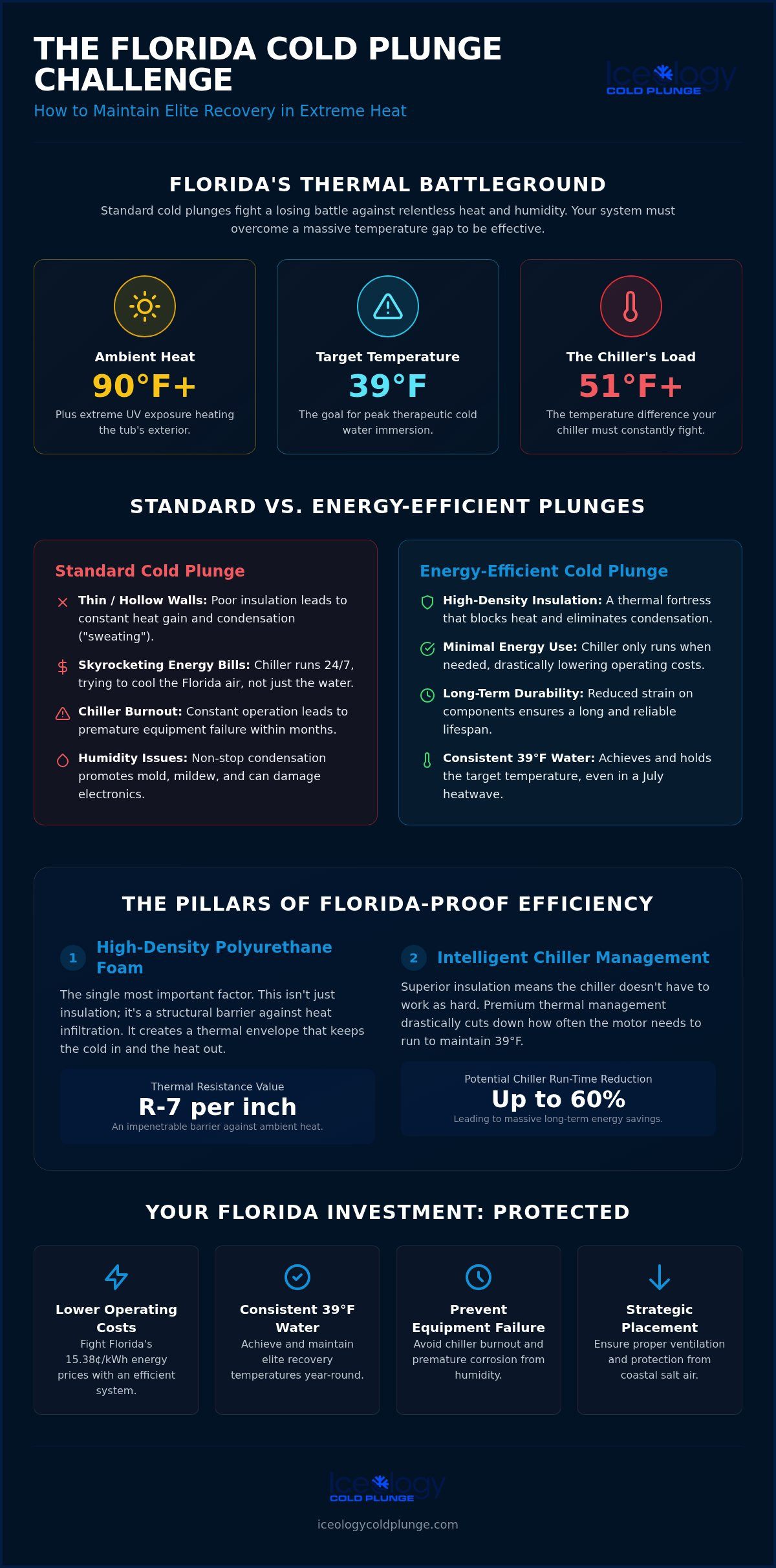
Florida isn't just another warm state. It's a thermal battleground where 90°F+ temperatures and extreme UV indices turn standard equipment into expensive lawn ornaments. Most tubs designed for moderate climates simply can't handle the relentless thermal load. When you're searching for an energy efficient cold plunge for Florida climate, you're fighting a constant battle against heat infiltration. Without high-level engineering, the water absorbs heat faster than a weak chiller can remove it. This creates a cycle where the motor never rests, leading to "chiller burnout" within months of a Miami summer. You need a system that acts as a fortress against the sun.
Ambient Temperature vs. Target Recovery Temp
The math is simple but brutal. If the ambient air is 90°F and your goal is 39°F, your system must maintain a 51-degree temperature differential. Passive cooling doesn't exist in South Florida. Direct UV exposure further complicates the issue by heating the tub's exterior surface to well over 100°F. This creates thermal bridges where heat migrates through the walls and into your water. To sustain the benefits of cold-water immersion, your equipment needs a physical barrier that stops this energy transfer before it starts. Cheap, thin-walled systems lack the density to block this migration, forcing the chiller to run 24/7 just to stay above 50°F.
The Humidity Factor: Condensation and Efficiency
Humidity is the silent efficiency killer. In high-moisture environments like Tampa or Orlando, uninsulated tubs "sweat" constantly. This condensation isn't just a mess; it's a sign of significant energy loss. Every drop of water forming on the outside of your tub represents heat being transferred from the air into your cold water. A truly energy efficient cold plunge for Florida climate must account for these specific environmental pressures:
- Energy Waste: "Sweating" forces the chiller to work significantly harder to overcome latent heat transfer from the humid air.
- Structural Risks: Persistent moisture leads to mold and mildew growth that thrives in the Florida humidity.
- Equipment Strain: Excessive condensation can eventually migrate into internal electronics, causing short circuits or premature corrosion.
Poorly designed tubs often feature uninsulated plumbing or thin lids that serve as massive thermal leaks. These "sweating" components are the primary reason why standard units fail to reach 39°F in July. By identifying these thermal bridges early, you can avoid the frustration of a system that promises cold water but delivers a lukewarm experience. Professional-grade recovery requires equipment that respects the physics of the Florida sun.
The Pillars of Efficiency: Polyurethane Insulation and Chiller Tech
Florida's climate demands more than just a powerful motor; it requires a superior thermal envelope. An energy efficient cold plunge for Florida climate relies on two critical pillars: high-density insulation and intelligent chiller architecture. While many entry-level units focus solely on the cooling unit's horsepower, the true leaders in the industry focus on how well the tub holds that cold water. Without a professional-grade barrier, your chiller is effectively trying to cool the entire neighborhood. High-quality engineering ensures that once your water reaches 39°F, it stays there with minimal effort.
High-Density Polyurethane Foam Explained
High-density polyurethane foam provides a thermal resistance value of approximately R-6.5 to R-7 per inch of thickness, creating an impenetrable barrier against Florida’s ambient heat. Unlike hollow plastic shells that allow air to circulate and transfer heat, foam-filled walls eliminate internal convection. This structural density doesn't just block heat; it provides the rigid durability needed to withstand the expansion and contraction caused by extreme temperature swings. Research into foam insulation for improved building efficiency highlights that dense cellular structures are the most effective way to prevent energy loss in high-heat environments. For a cold plunge, this means your water stays chilled even if the power cycles off.
Precision Chillers: 39 Degrees in Any Weather
The heart of a high-performance system is a precision-engineered chiller equipped with a high-efficiency heat exchanger. Modern chillers are designed to work smarter, not harder. Once the target temperature is achieved, the system enters a maintenance cycle, drawing only a fraction of the power required during the initial pull-down. This prevents energy waste by avoiding the constant "on-off" surging common in lower-end models. Precise temperature control also ensures you aren't over-cooling the water, which can lead to unnecessary electrical consumption.
Integrated chillers offer a distinct advantage over external units by minimizing the length of plumbing exposed to the air. Every inch of external hose is a potential thermal leak where the Florida humidity can attack your progress. By housing the cooling tech within the insulated structure of the tub, the system maintains a closed loop of efficiency. When exploring premium cold tubs, prioritizing this level of integrated engineering is the only way to guarantee performance in the heat. Hard-sided construction acts as the final guard, protecting the delicate internal components from the corrosive salt air and intense UV rays that define the South Florida experience.
Calculating the ROI: Energy Costs vs. Premium Performance
Investing in a cold plunge in Florida requires a strategic look at long-term operating expenses. While an uninsulated unit may seem affordable initially, it often leads to a hidden "Florida Tax" through excessive energy consumption. In a state where residential electricity rates average around 15.38¢/kWh, an inefficient system that runs its chiller 24/7 can quickly become a financial burden. High-quality Energy efficiency in Florida is a necessity, not a luxury. By choosing a system with high-density polyurethane insulation, you can reduce chiller run-time by up to 60% compared to uninsulated alternatives. This efficiency doesn't just lower your bill; it preserves the life of the mechanical components by preventing the motor from overworking in the humid air.
Premium vs. Entry-Level Efficiency Comparison
The difference in performance is stark when you compare a hard-sided, USA-made tub to an uninsulated shell. Beyond just the monthly energy draw, temperature stability is the key to a consistent recovery protocol. An uninsulated tub can lose several degrees of cooling per hour in a 90°F garage, whereas a premium insulated tub maintains its 39°F target with minimal intervention. Maintaining an energy efficient cold plunge for Florida climate means looking beyond the sticker price to the total cost of ownership over several years.
| Feature | Insulated Hard-Sided Tub | Uninsulated Shell / Inflatable |
|---|---|---|
| Chiller Run-time | Low (Cycles only as needed) | High (Runs near 24/7) |
| Temperature Stability | Elite (Holds 39°F for hours) | Poor (Rapid thermal gain) |
| Equipment Lifespan | 5 to 10+ Years | 1 to 2 Seasons |
Maintenance Costs in the Sunshine State
Durability in coastal environments is another critical factor for ROI. Salt air and high humidity are notorious for corroding cheap imports and thin-walled equipment. USA-made, hard-sided tubs are engineered with materials that resist this degradation, ensuring your investment lasts for years rather than a single season. Additionally, integrated filtration systems play a vital role in cost management. By keeping water cleaner for longer, you reduce the frequency of water changes and the need for excessive chemical treatments. Using a premium cover also blocks UV rays and prevents heat gain, further optimizing your system. For more on maximizing the life of your equipment, check out these Essential Cold Plunge Maintenance Tips. Quality craftsmanship ensures your focus remains on your recovery, not on constant repairs or high utility bills.
Strategic Setup for Florida Homes: From Miami Patios to Tampa Garages
Location is the final variable in the efficiency equation. Even the most advanced engineering can be undermined by poor placement. In Florida, the sun's position changes the thermal load on your tub throughout the day. Strategic placement reduces the stress on your equipment, ensuring your energy efficient cold plunge for Florida climate operates at peak performance. Whether you're in a high-rise in Miami or a suburban home in Tampa, your setup must account for airflow and environmental exposure. Proper planning prevents the chiller from fighting an uphill battle against its own exhaust.
Location Scouting: Sun vs. Shade
Position your tub against a shaded, north-facing wall to minimize direct UV impact. This simple choice can lower the exterior surface temperature of the tub by 20 degrees or more during peak afternoon hours. If you're installing in an enclosed garage, ventilation is non-negotiable. Chillers generate heat as they remove it from the water; without proper airflow, the ambient temperature in the garage will rise, forcing the unit to work harder. Always ensure your base is level and capable of handling drainage during routine maintenance. A sturdy, drain-capable foundation prevents water from pooling and attracting pests in the Florida humidity.
Coastal Considerations: Salt Air and Corrosion
For homes in Naples or West Palm Beach, the salt air presents a unique challenge to mechanical longevity. Standard imports often use lower-grade metals that pit and corrode within months of exposure. USA-made hardware is critical because it utilizes marine-grade components designed to resist the "salt creep" that destroys sensitive electronics. Regular maintenance, such as rinsing the exterior and checking seals, preserves both the finish and the function of your investment. To dive deeper into the technical requirements for your specific home layout, review our Cold Plunge Tub Setup Guide. These steps ensure your system remains a reliable part of your routine for years.
High-performance setups typically require a dedicated 15-amp or 20-amp circuit to handle the initial pull-down of a heavy-duty chiller. Don't share these circuits with other high-draw appliances like extra refrigerators or power tools. This electrical stability prevents tripped breakers and ensures your water stays at a consistent 39°F regardless of the weather outside. If you are ready to elevate your recovery space with a system built specifically for the tropics, you can order your premium cold plunge tub today. A professional installation is the final step toward achieving total-body optimization in the comfort of your own home.
Why Iceology is the Gold Standard for Florida Recovery
Choosing a recovery system in the Sunshine State is a commitment to quality and longevity. Iceology stands apart because we understand the specific environmental stressors that Florida homeowners face. Our tubs aren't mass-produced imports; they're meticulously crafted in the USA to meet the highest standards of performance. This local manufacturing advantage means your equipment is built to handle the humidity of Miami and the salt air of the Gulf Coast. When you invest in an energy efficient cold plunge for Florida climate, you're choosing a partner dedicated to your long-term wellness and peak physical state.
The Iceology Engineering Edge
Our systems feature a fully integrated chiller and high-density polyurethane insulation, creating a seamless thermal barrier. This hard-sided durability ensures that your tub remains a permanent fixture of your outdoor living space. Maintaining an energy efficient cold plunge for Florida climate requires this level of expert craftsmanship to manage thermal gain effectively. By housing the cooling technology within the insulated structure, we've eliminated the thermal leaks that plague external-chiller setups. For a deeper look at how this technology works, explore our Cold Plunge Tub with Chiller Guide. We've mastered the technical details so you can focus entirely on the transformative power of the cold.
Beyond the internal engineering, Iceology tubs are designed to complement the aesthetics of luxury Florida homes. We know that a cold plunge is more than a tool; it's an extension of your lifestyle. Our premium finishes and clean lines blend effortlessly with modern patios and lanais. We also take pride in supporting the South Florida wellness community with local expertise. Whether you're in Orlando, Tampa, or Fort Lauderdale, you have access to a team that understands your climate and your recovery goals. It's this combination of localized knowledge and elite performance that makes us the premier choice for serious athletes and wellness enthusiasts alike.
Ready to Start Your Recovery Journey?
A high-performance recovery routine shouldn't be a source of stress. The peace of mind that comes with a high-efficiency system means you'll never have to worry about your water temperature or your electric bill. You've done the work to optimize your training and nutrition; your recovery equipment should match that level of discipline. Iceology provides the reliability you need to take control of your physical and mental state every single day. If you're ready to experience the gold standard of cold-water therapy, it's time to Explore Iceology's Florida-Ready Cold Plunge Tubs. Elevate your routine with a system built for the heat.
Elevate Your Recovery with Tropical Precision
Maintaining an elite recovery routine in the Sunshine State requires more than just a standard tub. It demands a system engineered to withstand 90°F ambient temperatures and corrosive salt air. By prioritizing high-efficiency polyurethane insulation and strategic placement, you can achieve consistent 39°F performance without the burden of excessive energy costs. Your investment should be a source of physical and mental empowerment, not a constant struggle with equipment failure or high utility bills.
Choosing an energy efficient cold plunge for Florida climate is the final step in mastering your personal performance. With USA-made craftsmanship and a dedicated focus on thermal management, you can focus entirely on the results of your discipline. To further enhance your home setup, Freedom Fit Fuel offers premium wellness tools that complement a professional recovery routine. It's time to take control of your recovery with a system built for the unique demands of the tropics. You've earned the right to perform at your peak; make sure your equipment is ready to meet you there.
Build Your Premium Florida Recovery Station with Iceology
Step into the cold and discover the transformative power of a truly optimized recovery journey. Your path to peak performance starts with a single, disciplined plunge.
Frequently Asked Questions
How much electricity does a cold plunge use in Florida?
Your electricity usage depends entirely on your tub's insulation and the ambient temperature. In Florida, where residential rates average 15.38¢/kWh, an uninsulated unit might run its chiller nearly 24/7. However, an energy efficient cold plunge for Florida climate with high-density foam cycles much less frequently. This thermal management keeps your daily consumption low by holding the cold water temperature for hours without requiring constant mechanical cooling.
Can I keep my cold plunge outside in the Florida sun?
Yes, you can keep a hard-sided tub outdoors, but providing shade is highly recommended to maximize efficiency. Direct Florida sun can heat the exterior surface to over 100°F, forcing the chiller to work harder. Using a UV-resistant cover and placing the unit under a lanai or pergola protects the finish and the internal components. This setup ensures your system doesn't have to fight the sun's radiation while maintaining your target temperature.
What is the best temperature for a cold plunge in a hot climate?
Most users find the most effective recovery happens between 39°F and 50°F. In a hot climate, the contrast between the 90°F air and 39°F water provides a powerful stimulus for the nervous system. Reaching these lower temperatures requires a robust cooling system and superior thermal barriers. Maintaining this range consistently is what separates professional-grade equipment from standard tubs that struggle to stay below 55°F in the peak of summer.
Do I need a special electrical outlet for a cold plunge chiller?
Most high-performance chillers run on a standard 110V to 120V outlet, but they require a dedicated 15-amp or 20-amp circuit. You shouldn't share this circuit with other high-draw appliances like garage refrigerators or power tools. Using a dedicated line ensures the chiller has a stable power supply for the initial pull-down phase. This electrical stability is crucial for protecting the motor and ensuring long-term reliability in humid conditions.
How often should I change the water in my Florida cold plunge?
With a high-quality integrated filtration and ozone system, you'll only need to change the water every one to four months. The high humidity in Florida can encourage faster biological growth if the water remains stagnant or unfiltered. Regular filter cleanings and maintaining proper water chemistry will extend the life of each fill. This efficiency reduces your overall maintenance time and ensures you always have a clean, inviting recovery environment.
Is a hard-sided tub better than an inflatable one for Florida humidity?
Hard-sided tubs are significantly better for the Florida climate because they offer superior thermal management and durability. Inflatable models often suffer from excessive condensation and "sweating" in high humidity, which leads to mold growth and energy loss. An energy efficient cold plunge for Florida climate must have rigid, foam-filled walls to block heat infiltration effectively. This construction also resists the intense UV rays that can degrade thin plastic shells.
Can Iceology tubs really reach 39 degrees when it's 95 degrees outside?
Iceology tubs are specifically engineered to reach and maintain 39°F even when ambient temperatures exceed 95°F. The combination of a powerful built-in chiller and high-density polyurethane insulation allows the system to overcome extreme external heat. While standard units may plateau at 50°F in the summer, our hardware provides the consistent performance needed for serious recovery. This capability ensures your protocol remains uninterrupted regardless of the weather in Miami or Orlando.
What maintenance is required for a cold plunge in a coastal area like Miami?
Coastal maintenance focuses on protecting the system from salt air corrosion and high humidity. You should rinse the exterior of the tub regularly with fresh water to prevent salt buildup on metal components. Checking seals and cleaning the chiller's intake vents ensures the system maintains peak airflow. These simple steps, combined with regular filter changes, will preserve the premium aesthetics and mechanical integrity of your investment for years to come.