
The Definitive Guide to Chilled Water Therapy Tubs: Recovery Engineered for 2026
The era of hauling forty pounds of ice from the gas station just to get three minutes of relief is officially over. If you've ever watched a bag of expensive ice disappear into lukewarm water in the Miami humidity, you know that traditional recovery is often more work than it's worth. You want the benefits of cold immersion without the logistical headache or the risk of a leaky, inflatable pod. A dedicated chilled water therapy tub changes the entire equation. It replaces manual labor with precision engineering, ensuring your recovery is ready when you are.
We understand that peak performance requires consistency, not a struggle with equipment. This guide explores how advanced insulation and integrated cooling systems deliver a steady 39°F at the push of a button. You'll discover the technical specifications that define a professional-grade tub and learn how automated thermal management leads to measurable improvements in your inflammation levels and sleep quality. We're looking at the future of recovery, where durability meets design to create a permanent sanctuary for your physical well-being.
Key Takeaways
- Eliminate the manual labor of hauling ice by understanding how automated temperature control ensures your water is always at the optimal recovery temperature.
- Explore the engineering behind integrated chillers that maintain a precise 39°F while offering a streamlined, clutter-free aesthetic for your home or patio.
- Discover why a hard-sided chilled water therapy tub offers the superior thermal stability and durability required to withstand years of consistent use.
- Learn how to optimize your setup for high-humidity climates like Florida by selecting components designed for maximum heat exchange and insulation.
- Identify the essential features of a professional recovery station, including high-density polyurethane foam and advanced filtration for long-term water purity.
What is a Chilled Water Therapy Tub?
A chilled water therapy tub is far more than a simple container for cold water. It is a precision-engineered recovery system designed to provide consistent, automated cryotherapy without the logistical burden of manual ice. Unlike traditional methods that rely on melting cubes, these advanced units utilize powerful refrigeration units known as chillers to reach and maintain specific temperatures. This technology ensures that your recovery environment remains stable, allowing you to focus entirely on the physiological benefits rather than the preparation process.
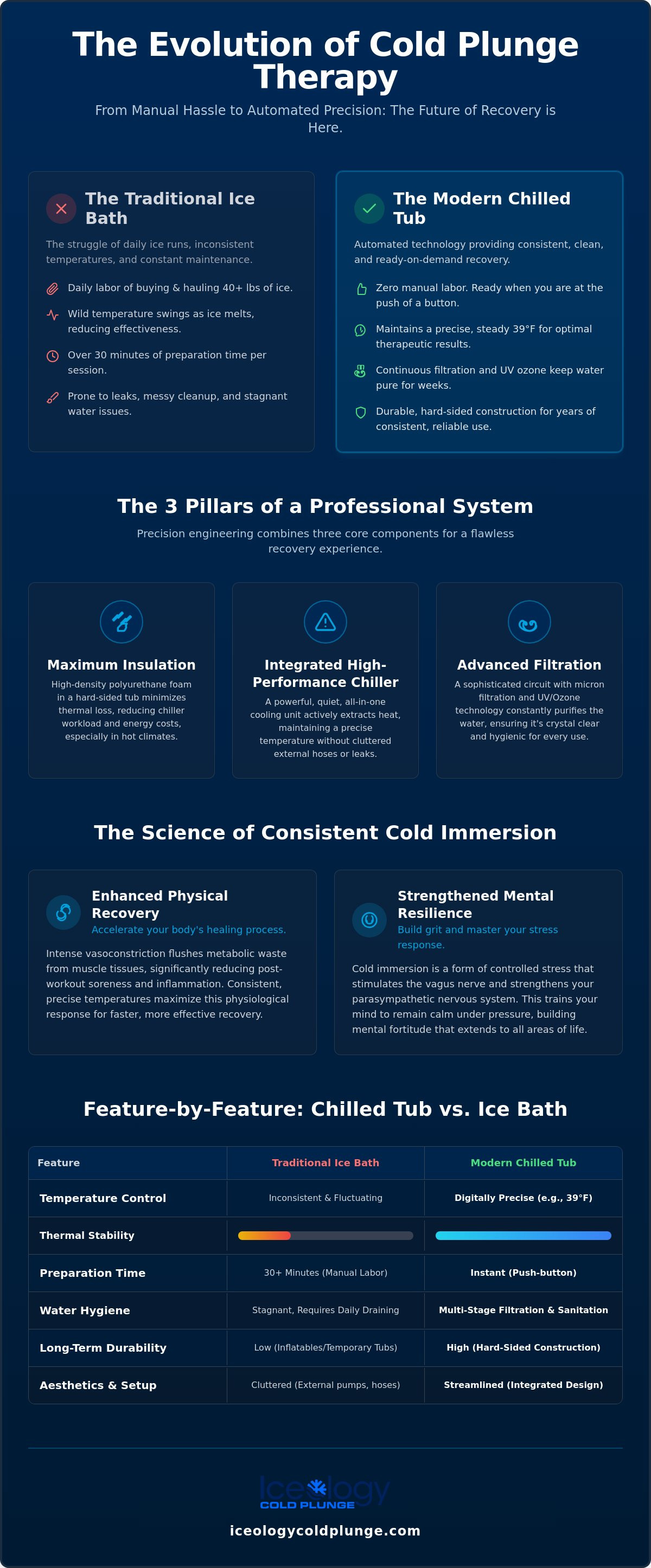
The architecture of a modern system relies on three core pillars: a highly insulated tub, a high-performance chiller, and a sophisticated filtration circuit. In 2026, we have entered the era of the "smart plunge." This shift means that integrated technology now handles everything from thermal management to water purity. It represents a fundamental psychological change for the user. Recovery is no longer a chore involving heavy lifting and gas station runs; it has become a streamlined ritual. You simply step in, press a button, and experience a professional-grade treatment in your own home or gym.
Chilled Tubs vs. Traditional Ice Baths
The most significant advantage of a dedicated system is thermal precision. When you dump ice into a standard bathtub, the temperature begins to rise the moment you enter. This "temperature swing" makes it difficult to stay within the therapeutic window required for optimal results. A chilled water therapy tub eliminates this variance by providing a steady 39°F environment that doesn't budge. This consistency saves you over thirty minutes of preparation time per session, making it easier to stick to a disciplined schedule.
Hygiene is another area where automated systems outperform basic tubs. Traditional ice baths become stagnant and require frequent draining, which is both wasteful and inconvenient. Modern chilled systems utilize continuous micron filtration and UV ozone technology. These components work together to neutralize contaminants and keep the water crystal clear for weeks at a time, ensuring a safe and inviting experience every morning.
The Science of Cold Water Immersion
The physiological impact of cold is both immediate and systemic. When you submerge, your body undergoes intense vasoconstriction. This narrowing of the blood vessels helps "flush" metabolic waste from your muscle tissues, which is essential for reducing post-workout soreness. Beyond the physical, Cold-Water Immersion plays a vital role in mental health by stimulating the vagus nerve. This stimulation strengthens the parasympathetic nervous system, helping you manage stress with greater composure and clarity.
Cold water immersion therapy is a form of controlled hormetic stress that triggers adaptive cellular responses to strengthen the body's overall resilience. By exposing yourself to these temperatures, you are essentially training your nervous system to remain calm under pressure. This practice builds a unique kind of mental grit that carries over into every other aspect of your life.
The Engineering of Cold: How Integrated Chillers Work
The cooling process in a chilled water therapy tub is a feat of modern thermodynamics. While an ice bath relies on the passive, fleeting cooling of melting solids, a dedicated chilled system uses active heat exchange to maintain a specific, programmable thermal environment. It functions through a closed-loop refrigeration cycle where a refrigerant absorbs heat from the water and dissipates it into the surrounding air. This isn't just about making water cold; it's about efficient heat extraction. In 2026, this technology has advanced through the use of variable-speed compressors. These components adjust their output based on real-time water temperature, preventing the system from running at full capacity unnecessarily and significantly lowering your operational costs.
Integrated Chiller Systems: The Premium Choice
When evaluating your recovery options, the distinction between integrated and external systems is critical. Many entry-level units rely on external chillers connected by a network of exposed hoses and pumps. These setups are prone to leaks, create a cluttered aesthetic, and often look like an industrial science project in your home gym. An integrated cold plunge tub with chiller houses all mechanical components within the tub's own frame. This "all-in-one" approach protects sensitive electronics from environmental wear and provides a much quieter experience. High-end engineering allows for advanced noise-dampening, ensuring the compressor's hum doesn't disrupt the tranquility of your morning ritual.
The Role of High-Density Insulation
Even the most powerful chiller is ineffective without proper thermal retention. This is where high-density polyurethane foam becomes the industry standard for performance. This specialized insulation acts as a robust thermal barrier, sealing the cold inside the tub while keeping external heat out. This is particularly vital for users in warm climates like Florida, where ambient heat and humidity can quickly degrade water temperature. By maintaining a steady 39°F with minimal effort, the insulation directly reduces the workload on your chiller. This efficiency translates to a lower monthly electricity bill and a longer lifespan for the internal mechanical parts.
Choosing a system that prioritizes these engineering details allows you to focus on the physical results rather than the maintenance of the equipment. If you're ready to upgrade your recovery setup with a professional-grade solution, you can view our selection of premium cold tubs to find the perfect fit for your home.
Hard-Sided vs. Inflatable Tubs: Choosing for Longevity
The rise of cold therapy has flooded the market with "pop-up" inflatable pods, but there is a vast difference between a temporary container and a permanent recovery station. Choosing a hard-sided chilled water therapy tub is an investment in structural integrity and long-term performance. While inflatables are often marketed for their portability, they lack the foundational strength required for a daily, disciplined ritual. A rigid, hard-sided tub provides a stable environment that won't bow, sag, or shift when a larger athlete enters the water. It turns your recovery space into a dedicated sanctuary rather than a cluttered corner of your patio.
The "luxury factor" of a hard-sided system goes beyond mere appearances. These units are designed to complement the aesthetics of a high-end home gym or a modern outdoor living area. Beyond the visual appeal, the rigid construction allows for integrated plumbing and electrical components. This means no exposed hoses to trip over and no external pumps that are vulnerable to the elements. It's a "buy once, cry once" philosophy that prioritizes craftsmanship over convenience.
Why Hard-Sided Tubs Win on Performance
Thermal stability is the primary metric where rigid walls outperform thin PVC layers. A high-quality premium cold plunge tub utilizes 2-inch thick insulated walls to create a true thermal seal. This thickness prevents the "energy leak" common in cheaper models. When the structure is solid, the internal components remain protected from vibration and environmental stress, which extends the overall lifespan of the system. Consider these performance advantages:
- Structural Integrity: Rigid walls support the weight of 112.5 gallons of water without any risk of structural collapse.
- Integrated Safety: Internal plumbing eliminates the risk of snags or tears that lead to catastrophic leaks.
- Maintenance Ease: Smooth, hard surfaces are significantly easier to sanitize than porous, flexible PVC.
The Hidden Costs of "Cheap" Inflatables
Inflatable pods often appear attractive due to their lower entry price, but their operational costs quickly add up. Because thin PVC walls offer almost no thermal resistance, these tubs can lose 5 to 10 degrees of temperature per hour when exposed to warm ambient air. This inefficiency forces your chiller to run 24/7 just to maintain a therapeutic baseline, which dramatically increases your electricity bill.
Durability is the other major concern. Inflatable materials are susceptible to punctures, UV degradation, and mold growth in the seams and folds. Replacing a "budget" pod every two seasons is more expensive and frustrating than owning a single, American-made tub designed to last for decades. When you choose a hard-sided system, you're choosing a reliable partner that is ready for your 39°F plunge every single morning, regardless of the weather outside.
Optimizing Your Recovery Station in Florida’s Climate
Operating a chilled water therapy tub in Florida requires a specific tactical approach. In cities like Miami and Tampa, where humidity levels frequently soar above 90%, your equipment faces environmental stressors that aren't present in drier climates. Maintaining a consistent 39°F becomes an active battle against ambient heat. While high-density polyurethane insulation provides the necessary barrier, your placement strategy determines how hard the integrated chiller must work to keep the water at your target temperature. Proper planning ensures that your recovery ritual remains efficient and cost-effective regardless of the external heat index.
Choosing between an indoor and outdoor setup involves balancing convenience with thermal load. An indoor installation allows the unit to benefit from your home's climate control, which significantly reduces the energy required for cooling. However, many athletes prefer the experience of an outdoor plunge on a patio or deck. If you choose an outdoor location, you must prioritize sun protection. Direct Florida UV rays can quickly heat the tub's exterior and degrade non-metallic components over time. For a deeper look at site preparation and electrical requirements, you can explore our cold plunge tub setup guide.
Outdoor Setups in South Florida
If you're installing your unit outdoors in South Florida, shade is your most valuable asset. Placing the tub under a pergola or a covered lanai shields the chassis from radiant heat, allowing the chiller to cycle less frequently. Level ground is also essential; a perfectly flat surface ensures even water distribution and prevents unnecessary stress on the internal frame. Coastal residents must also consider salt air, which can be highly corrosive. Utilizing high-grade plastics and stainless steel hardware is vital for preventing rust and maintaining the luxury aesthetic of your station.
Safety and cold retention are best managed through a locking, insulated cover. A high-quality cover acts as a secondary thermal seal, preventing the "cold skip" that occurs when chilled water is exposed to heavy, humid air. This simple addition keeps debris out and ensures that your water is ready for an immediate plunge the moment you unlock the lid.
Maintenance for Humid Environments
Humidity and heat create the perfect breeding ground for organic matter, making a strict maintenance schedule non-negotiable. You should check your micron filters weekly and replace them every four to six weeks to ensure the water remains crystal clear. Proper drainage is also a factor; condensation will naturally form around the unit's cooling coils in humid weather. Ensuring your recovery station has adequate runoff prevents water from pooling around the base, which protects your flooring or deck from moisture damage.
UV ozone sanitation provides a secondary layer of protection by neutralizing pathogens that thrive in warm, humid environments before they can compromise water quality. This automated process works alongside your filtration system to minimize the need for chemical additives. If you're ready to invest in a system built to handle the unique demands of the Sunshine State, you can shop our Florida-ready cold tubs to find the professional choice for your home.
Why Iceology is the Gold Standard for Chilled Therapy
Iceology Cold Plunge stands at the intersection of rigorous engineering and holistic wellness advocacy. While the market is crowded with generic cooling solutions, our chilled water therapy tub is built to meet a professional standard of performance that prioritizes long-term reliability over temporary convenience. We recognize that for an athlete or a high-performer, equipment failure disrupts the discipline required for growth. This is why we focus on integrated systems that reach the 39°F threshold with unwavering consistency. Our tubs provide a precise thermal environment that allows you to reap the full benefits of cold plunge therapy every single day without the variance found in lower-tier models.
The difference lies in the meticulous attention to the build process. By housing the mechanical components directly within the chassis, Iceology Cold Plunge eliminates the clutter of external hoses and the inefficiency of poorly insulated walls. This quality-first mindset means our systems are designed to handle the thermal load of a hot afternoon in Miami without losing their cooling edge. We provide a professional tool that has mastered the technical details so you can focus entirely on your personal results. It is the definitive choice for those who value longevity, aesthetic beauty, and measurable physical outcomes.
Crafted in the USA: Quality You Can Trust
Every unit we produce is a testament to American craftsmanship. Choosing a cold plunge tub made in USA means you're investing in a product with a transparent supply chain and superior quality control. Local manufacturing allows Iceology Cold Plunge to oversee every weld, seal, and component installation with care. For our Florida-based customers, this proximity offers a significant advantage. It means faster access to parts and specialized support without the frustration of overseas shipping delays or communication barriers. You're not just buying a tub; you're partnering with a team of experts dedicated to your long-term success.
Transforming Your Daily Routine
The transition from a manual ice bath to an automated system is a profound shift in lifestyle. Our user experience is designed for simplicity, providing professional results through an intuitive interface. Whether you're setting up on a South Florida patio or in an Orlando home gym, the versatility of our hard-sided tubs ensures they fit seamlessly into your environment. You no longer have to plan your day around ice runs or water prep. Instead, you have a permanent sanctuary for physical and mental optimization ready at the push of a button.
Investing in a high-performance recovery system is a commitment to your future self. By removing the friction of preparation, you make it easier to stay disciplined and consistent with your practice. Taking this first step allows you to take control of your inflammation, your sleep quality, and your mental resilience. We've handled the engineering so you can master the ritual. If you're ready to experience the gold standard in recovery, you can explore our collection of premium cold tubs and start your journey toward peak performance today.
Take Command of Your Physical Potential
Recovery is no longer a matter of chance or a struggle with melting ice. By choosing a professional-grade chilled water therapy tub, you're investing in a permanent solution for mental clarity and physical resilience. We've explored how integrated chillers and high-density polyurethane insulation work together to maintain a consistent 39°F, even in the most demanding climates. This level of engineering ensures that your recovery ritual is always ready. It allows you to focus on the results rather than the equipment. A hard-sided, American-made system provides the structural integrity and aesthetic beauty that temporary inflatable pods simply cannot match.
You deserve a recovery station that is as dedicated to your goals as you are. Every Iceology unit is built in the USA to ensure the highest standards of craftsmanship and long-term reliability. It's time to replace the hassle of traditional ice baths with a streamlined, automated experience that supports your peak performance. Explore our USA-made chilled water therapy tubs and discover the difference that precision engineering makes in your daily life. Your journey toward total-body optimization is just one plunge away.
Frequently Asked Questions
How long should I stay in a chilled water therapy tub for results?
You should aim for two to five minutes per session to achieve optimal physiological results. Many experts suggest a cumulative goal of eleven minutes per week to maximize metabolic and mental health benefits. It is vital to listen to your body's signals and exit the water if you experience lightheadedness or excessive numbness during your practice.
What is the ideal temperature for a cold plunge tub?
The most effective therapeutic range is typically between 39F and 50F. Beginners often start near 55F to build initial tolerance before gradually lowering the setting as their nervous system adapts. Staying at the lower end of this spectrum triggers a more robust hormetic stress response, which is essential for building long-term resilience and reducing systemic inflammation.
Does a chilled water therapy tub use a lot of electricity?
A high-quality chilled water therapy tub is remarkably efficient, often costing about the same to operate as a standard household appliance. High-density polyurethane insulation ensures that the cold stays inside the tub, preventing the chiller from running unnecessarily. Modern compressors are designed to cycle only when needed to maintain your precise temperature setting, which keeps monthly power costs low.
Can I keep my chilled water tub outside in the Florida heat?
Yes, our hard-sided units are specifically engineered to withstand the intense heat and humidity of the Florida climate. The combination of thick insulated walls and a powerful integrated chiller allows the system to maintain 39F even when ambient temperatures soar. We recommend using an insulated cover and placing the tub in a shaded area to protect the exterior and further optimize energy efficiency.
How often do I need to change the water in a chilled tub?
You generally only need to change the water every three to six months with proper maintenance. Because our systems utilize continuous micron filtration and UV ozone sanitation, the water remains clear and hygienic for much longer than a traditional tub. Rinsing off before you plunge and checking your filter weekly will help extend the life of your water and keep the system pristine.
Is a chilled water therapy tub better than a traditional ice bath?
A chilled water therapy tub is far superior because it offers automated temperature precision and built-in sanitation. Traditional ice baths require constant manual labor and suffer from rapid warming as the ice melts, which compromises the therapeutic effect. A dedicated chilled system provides a consistent environment and eliminates the need for frequent draining and refilling, making your recovery ritual much more sustainable.
What maintenance is required for a cold plunge with a built-in chiller?
Maintenance is simple and focuses on keeping the water and the mechanical components clean. You should rinse or replace your micron filter every few weeks and ensure the chiller's air intake remains clear of dust or debris. Checking the ozone system annually and wiping down the interior during your quarterly water change will ensure your investment remains in peak condition for years.
Do I need a special electrical outlet for my cold plunge tub?
Most standard models are designed to operate on a dedicated 110V/120V household outlet equipped with a GFCI protector. This allows for easy installation on most patios or in home gyms without the need for expensive electrical upgrades. It is important to use a grounded outlet and avoid extension cords to ensure the integrated chiller receives a steady, safe supply of power.