
Cold Plunge Chiller & Water Maintenance Guide: The Florida Edition (2026)
In Florida's 90 percent humidity, your cold plunge isn't just a recovery tool; it's a high-stakes battle against biology. What if your morning ritual for mental clarity is actually harboring a microscopic ecosystem of algae and biofilm? You've invested in a premium setup to sharpen your mind and heal your body. It's frustrating to see that first hint of cloudiness or feel your chiller struggle against the relentless Sunshine State heat. We understand that you want to focus on the results of the plunge, not the complexity of the chemistry. This cold plunge chiller maintenance guide provides the essential roadmap to keep your water crystal clear and your system running at peak efficiency. You'll learn how to navigate Florida's unique climate challenges, from preventing chiller overheating to mastering the balance between mechanical filtration and chemical sanitation. We're diving into a repeatable, professional schedule that ensures your water remains safe and your cooling remains consistent. By the end of this guide, you'll have the confidence to maintain a pristine environment for daily performance, regardless of how high the mercury rises.
Key Takeaways
- Understand how high ambient temperatures in cities like Miami and Orlando impact cooling cycles and learn the steps to maintain thermal efficiency.
- Discover the optimal pH range of 7.2–7.8 to prevent scale buildup and protect your chiller's internal heat exchanger from the effects of hard water.
- Use this cold plunge chiller maintenance guide to protect your investment by properly cleaning condenser coils and inspecting circulation pumps for debris.
- Implement a repeatable daily and weekly maintenance calendar that simplifies water testing and debris management for long-term tub durability.
- Explore the advantages of USA-made, hard-sided tubs with integrated chillers that shield sensitive electrical components from Florida's intense humidity.
The Impact of Florida’s Climate on Cold Plunge Chiller Maintenance
Florida’s environment presents a specific set of challenges that standard maintenance manuals often overlook. In cities like Miami and Orlando, the relentless ambient temperature doesn't just make you sweat; it forces your chiller to run extended cycles to maintain that crisp 39°F. This increased mechanical load makes a comprehensive cold plunge chiller maintenance guide essential for any Florida resident. Beyond the heat, the salt-saturated air in coastal regions like Naples or West Palm Beach acts as a silent catalyst for corrosion. If your system uses non-premium components, this salt air can quickly degrade metal surfaces and sensitive electronics. High-density polyurethane foam insulation serves as your primary defense. It creates a thermal barrier that allows the chiller to rest even when the outdoor temperature soars.
Managing Heat Load and Airflow
Proper placement is the foundation of mechanical longevity. You must maintain at least 12 inches of clearance around your chiller unit to facilitate efficient heat exchange. Without this space, the unit recirculates its own hot exhaust. This leads to overheating and potential system failure. Ambient air temperature directly dictates your cooling speed; a unit in the direct sun will struggle significantly more than one in a controlled environment. Utilizing a shade structure isn't just about user comfort. It's a strategic move that can reduce your chiller’s energy consumption by up to 20 percent by lowering the immediate thermal load on the cabinet. This efficiency keeps your monthly operating costs, which typically range from $25 to $65 in Florida, on the lower end of the spectrum.
Humidity and Condensation Control
High humidity levels frequently cause "sweating" on external pipes and connectors. It's vital to distinguish this harmless condensation from an actual mechanical leak. If you notice moisture, wipe it down and monitor the water level in the tub to confirm the system's integrity. In Florida’s damp air, stagnant moisture on exterior surfaces becomes a breeding ground for mold and mildew. Regular cleaning of the exterior is required to maintain a sanitary environment. A sealed, hard-sided tub is superior to flimsy inflatable alternatives in this climate because it prevents moisture ingress into the insulation layer. This structural integrity keeps the internal components dry. It ensures your cold plunge chiller maintenance guide remains a simple routine of prevention rather than a series of expensive repairs caused by environmental wear.
Step-by-Step Cold Plunge Tub Water Maintenance in Florida
Florida's intense sunlight and high temperatures create a unique environment where water chemistry shifts rapidly. Maintaining a pH between 7.2 and 7.8 isn't just about skin comfort; it's a critical mechanical safeguard. When pH climbs too high, calcium scale begins to crystallize inside your chiller's heat exchanger. This layer of scale acts as an insulator, forcing the unit to work harder to cool the water. Conversely, acidic water with a low pH can corrode internal components. This cold plunge chiller maintenance guide emphasizes that stable water chemistry extends the life of your pump and cooling system. Monitoring Total Dissolved Solids (TDS) is also vital in the Sunshine State, as evaporation can concentrate minerals, eventually straining the circulation pump.
The 3-Step Water Testing Routine
Consistency is your best tool for long-term tub health. For outdoor setups in Florida, you should test your water at least twice weekly to account for the accelerated degradation caused by UV rays. Focus on these three metrics:
- Total Alkalinity: Keep this between 80 and 120 ppm to act as a buffer for your pH levels.
- pH Balance: Aim for the 7.2 to 7.8 range to prevent both corrosion and scale.
- Sanitizer Levels: Maintain consistent levels of chlorine or bromine, or monitor your Ozone/UV output.
Properly balanced water prevents corrosive damage to the chiller's internal evaporator while stopping mineral scale from insulating the heat exchange surfaces. If you find your chemistry swinging wildly, check your local water hardness, as Florida tap water often contains high mineral content that requires specific balancing agents.
Sanitization and Filtration Essentials
Mechanical filtration is your first line of defense against organic debris. You should clean or replace your 20-micron filter every two weeks to ensure optimal flow rates. A clogged filter creates backpressure, which can cause your chiller to cycle incorrectly or trigger flow-rate errors. Integrating advanced technology like UV-C or Ozone systems drastically reduces the chemical burden on your skin, providing a more natural experience. These systems neutralize contaminants on a molecular level, allowing you to use lower concentrations of traditional sanitizers. To maintain peak performance, consider upgrading to premium cold tubs that feature integrated filtration designed for high-efficiency flow. Rather than using aggressive "shock" treatments that can be harsh on the tub's lining, focus on consistent, low-level sanitization. This methodical approach keeps the water crystal clear and ready for your next session without the need for frequent full water changes.
Hardware Care: Protecting Your Cold Plunge Chiller
Hardware longevity is the direct result of proactive care. While water chemistry protects the internals, physical hardware maintenance ensures your system can actually move heat out of the water. This cold plunge chiller maintenance guide focuses on the mechanical heart of your recovery routine. Florida's environmental factors, such as high pollen counts and salt spray, create a unique clogging effect on condenser coils that users in drier climates rarely experience. High-density polyurethane foam insulation serves as a silent partner in this process. It reduces the frequency of cooling cycles, which naturally limits the amount of air and debris pulled through the mechanical components.
Condenser Coil Cleaning Procedure
Heat dissipation is the only way your chiller reaches 39°F. The condenser coils, similar to those on an outdoor AC unit, must be free of obstruction to function. In Florida, you should use compressed air or a soft brush to remove dust, pollen, and pet hair from these coils every month. If you keep your unit indoors, a quarterly schedule is sufficient. Clogged coils act like a blanket. They trap heat inside the cabinet, forcing the compressor to run hotter and longer. This thermal stress is the leading cause of premature compressor failure. By keeping these fins clear, you maintain the breathability of your system. This simple task ensures your monthly operating costs stay closer to the $25 average rather than the $65 high seen with inefficient units.
Pump and Flow Optimization
The circulation pump is the workhorse of your setup. It must move water at a consistent rate to ensure even cooling and effective filtration. In professional water management, specialized hardware like the systems at shop.water-services.us is used to ensure pumps can be easily maintained and disconnected. Periodically backwashing your own system helps clear internal sediment that may have bypassed the 20-micron filter. You'll know your pump is struggling if you notice any of the following signs:
- Increased humming or grinding noises during operation.
- Visible reduction in water agitation or flow strength at the return jet.
- Frequent "Low Flow" error codes appearing on the chiller display.
Your flow sensor acts as a critical safety switch. If the sensor detects a drop in water movement, it shuts down the cooling cycle to prevent the internal evaporator from freezing. Ice formation inside the chiller lines can cause catastrophic damage to the heat exchanger. A premium cold plunge tub setup integrates these sensors with hard-sided construction. This creates a stable thermal environment where the hardware doesn't have to fight against the external Florida heat every minute of the day. By choosing a system designed for durability, you spend less time troubleshooting and more time reaping the benefits of cold water immersion.
The 2026 Cold Plunge Maintenance Calendar
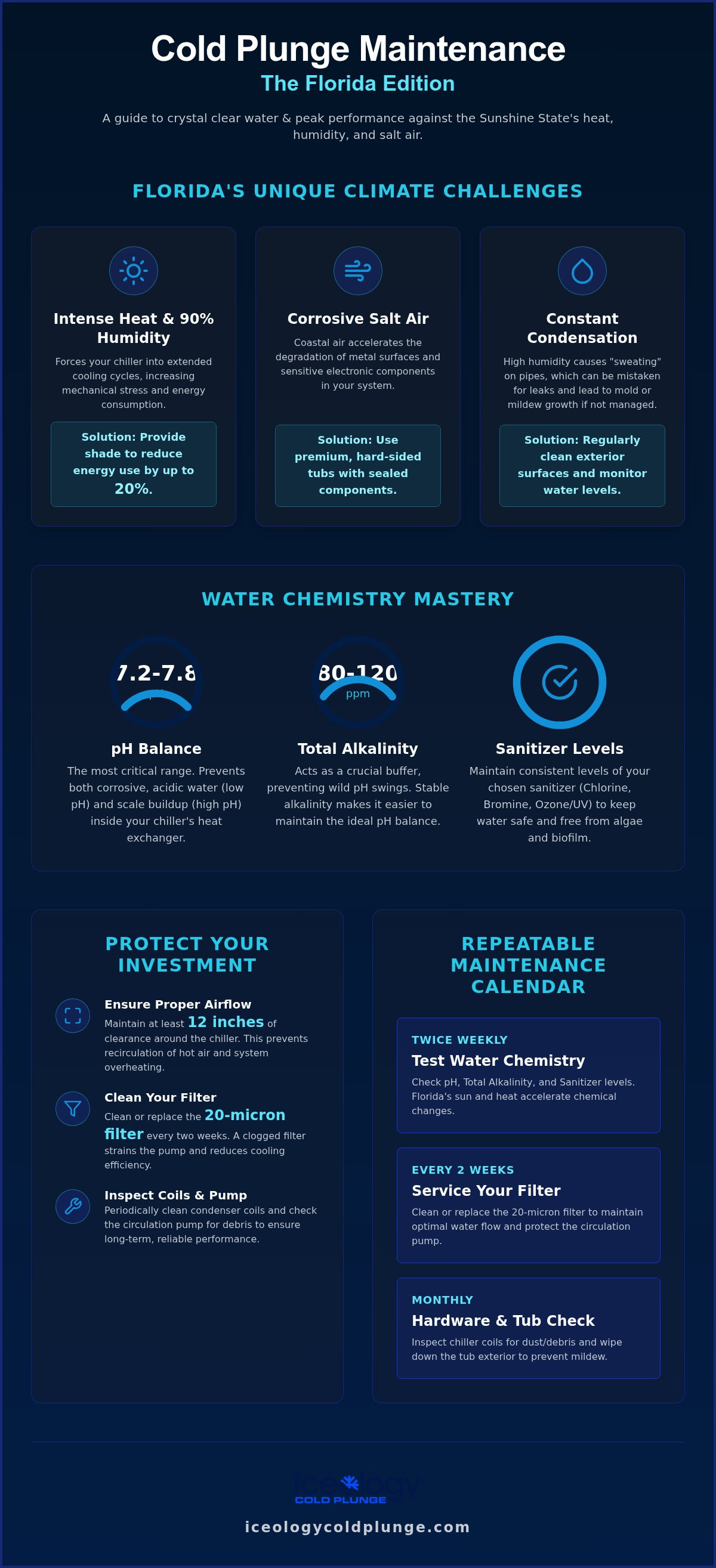
Success in recovery depends on consistency. A structured cold plunge chiller maintenance guide transforms a complex mechanical chore into a series of manageable habits. In Florida, where humidity and heat never take a day off, your schedule must be equally relentless. This calendar ensures your water stays crystal clear and your hardware remains efficient throughout the year. By following this repeatable cadence, you protect the high-performance components that make your daily immersion possible.
- Daily: Skim surface debris and verify the temperature display for consistency.
- Weekly: Test alkalinity, pH, and sanitizer levels; wipe down the tub's waterline.
- Bi-Weekly: Rinse the pleated 20-micron filter and check for airflow obstructions around the chiller.
- Monthly: Deep clean the condenser coils and inspect all plumbing seals for signs of wear.
- Quarterly: Perform a complete water change and comprehensive system flush.
Daily and Weekly Quick-Checks
Start every day with a sixty second audit. Skim surface debris and check the digital temperature display for consistency. If you notice the built-in chiller producing unusual vibrations or a louder hum than yesterday, investigate the airflow immediately. This early detection prevents minor mechanical issues from spiraling into total system failure. Ensure your insulated cover is sealed tight after every session. A loose seal allows thermal loss, forcing your unit to work harder against the Florida sun. Maintaining a precise 39°F is essential so the full benefits of cold plunge, including metabolic boost and enhanced resilience, are never compromised. Every week, test your water chemistry and wipe the waterline with a microfiber cloth to prevent biofilm from taking hold.
The Deep Clean: Quarterly System Flush
Even with perfect chemistry, total dissolved solids eventually accumulate and strain your pump. Every ninety days, you should perform a complete water change and system flush. When draining your tub, ensure the water is directed toward appropriate drainage systems; Florida lawns can be sensitive to concentrated sanitizing agents. Use a non-abrasive, wellness-grade cleaner to wipe down the interior surfaces of the hard-sided tub. This removes microscopic residue that mechanical filtration might miss. Once clean, refill the unit and re-balance the chemistry before the next cooling cycle begins. If you want a system that streamlines this process with integrated, high-efficiency components, explore our premium cold plunge tubs designed for maximum durability. Taking these steps every quarter ensures your recovery sanctuary remains sanitary and efficient for the long term.
Why Premium Built-In Chillers Simplify Maintenance
Selecting the right hardware is the most effective way to reduce your long-term workload. This cold plunge chiller maintenance guide has detailed the daily and weekly steps required for water clarity, but the frequency of those tasks depends heavily on your tub's construction. There is a vast difference between USA-made cold plunge tubs and imported inflatable models. Hard-sided tubs provide a stable, durable environment that resists the intense Florida sun. In contrast, flimsy inflatables often degrade under high UV exposure, leading to micro-leaks and structural softening that complicates your maintenance routine. By choosing a system built for longevity, you ensure that your recovery practice remains a source of strength rather than a source of stress.
Integrated vs. External Chiller Systems
Choosing cold plunge tubs with chillers that are fully integrated eliminates what industry experts call "plumbing spaghetti." External units require multiple hoses, clamps, and exposed connections. Each of these represents a potential point of failure or a slow drip that can go unnoticed in high-humidity environments. Integrated systems house these components within a protected cabinet, shielding them from the salt air and rain common in coastal regions.
Factory-sealed units offer significantly better protection against moisture ingress. When your electrical components are tucked away inside a hard-sided structure, they stay dry and cool. This streamlined design also fits the high-end aesthetics of South Florida patio spaces. You don't have to sacrifice your home's visual appeal for professional-grade recovery. A clean, self-contained unit is easier to wipe down and inspect. It turns a thirty minute troubleshooting session into a five minute visual check.
Long-Term ROI of Premium Engineering
The financial logic of premium engineering becomes clear when you look at your monthly utility bills. High-density polyurethane foam insulation acts as a thermal vault. It keeps the water at exactly 39°F by preventing heat from leaking into the tub. In a climate where the air temperature often exceeds 90°F, this insulation is what keeps your chiller from running 24/7. When the mechanical load is reduced, the lifespan of your compressor and pump increases. This means fewer part replacements over the next decade.
Superior thermal management leads to lower electricity costs. You'll likely find your operating expenses staying at the lower end of the $25 to $65 monthly average. Furthermore, American-manufactured wellness equipment maintains a much higher resale value than mass-produced imports. You're not just buying a tub; you're investing in a piece of precision machinery designed to thrive in the Florida heat. This gives you the peace of mind to focus entirely on your physical and mental optimization. You can trust that your system is ready to perform every time you step into the water.
Master Your Recovery Environment
Maintaining a cold plunge in Florida is a commitment to performance that requires a clear understanding of your environment. This cold plunge chiller maintenance guide has provided the roadmap to navigate high humidity and heat while keeping your water pristine. By mastering the balance of water chemistry and ensuring your hardware has proper airflow, you protect both the system and your daily recovery ritual. Superior engineering remains your most valuable asset in this journey. Tubs utilizing high-density polyurethane foam insulation and integrated components naturally reduce the mechanical stress on your equipment. This allows you to focus on your physical and mental results rather than troubleshooting technical issues. If you're ready to invest in a system built for the local climate, discover the maintenance-free luxury of Iceology Cold Plunge Tubs. Featuring USA-made craftsmanship and built-in 39°F chiller technology, our tubs are engineered for those who demand peak performance. Step into the cold with confidence and let your discipline drive your transformation.
Frequently Asked Questions
How often should I change the water in my cold plunge in Florida?
In Florida's climate, you should perform a complete water change every three months if you follow a consistent cold plunge chiller maintenance guide. While high-quality filtration systems and ozone sanitation extend water life, the heat can accelerate organic buildup. If your tub sees heavy daily use from multiple bathers, you might need to refresh the water every eight weeks. Always scrub the interior surfaces during the drain cycle to remove microscopic biofilm.
Can I leave my cold plunge chiller running 24/7 in the summer?
You can and should leave your chiller running 24/7 to maintain thermal stability. Modern units are engineered for continuous operation, and premium polyurethane insulation ensures the motor only engages when necessary. In the Florida summer, turning the unit off allows water to reach ambient temperatures of 90°F or higher. This forces the chiller to work much harder to cool down again, which actually increases mechanical wear and energy consumption compared to maintaining a steady 39°F.
What is the 'Low Flow' error on my chiller and how do I fix it?
A 'Low Flow' error usually indicates a restriction in water movement caused by a dirty filter or trapped air. Your first step should be rinsing the 20-micron pleated filter to restore optimal pressure. If the error persists, check the intake and return jets for debris like hair or leaves. This sensor is a critical safety feature that prevents the internal heat exchanger from freezing; ignoring it can lead to catastrophic hardware failure.
Do I need to use chlorine in my cold plunge tub?
Chlorine is a reliable option, but it isn't the only way to keep your water sanitary. Many users prefer bromine for its stability in warmer water or integrated Ozone and UV-C systems that neutralize contaminants without harsh chemicals. Regardless of your choice, maintaining a balanced pH between 7.2 and 7.8 is essential. This protects the internal components of your system from corrosion while ensuring the water remains safe for your daily recovery practice.
How do I protect my outdoor cold plunge from Florida's salt air?
Coastal residents in Naples or West Palm Beach should rinse the exterior of their tubs with fresh water weekly to prevent salt accumulation. This cold plunge chiller maintenance guide recommends cleaning the condenser coils monthly with compressed air to stop salt spray from corroding the fins. Choosing a hard-sided, USA-made tub provides a superior barrier compared to inflatables, as the integrated cabinet shields sensitive electrical connections from the corrosive effects of the Florida maritime environment.
Why is my cold plunge chiller not reaching 39 degrees?
If your water isn't reaching 39°F, the most common culprit is poor airflow or dirty condenser coils. Ensure the unit has at least 12 inches of clearance on all sides so it doesn't recirculate hot exhaust air. In extreme Florida heat, direct sunlight can also overwhelm a chiller. Adding a shade structure or moving the unit to a covered patio can reduce the thermal load, allowing the system to reach and maintain your target temperature efficiently.
Is it safe to use a cold plunge during a Florida thunderstorm?
You should never use your cold plunge during a Florida thunderstorm. Water is a highly effective conductor, and permanent outdoor installations are susceptible to lightning strikes or power surges. Even if your tub is on a covered patio, the risk of electrical interference is high during active weather. It's best to wait until the storm passes and the sky clears before resuming your session to ensure your safety and protect the system's electronics.
How much electricity does a cold plunge chiller use in a month?
Monthly electricity costs for a cold plunge chiller in Florida typically range from $10 to $30 for well-insulated units. However, poorly insulated tubs or those in direct sun can see costs climb to $50 or $60 as the motor runs more frequently. Using high-density polyurethane foam insulation significantly lowers these expenses by trapping the cold. This efficiency ensures that your daily recovery ritual remains an affordable part of your wellness routine without surprising utility bills.