
Cold Plunge for Chronic Pain: Science-Backed Guide (2026)
What if the very cold you worry will lock up your aching joints is actually the exact biological signal your nervous system needs to reset? Adopting a cold plunge for reducing chronic pain can feel counterintuitive when you're battling persistent arthritis, fibromyalgia flare-ups, or recurring back spasms. It's completely natural to hesitate, especially if you fear that freezing temperatures will aggravate joint stiffness or if you're exhausted from managing the side effects of long-term pharmaceuticals.
You don't have to stay trapped in continuous discomfort. In this guide, you'll discover how cold water immersion therapy relieves persistent inflammation, blunts pain signals, and restores daily mobility. We will break down the clinical science behind vasoconstriction and neurochemical pain modulation, address common joint concerns, and provide a clear, temperature-controlled protocol so you can safely build a sustainable recovery routine right at home.
Key Takeaways
- Learn how chilled water stimulates TRPM8 cold receptors to blunt primary nociceptive signaling and interrupt persistent discomfort.
- Understand the science behind using a cold plunge for reducing chronic pain, using targeted vascular constriction to suppress inflammatory cytokines.
- Master a progressive protocol starting between 50°F and 55°F to build physical adaptation safely and protect sensitive joints.
- Discover why temporary connective stiffness during exposure gives way to sustained, whole-body mobility once you rewarm.
- Explore why reliable, temperature-controlled cold tubs provide the thermal consistency essential for predictable therapeutic results at home.
The Physiology of Pain Relief: How Cold Water Immersion Interrupts Pain Signals
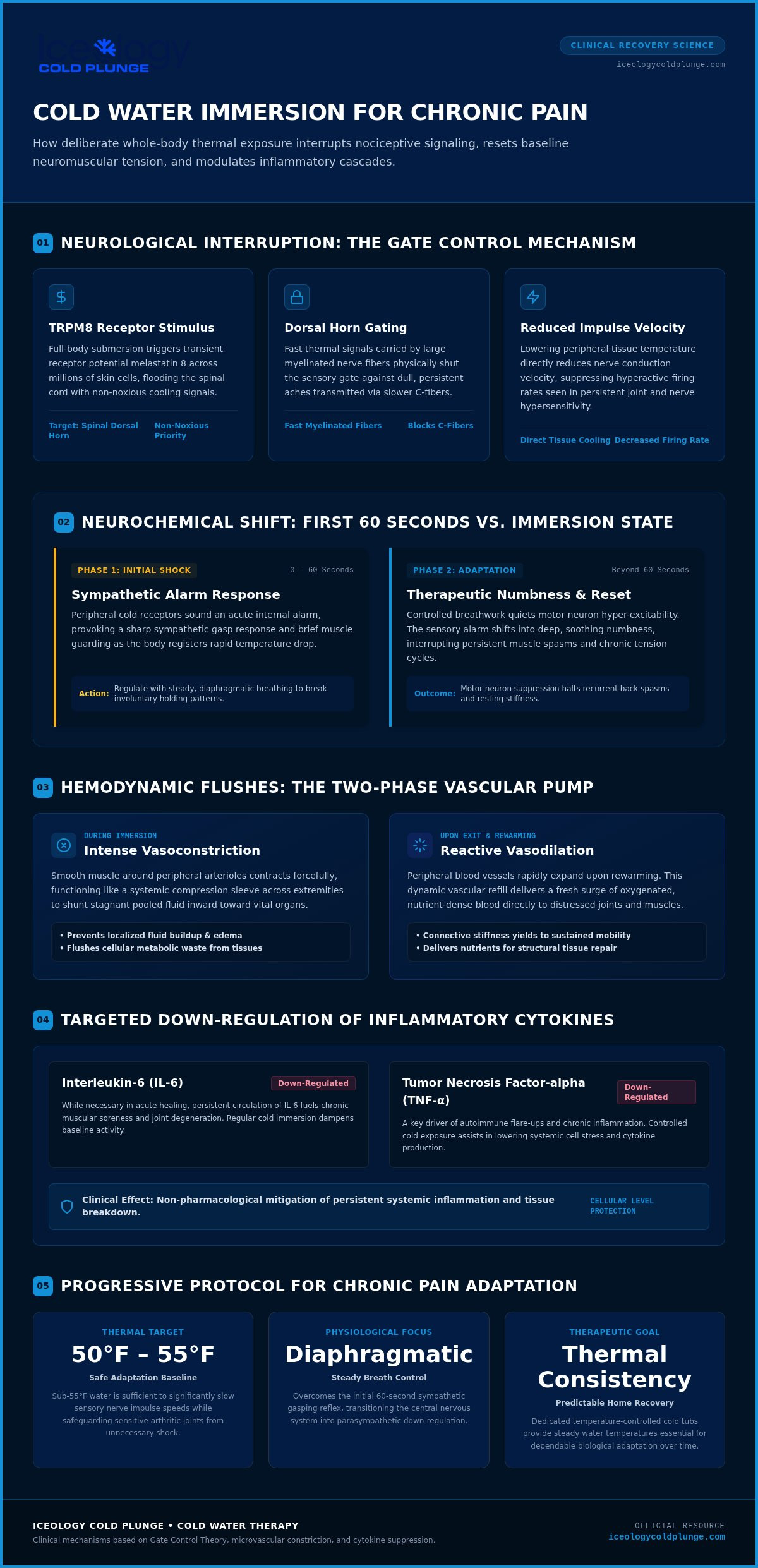
Cold water immersion therapy operates as a systemic neurological and vascular intervention rather than a simple cooling trick. While placing a localized ice pack provides superficial numbing to a single joint, submersing your entire body initiates a coordinated biological response that alters how your central nervous system interprets physical distress. When immersed, thermal receptors known as TRPM8 (transient receptor potential melastatin 8) activate across millions of skin cells. This widespread activation floods the spinal cord with non-noxious cooling signals, effectively overpowering and blunting primary nociceptive signaling before those distress messages reach the brain.
This process directly reflects the Gate Control Theory of pain. Under this neurological model, high-priority thermal inputs carried by large myelinated nerve fibers effectively close the spinal dorsal horn gateway against dull, chronic aches transmitted by slower C-fibers. As detailed in the broader clinical literature surrounding modern Cryotherapy, this physiological mechanism explains why submerging in cold water can provide immediate relief where topical patches fail. You aren't simply masking discomfort; you are physically intercepting it at the spinal cord level. To explore how deliberate cold exposure retrains your body's baseline resilience, review the scientific benefits of cold plunge.
Nerve Conduction Velocity and the Sensory Gate
Water maintained below 55°F significantly slows sensory nerve impulse transmission speeds throughout peripheral tissues. Cold thermal inputs slam the sensory gate shut, quietening persistent nociceptive chatter before it registers in the brain. By directly lowering tissue temperature, using a cold plunge for reducing chronic pain helps dial back the hyperactive firing rates seen in persistent nerve sensitivity, providing joints and surrounding muscle tissue with restorative physical relief.
The Shift from Acute Pain Sensation to Deep Numbness
The first 60 seconds inside chilled water provoke a sharp, sensory shock as peripheral cold receptors sound an internal alarm. Sustaining steady, diaphragmatic breathing quickly shifts that initial sympathetic gasp response into a calm, therapeutic numbness. This state creates valuable break periods from stubborn muscle guarding and chronic spasm cycles. By quieting persistent motor neuron hyper-excitability, a structured cold plunge for reducing chronic pain helps your body break out of involuntary holding patterns and reset baseline tension.
Biological Pathways: Vasoconstriction, Neurotransmitters, and Systemic Inflammation Reduction
Deliberate cold exposure triggers a systemic vascular flush that systematically alters inflammatory chemistry. When your body meets chilled water, smooth muscle tissues surrounding peripheral arterioles contract instantly. This intense vasoconstriction drives stagnant fluid away from extremities toward your vital core. Once you exit the tub and rewarm, these blood vessels dilate rapidly. This dynamic vascular pumping delivers a fresh surge of oxygenated, nutrient-dense blood directly to distressed connective tissues, accelerating physical repair.
This hemodynamic shift plays a central role in mitigating inflammatory cascades. Research into biological markers shows that cold water immersion directly influences inflammation and cell stress responses, assisting in the down-regulation of pro-inflammatory cytokines like interleukin-6 (IL-6) and tumor necrosis factor-alpha (TNF-alpha). While these molecules serve essential functions during acute injury, their persistent circulation fuels chronic joint degradation and muscular soreness. By dampening baseline cytokine activity, a regular cold plunge for reducing chronic pain acts as a dependable, non-pharmacological ally for whole-body mobility. If you want to integrate this practice sustainably, exploring an American-made Iceology Cold Plunge offers a reliable way to maintain consistent thermal exposure at home.
Flushing Cellular Waste via Microvascular Constriction
Peripheral vasoconstriction acts like a natural compression sleeve across your extremities. Shunting pooled blood inward prevents the localized fluid buildup that aggravates arthritis and spinal disc compression. As the rewarming phase begins, rapid reperfusion sweeps clean the microvascular bed. This circulatory wave stimulates lymphatic drainage, escorting cellular debris, excess fluid, and metabolic irritants out of painful soft tissue matrices.
The Norepinephrine Surge and Pain Perception
Beyond circulatory mechanics, cold immersion unleashes a profound neurochemical surge. Thermal shock triggers the locus coeruleus in the brainstem, driving plasma norepinephrine concentrations up significantly. This massive hormone release produces an immediate analgesic effect across central pain processing centers. Clinical evaluations document that cold water exposure can elevate circulating norepinephrine by 200% to 300% alongside substantial dopamine spikes, fostering enduring mental focus and dampening central sensitization.
Regular practice also elevates systemic endorphin production, reinforcing neuroplastic resilience against recurring discomfort. Over time, these sustained neurochemical shifts quiet sympathetic tone and promote deeper slow-wave sleep. Because poor sleep amplifies inflammatory sensitivity, adopting a cold plunge for reducing chronic pain addresses physical discomfort from both hormonal and structural angles.
Cold Plunge Protocols for Chronic Pain Management: Duration, Frequency, and Temperature
Adopting a cold plunge for reducing chronic pain requires a methodical progression, not an endurance contest. Submerging without a structured plan can provoke involuntary muscle guarding and elevate stress hormones, working against physical recovery. To build a safe, therapeutic foundation, follow this five-step protocol:
- Consult a healthcare professional: Evaluate underlying cardiovascular health, uncontrolled blood pressure, or conditions like Raynaud's syndrome before your first dip.
- Establish a temperate baseline: Set your initial water temperature between 50°F and 55°F to promote vascular adaptation without shocking sensitive joint capsules.
- Start short: Limit early immersions to 1 to 2 minutes while maintaining continuous, slow nasal breathing.
- Titrate downward gradually: Over several weeks, lower target temperatures toward 45°F or down to 39°F as comfort improves.
- Hit the weekly target: Aim for an accumulated 11 minutes per week, divided across 2 to 4 structured sessions.
Establishing Safe Temperature Baselines
Diving straight into near-freezing temperatures often causes intense shivering that aggravates spinal compression and arthritic stiffness. Beginning between 50°F and 55°F provides meaningful anti-inflammatory stimulation without triggering protective spasms. Log your subjective comfort ratings and post-plunge ease against your water temperature each morning. As your autonomic nervous system stabilizes, step down the thermostat toward 39°F to deepen the therapeutic effect.
Breathwork and Parasympathetic Activation
Your breath dictates your physiological response during cold water exposure. The initial cold shock sparks an automatic urge to hyperventilate, raising your heart rate. Counteract this reflex with deep diaphragmatic inhales through the nose and slow, extended exhalations through pursed lips. Never hold your breath or hyperventilate prior to immersion. Controlled breathing rapidly engages the parasympathetic system, anchoring your body in calm tolerance.
Post-Plunge Warming and Mobility Windows
Step out of the tub and resist the urge to jump immediately into a hot shower. Allowing your body to rewarm naturally through light walking or gentle mobility exercises encourages endogenous thermogenesis and optimizes blood reperfusion. This phase opens a prime 30-minute functional mobility window where joint stiffness eases and tissues accept gentle stretching. For comprehensive recovery strategies, consult our guide to cold water immersion therapy.
Overcoming the Fear of Cold: Navigating Joint Stiffness vs. Systemic Relief
Hesitating before stepping into near-freezing water is a reasonable biological response, particularly if you manage chronic arthritis, spinal issues, or fibromyalgia. Many people dread that sudden chilling will seize their limbs and lock irritated joints in place. Environmental cold snaps often make stiff knees ache, leading people to believe water immersion will cause identical misery. Deliberate, controlled water submersion affects connective tissue very differently than walking outside on an icy winter morning.
Understanding these distinct physical trade-offs clarifies why thousands rely on a cold plunge for reducing chronic pain without worsening joint health:
- Pros: Immediate reduction of joint capsule swelling, natural hydrostatic offloading of compressive spinal loads, suppression of inflammatory enzymes, and elevated mechanical pain thresholds.
- Cons: Transient collagen thickening during immersion, brief post-soak feeling of tightness, and initial physical resistance while acclimating to the water temperature.
Differentiating brief, harmless mechanical tightness from structural tissue damage is the secret to moving past cold aversion. Using a cold plunge for reducing chronic pain helps reset internal joint mechanics by clearing the fluid bottlenecks that limit natural motion.
Synovial Fluid Viscosity vs. Inflammatory Pressure
Low temperatures cause hyaluronic acid within synovial fluid to thicken, creating a noticeable feeling of tightness while you remain submerged. This temporary shift in fluid viscosity is completely benign and does not wear down or damage protective cartilage. As the capsule cools, excessive intra-articular pressure drops drastically. Brief connective stiffness during exposure is a harmless physical reaction, while the profound reduction in inflammatory fluid delivers true, lasting mobility once tissues rewarm.
Hydrostatic Pressure as an Internal Compression Wrap
Water immersion exerts continuous 360-degree hydrostatic pressure across submerged limbs. This inward force functions like a full-body compression garment, gently pushing stagnant venous fluid out of swollen knees, ankles, and elbows back toward the thoracic cavity. At the same time, buoyant forces instantly offload compressive gravity from worn lumbar discs and hip sockets. While seated in your cold tub, practice gentle range-of-motion flexing by slowly bending and extending your knees and ankles to mobilize resting joints without bearing heavy weight.
Investing in Long-Term Relief: Establishing a Sustainable Home Cold Therapy Routine
Relying on makeshift ice baths quickly becomes an exhausting logistical barrier. Hauling dozens of pounds of bagged ice into an uninsulated bathtub creates inconsistent temperatures that fluctuate wildly before you even step inside. Effective neurological remodeling demands thermal precision. When you use a cold plunge for reducing chronic pain, your nervous system responds best to predictable, measurable stimuli rather than erratic dips in lukewarm meltwater. Dedicated home systems remove daily friction, transforming cold water therapy from an intimidating chore into a calming morning anchor.
A dependable setup turns passive recovery into active self-management. Eliminating the daily preparation hassle lets you focus entirely on your breathwork and physical relief. Built with industrial components, purpose-built cold plunge tubs ensure your water sits at the exact therapeutic temperature you need, exactly when you need it.
Why Consistency Trumps Occasional Extremes
Sporadic cold exposure does not provide the cumulative stimulus required to quiet persistent nerve sensitivity. Long-term modulation of inflammatory cytokines depends on regular, disciplined exposure. When accessing your tub is as simple as lifting an insulated lid, daily compliance stops being an uphill struggle. Removing physical roadblocks allows your body to establish genuine neurovascular adaptation over months of sustained practice.
The Advantage of Dedicated Chilling and Sanitation Systems
True thermal consistency requires commercial-grade engineering. Integrating a dependable cold plunge tub with chiller ensures continuous temperature control down to 39°F, eliminating thermal layering so every inch of water delivers identical therapeutic value. Heavy-duty Active Aqua chilling units provide this relentless cooling power efficiently.
Water purity is equally critical for daily immersion, especially for individuals managing sensitive skin conditions alongside joint inflammation. Built-in Ozone Sanitation Systems continually purify water without harsh, drying chemical additives. This process breaks down contaminants naturally, leaving water crisp and skin-friendly. When paired with the heavy-duty rotomolded insulation of Grizzly Cooler engineering, hard-sided tubs deliver exceptional thermal retention and American-made durability. Investing in an engineered cold plunge for reducing chronic pain gives you an enduring clinical recovery sanctuary in your own home.
Reclaiming Daily Comfort and Restoring Your Mobility
Living with persistent physical discomfort doesn't have to dictate your daily quality of life. By interrupting spinal sensory gates, driving out inflammatory cytokines, and elevating endogenous neurochemical analgesics, adopting a cold plunge for reducing chronic pain gives your nervous system a reliable biological reset. Lasting progress depends on precise, repeatable temperatures rather than makeshift ice bags. Iceology manufactures hard-sided cold plunge tubs proudly designed and built in the USA with heavy-duty rotomolded durability. Featuring commercial-grade chillers engineered to maintain temperatures down to 39°F and an integrated Ozone Sanitation System for clean, chemical-free water, these tubs provide the thermal consistency you need for dependable daily recovery.
Take charge of your physical well-being, protect your joints, and rediscover the ease of movement that comes with disciplined, purposeful self-care.
Frequently Asked Questions
Can cold water immersion make chronic arthritis or joint pain worse?
No, cold water immersion does not cause joint damage, though it can trigger temporary connective stiffness during exposure. The hyaluronic acid in synovial fluid thickens slightly at lower temperatures, creating a brief feeling of tightness. However, immersion rapidly lowers intra-articular pressure and clears fluid buildup. Once you exit and rewarm, joint mobility returns and baseline inflammatory discomfort drops significantly.
How cold should the water be to relieve persistent inflammation?
The recommended therapeutic range for managing inflammation is between 50°F and 59°F. Beginners should establish a starting baseline around 50°F to 55°F so the vascular system adapts without triggering intense muscle guarding. As tolerance improves over several weeks, you can progressively lower the chiller down toward 45°F or 39°F. Consistent, digitally regulated temperatures yield much more predictable anti-inflammatory benefits than erratic meltwater.
How long should a beginner cold plunge for chronic pain management?
Beginners should limit initial sessions to just 1 to 2 minutes. This brief window provides enough thermal stimulus to trigger peripheral vasoconstriction and release pain-blunting neurotransmitters without overstressing your nervous system. When adopting a cold plunge for reducing chronic pain, your main goal is working toward a cumulative target of 11 minutes per week, divided across two to four sessions.
What is the difference between an ice pack and full-body cold immersion?
Full-body cold immersion triggers a systemic neurological and vascular response, whereas an ice pack offers only superficial, localized numbing. Submerging your body activates cold receptors across widespread skin surfaces, closing the spinal dorsal horn gate to pain signals. Water immersion also provides 360-degree hydrostatic pressure, which actively offloads weight from aching joints and accelerates lymphatic drainage far beyond what topical ice achieves.
Is it better to cold plunge in the morning or evening for pain relief?
Morning immersion is generally best because it dampens early stiffness and prepares your joints for the day ahead. Cold exposure sparks an immediate surge in dopamine and norepinephrine, lifting alertness and mood. If you plunge in the evening to soothe accumulated daily aches, schedule your soak at least two hours before sleep so your internal core body temperature has ample time to normalize.
What happens if I experience intense muscle shivering during the plunge?
Violent muscle shivering indicates that your core is working overtime to maintain heat, signaling that you should exit the water. While mild shivering during natural rewarming is a healthy metabolic response, shivering inside the tub forces muscles to spasm against painful joints. When this happens, exit calmly, dry off, and use light active movement to restore warmth gradually.
Can cold plunge therapy replace my current prescription pain medications?
No, cold water immersion therapy should never replace prescribed medications without direct supervision from your doctor. Using a cold plunge for reducing chronic pain serves as an effective, non-pharmacological supportive therapy that blunts nerve signals and reduces inflammatory markers. However, it works alongside comprehensive medical care rather than functioning as a complete cure for underlying conditions.