
Cold Plunge for Florida Heat: Thermal Management Guide
You finish a high-intensity session in the 95-degree Tampa humidity, only to find your DIY ice bath has already reached lukewarm temperatures under the relentless sun. It's an exhausting reality for dedicated athletes across the Sunshine State. You know that standard recovery isn't enough when the ambient air feels like a sauna. Florida's extreme climate doesn't just sap your energy; it fuels persistent inflammation that slows your progress. Finding a reliable cold plunge for Florida heat recovery shouldn't feel like a losing battle against the elements.
We understand that your time is better spent training than driving through gridlock to a recovery clinic or hauling bags of ice that melt in minutes. This guide shows you how to maintain a 39-degree sanctuary that defies the heat, providing instant core temperature reduction and accelerated muscle repair. You'll discover the specific engineering required to keep your water crisp and your performance at its peak, regardless of the humidity outside. We're moving past temporary fixes to build a durable, USA-made foundation for your daily wellness discipline. It's time to take control of your recovery environment and optimize your physical state with precision.
Key Takeaways
- Learn why Florida's humidity stalls natural cooling and how precision thermal management helps you overcome systemic inflammation after every intense workout.
- Discover how integrated chillers and polyurethane insulation maintain a consistent cold plunge for Florida heat recovery, even when ambient temperatures exceed 90 degrees.
- Evaluate the true ROI of home ownership by factoring in the "time tax" of Florida traffic and the physiological benefits of immediate post-exercise immersion.
- Master the technical requirements for a safe home installation, including floor load-bearing assessments and GFCI safety protocols specifically for humid environments.
- Explore why USA-made, hard-sided construction is the superior choice for enduring coastal humidity while providing a reliable 39-degree sanctuary.
The Florida Recovery Paradox: Why Heat Stalls Your Progress
Florida athletes face a unique physiological hurdle that few other climates impose. It's a phenomenon known as the recovery paradox. While your mind is ready to transition into a state of rest after a grueling session, your body remains locked in a high-heat battle. The environment you live in actively works against your ability to heal. In the subtropics, the air doesn't just feel heavy; it acts as a thermal blanket that traps heat within your muscles and joints long after you've finished moving.
Understanding the Florida Heat Index and Inflammation
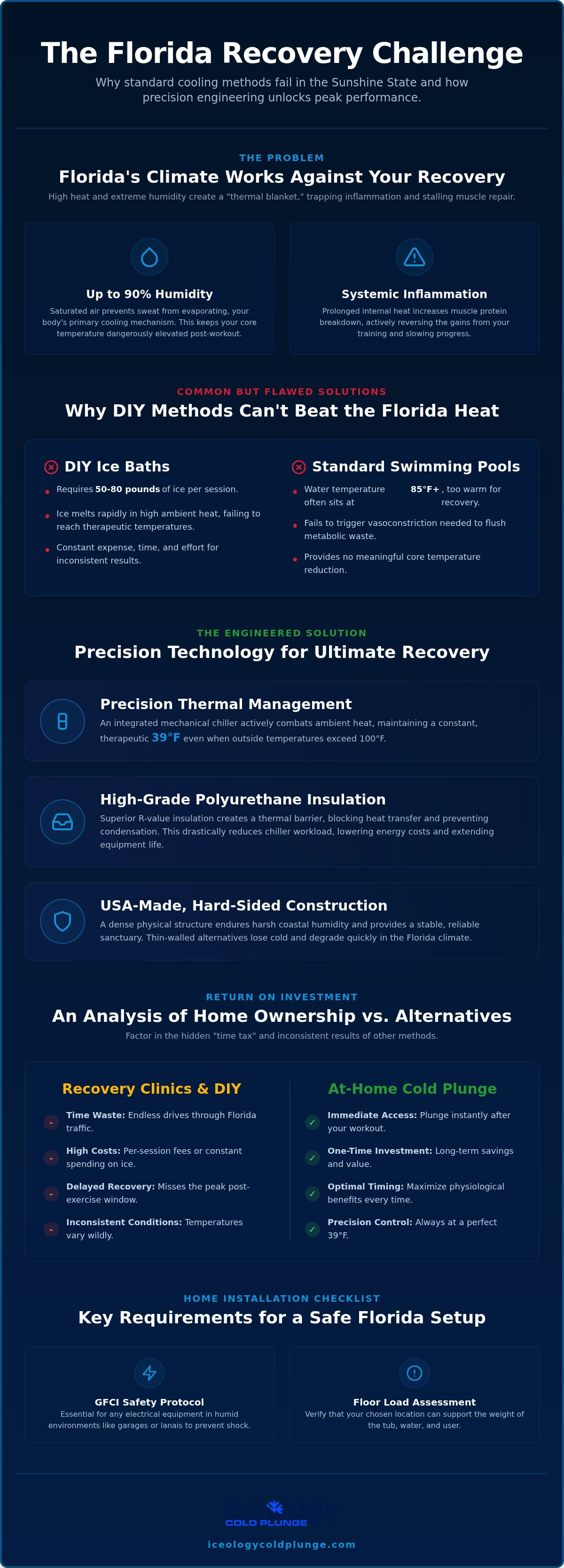
Humidity is the primary culprit behind stalled recovery. When humidity levels reach 90%, the air is nearly saturated with moisture. This prevents your sweat from evaporating, which is the body's natural mechanism for shedding heat. Without this evaporation, your core temperature remains elevated. This prolonged heat triggers a cascade of systemic inflammation. Research indicates that maintaining a high core temperature post-exercise correlates with increased muscle protein breakdown. It's a simple biological fact: rapid thermal reduction is a metabolic necessity for anyone training in the Florida sun. Using a cold plunge for Florida heat recovery provides the immediate shift your nervous system needs to flip the switch from "stress" to "repair."
The Failure of Passive Cooling in Subtropical Climates
Many residents try to find relief in a standard swimming pool or an uninsulated tub. These passive solutions simply don't work in Florida. A pool sitting at 85 degrees won't trigger the vasoconstriction required to flush metabolic waste from your tissues. Then there's the logistical nightmare of the traditional ice bath. In cities like Miami or Tampa, you'd need between 50 and 80 pounds of ice just to bring a standard tub down to a therapeutic 50-degree range. By the time you've fought through traffic to buy the bags and hauled them to your patio, a significant portion has already melted. It's an expensive, time-consuming, and ultimately ineffective cycle.
The "recovery window" is short. If you wait two hours for your body to cool down naturally or for a pile of ice to do its job, you've already lost the peak period for muscle repair. This is why a cold plunge for Florida heat recovery requires more than just water and ice; it requires active, mechanical chilling. You need a system that bypasses the ambient 100-degree heat index to deliver consistent, precision-controlled cold. Transitioning to mechanical thermal management ensures that your recovery is dictated by your schedule, not by the local weather forecast.
Precision Thermal Management: Keeping Water at 39°F in 100°F Weather
Florida's 100-degree days are a brutal stress test for any cooling system. Most equipment designed for temperate climates fails when the heat index climbs into the triple digits. Achieving a consistent 39°F environment requires more than just a powerful motor; it demands a synergy between mechanical power and structural integrity. For those seeking a reliable cold plunge for Florida heat recovery, the engineering must account for constant thermal gain from the surrounding humid air. Without precision management, you're simply fighting a losing battle against the sun.
The Science of Polyurethane Foam Insulation
Insulation is the silent partner in effective thermal management. We prioritize high-grade polyurethane foam because of its superior R-value, which measures a material's resistance to heat flow. In the subtropics, uninsulated tubs act like heat sinks, absorbing warmth from the pavement and air, which forces chillers to run indefinitely. This closed-cell foam doesn't just block heat; it creates a vital vapor barrier that prevents condensation and structural rot in our dense coastal air. By significantly reducing the chiller's workload, this insulation lowers your monthly energy bill and extends the lifespan of the hardware.
Thermal conductivity also plays a massive role in maintaining your recovery sanctuary. Hard-sided construction offers a dense physical barrier that thin-walled alternatives simply cannot match. While some setups lose their "cold" through the sides of the tub, a solid, USA-made structure ensures that once the water reaches its target, it stays there. This stability is crucial for anyone exploring the scientific benefits of cold plunge, as precise temperature control is what drives the specific physiological responses needed for elite performance.
Integrated Chillers vs. External Cooling Units
Space is often at a premium in Florida homes, whether you're setting up in a crowded garage or on a screened-in lanai. Integrated chillers offer a streamlined, all-in-one solution that eliminates messy external hoses and separate components. These units are specifically engineered to maintain 39°F even when ambient garage temperatures hit triple digits. By housing the cooling mechanism within the insulated structure, the system remains protected from coastal salt air and intense humidity that can corrode exposed parts.
Coastal environments also present unique challenges for water maintenance. High humidity can lead to faster microbial growth if the water isn't properly filtered and chilled. Maintaining a consistent 39°F environment naturally inhibits some of this growth, but a robust, integrated filtration system is still vital for clarity and safety. If you're ready to stop fighting the heat and start optimizing your performance, investing in a premium cold plunge tub ensures your recovery sanctuary is always ready when you are.
Home Ownership vs. Florida Recovery Clinics: An ROI Analysis
Choosing between a local recovery clinic and a home installation involves more than just comparing price tags. In Florida, the most significant hidden expense is often the "time tax" associated with our infrastructure. Fighting through I-95 or I-4 traffic for a 15-minute session is a logistical hurdle that frequently leads to skipped sessions. It's counterproductive to spend 45 minutes in a high-stress driving environment immediately after a workout. When you own a cold plunge for Florida heat recovery, you eliminate the friction between your training and your healing. You move directly from the oppressive humidity of the training ground to the precision cold of your private tub, ensuring your nervous system shifts into a parasympathetic state immediately.
The Hidden Costs of Recovery Center Memberships
A typical high-end wellness membership in Miami or Tampa can easily reach $200 per month. Over a single year, that totals $2,400; this is nearly the entire investment required for a premium, USA-made cold plunge for Florida heat recovery. While a membership is a recurring expense that provides no equity, a hard-sided tub is a long-term asset built for durability. Beyond the math, there's the issue of scheduling friction. Clinics operate on their timeline, not yours. A home setup provides unlimited access, allowing for multiple sessions on high-volume training days without extra fees. You also gain total control over water chemistry and hygiene. You don't have to wonder about the maintenance standards of a public facility when you are the one managing the sanctuary.
Maximizing Your Recovery Window
The physiological advantage of immediate immersion is well-documented. Plunging within 30 minutes of completing an outdoor workout in the Florida humidity is considered the gold standard for thermal regulation. This immediate cooling halts the inflammatory cascade before it peaks. If you have to drive 30 minutes to a facility, you've already missed the most critical window for muscle repair. Your body has already begun the process of dealing with heat-induced stress on its own, often less efficiently. Having a station at home also makes contrast therapy effortless. You can move between a sauna and your cold tub in seconds to maximize blood flow and metabolic clearing. For a deeper look at these techniques, consult our Cold Water Immersion Therapy Guide to refine your daily protocol.
Setting Up Your Florida Cold Plunge: Garage, Lanai, or Indoors?
Installing a cold plunge for Florida heat recovery requires a tactical approach to your home's layout. You aren't just placing a tub; you're integrating a high-performance thermal management system into a subtropical environment. The first step involves assessing your floor's load-bearing capacity. A standard tub filled with 100 gallons of water can weigh over 1,000 pounds once you factor in the weight of the unit and the user. Reinforced concrete, typical of Florida home slabs, is the ideal foundation. If you're considering a second-story installation or a wooden deck, a structural consultation is a mandatory safety step.
Electrical requirements are equally critical in our humid climate. Your system must be connected to a dedicated GFCI (Ground Fault Circuit Interrupter) outlet to prevent electrical hazards in high-moisture areas. Beyond safety, you must consider the thermodynamics of the chiller. These units work by expelling heat from the water into the surrounding air. If the chiller is tucked into a tight corner without proper airflow, it will struggle to maintain that 39°F sanctuary. Finally, protecting your investment from coastal salt air and relentless UV exposure is the only way to ensure long-term durability. USA-made, hard-sided construction provides the necessary resilience against these environmental stressors.
The Florida Garage Installation Guide
Florida garages are notoriously hot, often reaching temperatures well above 100 degrees in the summer months. To manage the heat exhaust from your chiller, position the unit with at least 12 to 18 inches of clearance on all sides. Placing the tub near a garage door or an exterior wall with a vent helps the system breathe, which significantly reduces energy consumption. Moisture management is another factor; condensation can accumulate on the floor during high-humidity days. Ensuring your garage has a slight pitch toward a floor drain or using a moisture-resistant mat will keep your recovery station clean and safe. For a deep dive into technical specifications, consult our Cold Plunge Tub Setup Guide.
Outdoor Placement: Lanai and Patio Considerations
Placing your tub on a screened-in lanai or patio offers the benefit of fresh air, but it introduces the challenge of direct sunlight. Intense UV rays can degrade inferior materials over time, making hard-sided, UV-resistant tubs essential for outdoor Florida life. These solid structures also offer a practical defense against local pests and lizards that might find their way into softer, less durable setups. During Florida's hurricane season, the weight of a filled tub actually serves as an advantage, providing a stable anchor against high winds. However, always ensure the electrical components are elevated or protected from potential localized flooding. If you're ready to transform your outdoor space into a professional-grade recovery zone, explore our lineup of premium cold plunge tubs today.
Why Iceology is the Gold Standard for Florida Heat Recovery
Building a recovery station that survives the Florida sun requires more than basic assembly. It demands a commitment to materials that don't warp under UV pressure or corrode in salt air. Iceology represents the pinnacle of this approach. By focusing on hard-sided construction and American craftsmanship, we provide a tool that matches the intensity of your training. Our 39°F guarantee isn't just a marketing claim; it's a technical promise. Even when the Miami humidity is at its peak, our systems maintain the precise temperature needed for effective vasoconstriction and metabolic clearing. This reliability makes us the premier choice for a cold plunge for Florida heat recovery.
Aesthetics matter in Florida's outdoor living spaces. Your recovery station should enhance your home's value and visual appeal, not detract from it. Our tubs feature premium finishes that look at home on a luxury lanai or in a high-end home gym. Beyond looks, the benefit of local, USA-based support cannot be overstated. If you ever need maintenance or parts, you aren't waiting on international shipping. You're working with a team that understands the specific environmental demands of the Sunshine State. It's a partnership that ensures your sanctuary remains operational year-round.
The Engineering Behind the Cold
The secret to our performance lies in our high-density polyurethane foam insulation. This material provides an exceptional thermal barrier that prevents the Florida heat from penetrating the water column. While cheap imported units often rely on thin walls that bleed cold, our integrated chillers work in tandem with our insulation to maximize energy efficiency. This high-level engineering ensures your water is always ready at the exact temperature you require. For a deeper look at why domestic production is vital for quality, explore our USA Made Cold Plunge Guide.
Taking the Next Step in Your Recovery Journey
Investing in your physical and mental resilience is a transformative decision. By bringing professional-grade thermal management into your home, you gain a significant edge in your performance and longevity. You no longer have to compromise your recovery because of the weather or a busy schedule. Our team of experts is ready to help you navigate the specifics of your cold plunge for Florida heat recovery setup. We invite you to consult with an Iceology specialist to determine the best configuration for your space and goals. It's time to stop fighting the heat and start mastering your environment through disciplined practice and superior craftsmanship.
Master Your Environment and Elevate Your Performance
Florida's climate is a unique adversary for any dedicated athlete. You've seen how standard recovery methods often fall short when the heat index reaches triple digits. Relying on passive cooling or the logistical nightmare of buying ice won't provide the physiological results you need for elite repair. Precision thermal management is the only way to bypass the humidity and lock in a consistent 39°F environment. By choosing a cold plunge for Florida heat recovery, you reclaim the critical post-workout window and eliminate the time tax of traveling to local clinics.
Our units are meticulously crafted in the USA, featuring high-density polyurethane insulation and a powerful integrated chiller system. This combination ensures your recovery sanctuary remains cold, efficient, and durable, even when faced with coastal salt air and intense UV exposure. It's time to stop letting the heat dictate your progress and start investing in a station that works as hard as you do.
Upgrade your recovery with a premium Iceology Cold Plunge Tub today and experience the transformative power of elite craftsmanship. You have the discipline to train; now give yourself the tools to thrive.
Frequently Asked Questions
Is it expensive to run a cold plunge chiller in the Florida heat?
Operating a chiller is surprisingly efficient when the tub features proper insulation. High-density polyurethane foam acts as a thermal barrier, which prevents the surrounding heat from warming the water. This means the motor only runs occasionally to maintain the set temperature rather than fighting a constant thermal leak. While energy costs vary by local utility rates, the precision engineering of our systems ensures that your cold plunge for Florida heat recovery remains a sustainable part of your daily routine.
Can I keep my cold plunge tub outside on my lanai in Miami?
You can absolutely place your tub on a screened-in lanai or patio. Miami residents should prioritize hard-sided construction to withstand the intense UV exposure and salty coastal air that can degrade softer materials. We recommend using a high-quality cover to maintain thermal efficiency and protect the interior from debris. This placement allows you to enjoy the fresh air while your integrated chiller maintains a consistent 39-degree sanctuary despite the subtropical humidity.
How long does it take for an Iceology tub to reach 39 degrees in 90-degree weather?
The time required depends on the initial water temperature, but our integrated chillers are engineered for rapid cooling. In 90-degree weather, the system works efficiently to drop the temperature several degrees per hour. Once the water reaches 39 degrees, the high-density insulation locks that temperature in. This stability is a key feature of a cold plunge for Florida heat recovery, ensuring your tub is ready for your post-workout immersion without the need for manual ice.
Do I need a special electrical outlet for my cold plunge in Florida?
Safety is paramount in humid environments, so a dedicated GFCI (Ground Fault Circuit Interrupter) outlet is a requirement. Most of our standard units operate on a typical 110V circuit, but it shouldn't share power with other high-draw appliances like a garage freezer. This dedicated connection prevents circuit overloads and ensures the chiller has a consistent power supply. Always consult with a licensed electrician to verify that your home's wiring meets local Florida building codes.
How does the humidity in Florida affect the cold plunge water chemistry?
Florida's high humidity and ambient warmth can accelerate the growth of bacteria and algae if water is left stagnant. Maintaining a consistent temperature of 39 degrees naturally inhibits many of these microbes. However, you still need a robust filtration system and a regular sanitation schedule using ozone or approved minerals. Keeping the lid sealed when not in use prevents moisture from the air from introducing contaminants into your clean, therapeutic water environment.
What happens to the cold plunge tub during a Florida hurricane?
During a hurricane, the weight of a water-filled tub provides significant stability against high winds. A full 100-gallon tub can weigh over 1,000 pounds, making it much harder to displace than lighter equipment. We recommend unplugging the chiller and securing the lid with heavy-duty straps before the storm arrives. If your area is prone to storm surge or localized flooding, ensure the electrical components are elevated or moved to a higher location to prevent water damage.
Is a hard-sided tub better than an inflatable one for Florida garages?
Hard-sided tubs are significantly better for Florida garages because they offer superior thermal resistance and durability. Inflatables lack the dense polyurethane foam insulation required to block the heat radiating from a concrete garage floor or sun-baked walls. Additionally, solid construction is resistant to local pests and the accidental punctures that can occur in a high-traffic garage space. Investing in a permanent, hard-sided station ensures your recovery tool lasts for years rather than a single season.
How often do I need to change the water in my Florida cold plunge?
With a high-quality integrated filtration system and proper sanitation, you only need to change the water every three to six months. The constant circulation and extreme cold help keep the water crisp and clear. We recommend rinsing off before each plunge to remove sweat and oils, which extends the life of your filter. Regularly checking your water chemistry ensures your Florida cold plunge remains a safe and inviting sanctuary for your daily recovery practice.