
Cold Plunge for Mental Performance: How Cold Exposure Sharpens Cognitive Edge
What if the most effective tool for clearing brain fog isn't a third cup of espresso, but a calculated descent into forty-degree water? You've likely felt the weight of decision fatigue by mid-afternoon, where even simple tasks feel like a mountain. High-stakes work demands a level of cognitive endurance that's difficult to maintain when stress levels are high and focus is fragmented. It's a common struggle for those pushing the limits of their professional and personal potential.
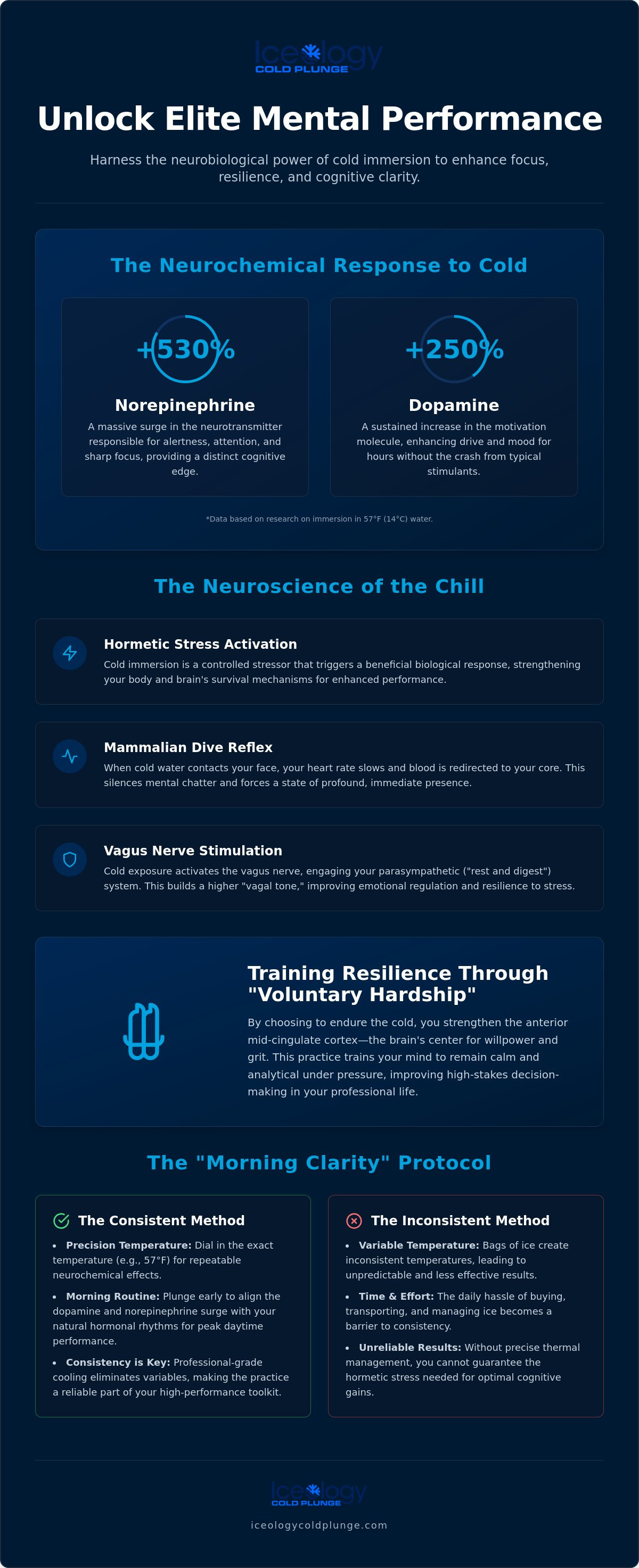
Understanding the link between a cold plunge and mental performance is about more than just "toughing it out." It's about precision neurobiology. Research has shown that immersion in 57°F water can trigger a 530% increase in norepinephrine and a 250% increase in dopamine. These aren't just numbers; they represent a fundamental shift in your brain's ability to process information and regulate mood. In this article, you'll discover the neurological mechanisms behind cold water immersion and learn how to leverage the "chill" for elite focus, resilience, and sharper decision-making. We'll outline a repeatable routine that transforms a simple recovery practice into a sophisticated tool for total cognitive readiness.
Key Takeaways
- Learn how cold water immersion acts as a powerful hormetic stressor, activating the Mammalian Dive Reflex to induce immediate mental presence and physiological calm.
- Discover how a cold plunge for mental performance triggers a sustained 250% dopamine spike, offering elite focus and motivation without the crash associated with traditional stimulants.
- Understand the concept of "voluntary hardship" and how it strengthens the brain's anterior mid-cingulate cortex to improve resilience and decision-making under pressure.
- Implement the "Morning Clarity" protocol by prioritizing temperature consistency and early sessions to align your cognitive readiness with natural hormonal rhythms.
- Recognize why precision thermal management is essential for a repeatable routine, replacing the inconsistency of manual ice with professional-grade cooling technology.
The Neuroscience of the Chill: How Cold Exposure Rewires the Brain
Cold Water Immersion (CWI) isn't just about physical recovery; it's a deliberate application of a hormetic stressor. Hormesis is a beneficial biological response to low-dose stressors. By exposing the body to controlled cold, you trigger ancient survival mechanisms that optimize brain function. One of the most powerful is the Mammalian Dive Reflex. When cold water hits your face, your heart rate drops and blood is redirected to your core. This induces a state of "forced presence," where the brain's internal chatter is silenced by the immediate demands of the environment. Cryotherapy, sometimes known as cold therapy, encompasses these practices that challenge our physiology to enhance our mental resilience. This process activates the vagus nerve, which serves as a direct line to your parasympathetic nervous system, helping you transition from a state of high-alert to one of focused calm.
The Immediate Neurochemical Surge
When you submerge, your brain experiences a chemical explosion. Norepinephrine, a neurotransmitter responsible for alertness, focus, and attention, skyrockets. Research indicates that immersion in 57°F water can result in a 530% increase in norepinephrine levels. This surge provides the "cognitive edge" often associated with a cold plunge for mental performance. Alongside this, a massive release of endorphins creates a natural high that lasts long after you leave the water. It's helpful to view the experience in two distinct stages. First is the "shock phase," where the initial gasp reflex triggers your sympathetic nervous system. This is followed by the "calm phase," where the body adapts and the mind enters a state of profound, quiet clarity.
The Vagus Nerve Connection
The vagus nerve is the primary component of your parasympathetic nervous system. It's responsible for the "rest and digest" state that balances out our daily stress. Stimulating this nerve through cold water exposure on the face and neck helps reset your stress response. Vagal tone refers to how well your vagus nerve functions. High vagal tone is a recognized marker for elite mental performance and superior emotional regulation. It allows you to stay calm under pressure and recover quickly from high-stress scenarios. By training the vagus nerve through consistent cold exposure, you're essentially rewiring your brain to handle the complexities of high-stakes work with greater ease. This discipline builds a foundation for long-term cognitive endurance.
From Stress to Focus: Neurotransmitters and Cognitive Gains
The shift from shivering to sharp thinking isn't accidental. It's the result of a profound neurochemical reorganization. While the initial cold shock gets your attention, the lasting benefit of a cold plunge for mental performance lies in the sustained elevation of dopamine. Research has documented that immersion in cold water can raise dopamine levels by 250%. Unlike the fleeting spike and subsequent crash from caffeine or refined sugar, this neurochemical rise is gradual and remains elevated for several hours. This creates a stable baseline of motivation, providing the mental stamina required for complex problem-solving and sustained focus throughout the workday.
This chemical shift has a significant impact on alertness, sleep, and cognitive function. It essentially primes the Prefrontal Cortex, the brain's executive center, to take command. When you're in the water, your brain's "CEO" must override the primitive urge to escape. This exercise in top-down control strengthens your ability to remain analytical and composed when facing high-pressure deadlines or difficult negotiations. You aren't just enduring the cold; you're training your brain to maintain executive function while under acute physiological stress.
Dopamine and the Motivation Loop
Cold exposure doesn't just give you a temporary boost. It rewires your relationship with effort. By providing a steady-state dopamine baseline, the practice helps eliminate the "procrastination fog" that often sets in during the afternoon. You'll find that your "get-it-done" energy is more accessible and reliable. This isn't just about raw productivity; it's about the creative capacity to see through obstacles. When dopamine levels are optimized, your brain is more adept at forming new connections, which is essential for innovative thinking and creative problem-solving.
Cortisol Management for Executive Function
Chronic stress is the enemy of clear thinking. It floods the system with cortisol, leading to brain fog and decision fatigue. A strategic cold plunge acts as a biological reset button. It helps "flush" excess cortisol and balances the adrenal system, clearing the mental clutter that hampers executive function. For professionals in high-stakes environments, this isn't a luxury. It's a performance tool. Integrating a dedicated cold water immersion routine ensures that this reset is available whenever your cognitive resources start to dwindle. By lowering the physiological markers of stress, you reclaim the mental bandwidth needed for high-level decision-making and strategic planning.
Building "Voluntary Hardship": Mental Resilience and Discipline
The true power of a cold plunge for mental performance isn't just found in the neurochemical shift; it's forged in the seconds before you step into the water. This moment of hesitation is known as limbic friction. It's the internal conflict between your brain's primitive desire for safety and your higher-level executive function. When you choose to enter the water despite the body's "quit" signal, you're exercising top-down control. This deliberate choice to face discomfort creates a neurological blueprint for handling adversity with precision. By consistently engaging in this "voluntary hardship," you strengthen the anterior mid-cingulate cortex (aMCC). This specific brain region is widely considered the seat of willpower and the "will to live," and it physically grows when we perform tasks we find challenging but necessary.
This structural change in the brain serves as a foundation for broader life applications. The discipline required to stay calm in 39°F water is the same discipline needed to remain composed during a high-stakes negotiation or a difficult interpersonal conflict. You aren't just chilling your body; you're building a "resilience reservoir." This practice is a cornerstone of the scientific benefits of cold plunge, transforming a physical recovery tool into a psychological training ground. Over time, the stressors that once felt overwhelming begin to feel manageable because you've already conquered the most difficult part of your day before breakfast.
Strengthening the Willpower Muscle
Doing something difficult first thing in the morning sets a powerful psychological tone. It eliminates the "negotiation" phase of your day, where you might otherwise talk yourself out of hard work. Overcoming the initial gasp reflex is an exercise in emotional stoicism. You learn to observe the body's panic without reacting to it. This transition from the shock of entry to the stillness of the plunge is a gateway to the "Flow State." In this state, the mind is fully immersed in the present moment, a skill that translates directly to deep work and high-level productivity.
Transferable Resilience
Plunging makes everyday stressors feel smaller by comparison. When you've mastered your response to extreme cold, a missed deadline or a technical glitch loses its power to derail your focus. For those operating in high-pressure Florida business environments, this mental armor is invaluable. It's common to exit the tub feeling a profound sense of "mental clarity" and quiet confidence. This isn't just a temporary mood boost; it's the result of your adrenal system being reset and your mind being sharpened. You return to your desk not just refreshed, but ready to lead with intentionality and grit.
The Performance Protocol: How to Plunge for Maximum Clarity
Achieving a consistent cold plunge mental performance edge requires more than just a quick dip in cold water; it demands a strategic framework. While many people focus on how long they can stay submerged, the neurological benefits are actually driven by temperature precision and frequency. For cognitive optimization, the goal isn't endurance. It's about triggering a specific physiological response that resets your mental state. If you're just starting out, A Beginner’s Guide to Cold Plunging can help you establish the basics of safety and setup before you dive into high-performance protocols.
The "Morning Clarity" protocol is the gold standard for high achievers. By plunging early in the day, you align the cold shock with your body's natural cortisol spike. This synchronization enhances alertness and sets a high baseline for focus that lasts well into the afternoon. Conversely, you should avoid deep cold exposure late in the evening. The drop in core body temperature required for sleep can be disrupted by the metabolic heat production that follows a plunge. For those days when the afternoon "wall" feels insurmountable, the "Sober Second Thought" method provides a mid-day reset. A brief, two-minute session can flush out decision fatigue and provide the cognitive "second wind" needed to finish high-stakes projects with precision.
Temperature and Timing
The "sweet spot" for neurological activation typically falls between 39°F and 50°F. While 50°F is sufficient to trigger the neurotransmitter release discussed earlier, lower temperatures like 39°F provide a more intense challenge to your executive function. Consistency is your most powerful tool. Research suggests aiming for a total of 11 minutes of cold exposure per week, distributed across two to four sessions. This "11-minute rule" is the baseline for maintaining the structural brain changes and resilience levels necessary for elite performance. To maintain this level of precision without the hassle of manual ice, consider investing in professional-grade cold tubs designed for consistent thermal management.
Breathwork and Mindset During the Plunge
Your mental state in the water determines the quality of your results. Use box breathing—inhaling, holding, exhaling, and holding for four seconds each—to regain control over the initial gasp reflex. This practice teaches your brain to remain calm while the body is in a state of high arousal. Once you're settled, you'll notice a "thermal layer" of slightly warmer water forming around your skin. You can remain still to find a meditative "flow state," or move your limbs to break that layer and increase the thermal challenge. To further test your cognitive focus, try performing mental math or visualizing your most complex task of the day while submerged. This trains your prefrontal cortex to operate efficiently even under extreme physiological pressure.
Iceology: Precision Cooling for Consistent Cognitive Results
The foundation of a successful cold plunge for mental performance is consistency. Manual ice baths are the primary enemy of this habit. Hauling heavy bags of ice and dealing with fluctuating temperatures creates significant friction, often leading to skipped sessions. When your goal is to rewire your brain for elite focus, you need a predictable environment. Iceology eliminates these variables with precision thermal management. By using a Cold Plunge Tub with Chiller, you can set your desired temperature to exactly 39°F and trust that it will be ready the moment your brain needs a reset. This reliability transforms the practice from a chore into a seamless part of your executive routine.
Florida's climate presents unique challenges for maintaining these low temperatures. In cities like Miami, Tampa, and Orlando, high ambient heat can quickly degrade water quality and temperature in poorly insulated systems. Our American-made, hard-sided tubs are engineered specifically to combat these environmental factors. We utilize high-density polyurethane foam insulation to ensure that the water remains at your target temperature without overworking the chiller. This level of precision is what separates a professional tool from a temporary hobby. It ensures that your cognitive edge isn't dependent on how much ice you have in the freezer.
Craftsmanship for the High-Performer
The "Iceology Advantage" is built on the philosophy that your recovery tools should match the quality of your work. While inflatable options might seem convenient, they often lack the durability and thermal efficiency required for a long-term routine. Our hard-sided tubs provide a premium experience that integrates perfectly into high-end homes and professional spaces. The structural integrity of these units ensures longevity, while the integrated filtration and ozone sanitation systems keep the water crystal clear. You get a repeatable, mess-free experience that prioritizes your cognitive results over maintenance tasks. It's a "set it and forget it" solution for the busy professional.
Bringing the Chill Home to Florida
We understand the specific needs of Florida residents, which is why we offer dedicated local support and expert setup across the state. Whether you're located in Naples, West Palm Beach, or Fort Lauderdale, our team ensures your cold plunge station is optimized for your specific space. An outdoor cold plunge becomes more than just equipment; it becomes a cornerstone of your daily wellness architecture. It provides a sanctuary where you can escape the humidity and reset your internal state for peak productivity. View our premium cold plunge tubs and start your performance journey today to reclaim your cognitive edge and master your mental state.
Elevate Your Cognitive Edge with Precision Recovery
You've explored how a strategic cold plunge for mental performance is far more than a test of physical endurance. It's a sophisticated neurobiological hack that rewires your stress response and floods your system with sustained dopamine. By strengthening the brain's executive centers through voluntary hardship, you build a level of focus and resilience that transfers directly to your most demanding professional challenges. This discipline isn't just about feeling better; it's about training your mind to operate with elite clarity when the stakes are highest.
Achieving these consistent results requires equipment that matches your dedication. Iceology offers premium, hard-sided cold tubs that are Made in the USA and engineered to chill down to a precise 39°F. Our advanced insulation is specifically designed to withstand the Florida heat, while our local delivery and support ensure your routine remains uninterrupted. It's time to stop managing bags of ice and start mastering your mental state with professional-grade technology.
Upgrade Your Mental Game with an Iceology Cold Plunge
Take control of your cognitive readiness and discover the transformative power of a disciplined recovery practice. Your path to peak performance starts with the first plunge.
Frequently Asked Questions
Is cold plunging better than coffee for mental focus?
Cold plunging offers a more sustained cognitive lift than caffeine because it doesn't lead to a typical energy crash. While coffee provides a temporary block of adenosine, cold exposure triggers a massive 250% dopamine increase that stays elevated for several hours. This creates a steady state of alertness rather than the jittery peak and valley associated with stimulants. It's a cleaner way to optimize your cold plunge mental performance throughout a demanding workday.
How long do I need to stay in the cold plunge to see mental benefits?
You only need 2 to 5 minutes per session to capture the primary neurological benefits. The initial shock triggers the immediate neurotransmitter release, but staying until your breathing stabilizes ensures the parasympathetic nervous system takes over. Research suggests that a total of 11 minutes of cold exposure per week, spread across two to four sessions, is sufficient to maintain these cognitive gains and build long term mental resilience.
What is the best temperature for cognitive enhancement?
The optimal temperature for cognitive enhancement generally falls between 50°F and 59°F. While professional grade tubs can reach 39°F for those seeking maximum intensity, the scientific consensus highlights this mid-range as highly effective for neurotransmitter production. It's cold enough to trigger the survival response without causing unnecessary physiological strain, making it a sustainable and repeatable choice for a daily mental performance routine.
Can cold plunging help with ADHD or brain fog?
Cold immersion is highly effective for clearing brain fog because it targets the specific neurochemicals responsible for alertness and focus. By increasing norepinephrine by over 500%, the plunge acts as a natural stimulant for the prefrontal cortex. This surge helps mitigate the symptoms of ADHD and decision fatigue, providing a sharp, clear mental environment that makes navigating high-stakes work feel significantly more manageable and less overwhelming.
Should I cold plunge before or after a deep work session?
Plunging before a deep work session is the most effective strategy for maximizing professional productivity. By entering the water prior to starting a complex task, you prime your brain's executive center and silence internal distractions. This pre-loading of dopamine and norepinephrine ensures that you start your work in a state of high alertness and quiet determination, allowing you to enter a productive flow state more quickly.
Is it safe to cold plunge every day for mental performance?
Daily plunging is safe for most healthy individuals and can be a powerful tool for maintaining a consistent cognitive edge. However, you don't need to plunge every day to see results; the 11-minute weekly total is the proven baseline for success. Always follow the 1-10-1 rule for safety and avoid plunging within four hours after resistance training to ensure you don't blunt the inflammatory signals necessary for muscle growth.
How does cold plunging improve sleep quality and next-day performance?
Cold water immersion improves sleep by regulating the autonomic nervous system and increasing vagal tone. A 2025 meta-analysis found that these sessions significantly reduce perceived stress levels, which is a primary barrier to restorative rest. By calming the nervous system and lowering core body temperature, you achieve higher quality sleep. This directly translates into better decision-making and sustained mental clarity when you return to your desk the following morning.