
Cold Plunge Tub for Fort Lauderdale Condo Balcony: 2026
Your Fort Lauderdale balcony is more than just a viewpoint; it's a structural puzzle where every gallon of water and every gust of salt air carries significant weight. You want the ultimate recovery tool, but the fear of structural failure or a stern letter from your HOA often keeps the dream of a private sanctuary out of reach. It's a common hesitation for high-rise residents who value peak performance but refuse to compromise on safety or aesthetics.
This guide changes that narrative. You'll discover how to safely install a premium cold plunge tub for condo balcony Fort Lauderdale setups while staying well within the 40 pounds per square foot live load requirements of the 2026 Florida Building Code. We'll explore salt-air resistant engineering that thrives in our coastal humidity and whisper-quiet chillers that satisfy even the strictest condo boards. By the end, you'll have a clear roadmap to building a permanent, low-maintenance recovery station that fits the luxury lifestyle you've earned. We'll cover structural load calculations, electrical safety protocols, and the specific material choices that ensure your investment lasts for years in the Florida sun.
Key Takeaways
- Learn how to align your recovery station with the 2026 Florida Building Code to ensure structural safety and load-bearing compliance on high-rise balconies.
- Understand why hard-sided, USA-made construction is the only reliable defense against the salt air and extreme humidity of the South Florida coast.
- Discover the step-by-step process for navigating HOA regulations and securing a cold plunge tub for condo balcony Fort Lauderdale that meets strict noise and visual requirements.
- Identify the logistical advantages of integrated chillers that reach 39°F, removing the need to transport heavy bags of ice through condo elevators and common areas.
- Gain clarity on the specific electrical requirements, including GFCI protection and dedicated circuits, necessary to safely operate a permanent recovery station outdoors.
The Fort Lauderdale Condo Challenge: Why Balcony Placement Requires Precision
Creating a Balcony Recovery Sanctuary in urban South Florida is an exercise in engineering discipline. It's about transforming a standard outdoor space into a high-performance environment where physical restoration meets the horizon of the Atlantic. In the dense vertical landscape of Fort Lauderdale, this sanctuary isn't just a luxury; it's a necessary tool for those who demand peak mental and physical states. However, the transition from a traditional gym to a private balcony setup involves navigating a unique set of environmental and structural hurdles.
Fort Lauderdale's micro-climate is a notorious "plunge killer." The combination of 90% humidity and constant salt air creates an aggressive atmosphere that quickly degrades standard equipment. Choosing a cold plunge tub for condo balcony Fort Lauderdale installations requires more than just measuring the floor space. You must account for the three pillars of condo plunging: Weight, Weather, and Wellness. While a DIY ice bath might seem like a simple entry point, the logistical nightmare of hauling hundreds of pounds of ice up a high-rise elevator makes it unsustainable. A premium cold plunge tub provides the integrated chiller technology and structural integrity required for a permanent, high-rise installation.
Salt Air: The Silent Equipment Destroyer
Coastal salt air is a relentless corrosive agent. It penetrates non-marine grade components, causing rapid oxidation and mechanical failure in standard chillers. For a balcony setup, every component must be resilient. Integrated chillers need to be shielded from direct salt spray to maintain their 39°F cooling capacity. Furthermore, the 2026 Florida sun is unforgiving. Without UV-resistant exterior finishes, a tub's shell can become brittle and lose its aesthetic appeal within a single season. We prioritize hard-sided, USA-made construction because it offers the density needed to resist these atmospheric pressures while maintaining thermal efficiency.
Space Efficiency vs. Therapeutic Depth
Designing for narrow balconies requires a balance between a compact footprint and therapeutic depth. You don't want to sacrifice full-body immersion just because your outdoor area is limited. The "Vertical Plunge" trend has become the standard for 2026, as it maximizes water depth while minimizing the square footage required. This vertical orientation allows for a deep soak that targets the central nervous system effectively. It's also vital to ensure adequate airflow around the chiller unit. In confined balcony spaces, heat can become trapped, forcing the motor to work harder. Proper placement ensures the system breathes, preserving the longevity of your recovery station.
Calculating Structural Load and Electrical Safety for High-Rise Recovery
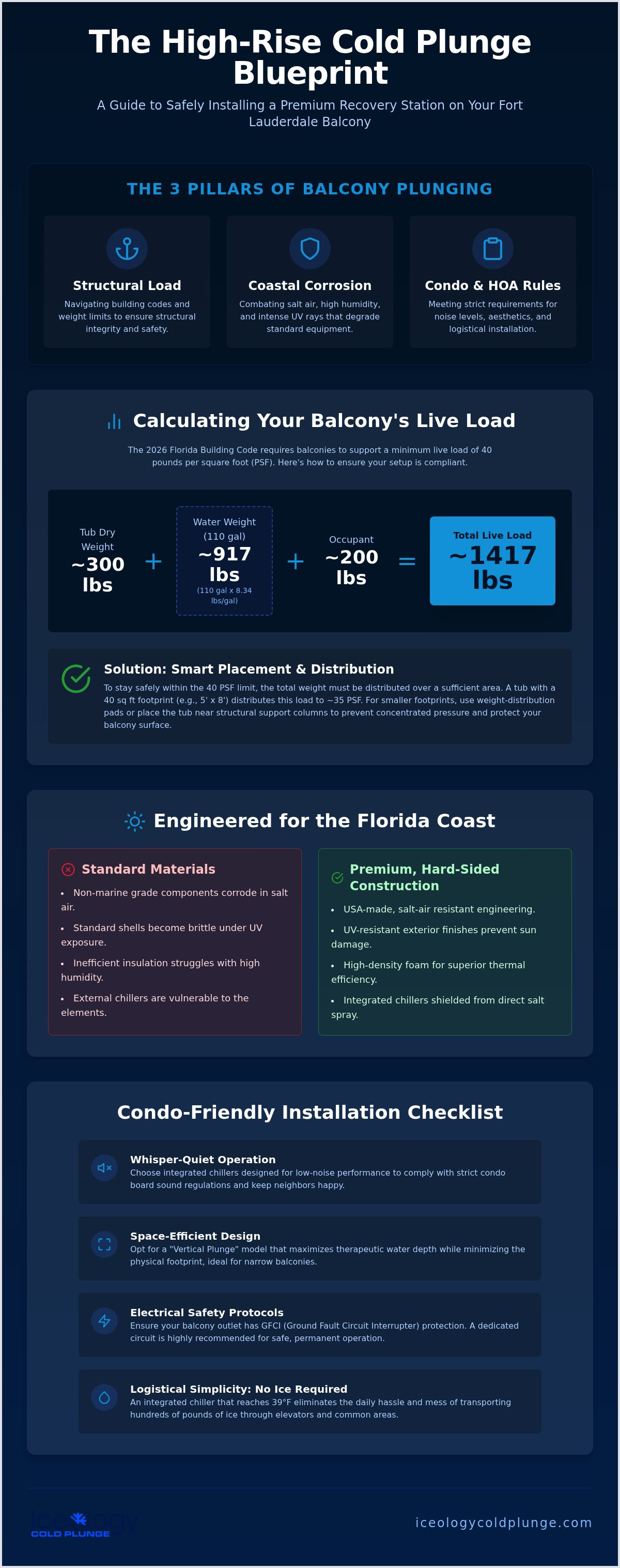
Engineering a private recovery station on a high-rise balcony requires a disciplined approach to physics. In Fort Lauderdale, where the 2026 Florida Building Code specifies a minimum live load of 40 pounds per square foot (psf) for balconies, every pound must be accounted for. The total weight of your setup is a sum of three variables: the tub’s dry weight, the weight of the water, and the weight of the occupant. With water weighing 8.34 pounds per gallon, a 110-gallon tub quickly approaches 900 pounds before you even step inside. For a cold plunge tub for condo balcony Fort Lauderdale installation, this means you are often operating near the structural threshold of the building.
Managing these logistics is simpler with a professional cold plunge tub setup designed for vertical living. High-density polyurethane foam insulation keeps the dry weight manageable while providing the structural rigidity needed to prevent bowing. To protect your balcony's aesthetic and structural integrity, we recommend using weight-distribution pads or a specialized structural platform. These tools spread the "dead load" across a larger surface area, preventing the concentrated pressure that can crack expensive porcelain tiles or stress the concrete slab. If you are looking for a system engineered for high-rise stability, prioritizing a hard-sided unit with a broad footprint is the most responsible choice.
Balcony Weight Distribution Guide
Hard-sided tubs offer a distinct advantage over other materials by providing a consistent, predictable footprint. Unlike some flexible alternatives that may bulge and shift their center of gravity, a rigid tub maintains its weight distribution. This prevents "point loading," a risky scenario where too much weight is concentrated on a single square inch of the balcony. To ensure safety, a standard 5x10 balcony should generally be limited to a tub with a maximum water capacity of 115 gallons to remain within the safe structural margins defined by most modern condo associations.
Electrical Access and GFCI Requirements
The 2026 Florida Building Code mandates that all outdoor outlets have Ground-Fault Circuit-Interrupter (GFCI) protection. This is a non-negotiable safety requirement for any wet environment. Older Fort Lauderdale condos often lack accessible outdoor power, which may require a licensed electrician to run a dedicated 110v line from your main panel. Our integrated chillers are designed to be energy-efficient, typically drawing about 7 amps. This low power draw allows them to operate on standard condo circuits without tripping breakers, provided the outlet is properly grounded and protected from the elements.
Hard-Sided Durability vs. Coastal Corrosion: Why Material Choice Matters
Selecting a cold plunge tub for condo balcony Fort Lauderdale requires a focus on material science. While national reviews often highlight portability, they neglect the corrosive reality of the Atlantic breeze. Hard-sided shells are the only viable choice for long-term high-rise use. Porous materials and soft-sided options act as magnets for salt and moisture, which eventually leads to mold colonization and structural weakening. A rigid, non-porous shell ensures that your recovery station remains a sterile environment, matching the high-end finishes of a luxury condo rather than looking like temporary equipment.
Beyond durability, the thermal performance of polyurethane foam insulation is what makes 2026 balcony plunging feasible. When the Florida sun pushes ambient temperatures toward 95 degrees, thin-walled tubs lose their chill almost instantly. High-density insulation creates a thermal barrier that locks in the cold. This allows the system to maintain its target temperature without constant mechanical strain, ensuring the water is ready for your recovery session at any hour of the day.
Thermal Management in the Sunshine State
Precision American craftsmanship is essential for managing South Florida's humidity. A chiller must be capable of holding water at a crisp 39°F even when the air is thick and hot. Cheap components often fail under these conditions, but a well-engineered system uses its insulation to stay efficient. This efficiency translates directly to your monthly expenses. Better insulation means the chiller runs less frequently, which keeps your condo electric bills manageable even during the peak of summer.
Noise Reduction for Neighbor Harmony
Living in a high-rise means your balcony is part of a shared acoustic environment. When installing a cold plunge tub for condo balcony Fort Lauderdale residents, noise complaints are a leading cause of HOA friction. Premium chillers operate at significantly lower decibel levels than budget fans, producing a low hum rather than a mechanical drone. To further ensure neighbor harmony, consider these techniques:
- Use vibration-dampening rubber mats under the tub to prevent sound from traveling through the concrete slab.
- Position the chiller unit away from shared walls to minimize acoustic bounce-back in high-rise corridors.
- Opt for integrated systems that house the motor within an insulated cabinet for maximum sound suppression.
By prioritizing a quiet, well-insulated unit, you protect your investment and your reputation within the building. These engineering choices allow you to focus entirely on the mental and physical results of your recovery practice without external distractions.
Navigating HOA Rules and Balcony Logistics: A Fort Lauderdale Resident’s Checklist
Installing a cold plunge tub for condo balcony Fort Lauderdale residents involves more than just selecting the right temperature; it requires a strategic approach to building management. Don't follow the common advice of "hiding" your equipment under a tarp. This path often leads to costly fines or forced removal. Instead, take a professional, transparent approach by reviewing your specific Condo Association (HOA) bylaws regarding "outdoor water features" or "portable spas." If the board expresses concern about structural integrity, securing a structural engineer’s letter is the most effective way to demonstrate that your setup complies with the 2026 Florida Building Code standards mentioned earlier.
Logistics extend to the moment of arrival. High-rise delivery is a specialized task. You must verify elevator dimensions and schedule freight access well in advance. Standard freight elevators in Fort Lauderdale high-rises often have a seven to eight foot height limit, which can be a tight fit for some units. Opting for "white glove" service ensures that your hard-sided tub is handled with the care required for tight corridors and expensive common area finishes.
The Drainage Dilemma
Managing water disposal is a critical responsibility in vertical living. Balcony floor drains are engineered for rainfall, not the rapid discharge of 100 gallons. Attempting to use them for emptying a tub can lead to flooding or stagnant water issues. In Fort Lauderdale, "over-the-side" water disposal is strictly prohibited and can result in legal liability for property damage to units below or municipal environmental fines. The safest solution is using a submersible pump to route water through a hose into an indoor drain, such as a shower or utility sink. This method provides total control over the drainage speed and prevents any impact on your neighbors or the building’s exterior.
HOA Aesthetic Compliance
Visual harmony is a priority for most boards. Choose tub colors like slate, sand, or white to blend seamlessly with your building’s architectural palette. Using a custom-fitted cover is essential; it keeps the balcony looking orderly and prevents condensation from becoming a "nuisance" issue. These covers also protect the unit from the intense Florida sun, ensuring the exterior remains pristine. High-quality chillers also address "nuisance" clauses by operating at whisper-quiet decibel levels that won't disturb residents in adjacent units. If you're ready to integrate a professional recovery station into your high-rise lifestyle, explore our premium cold plunge tubs designed for aesthetic and acoustic compliance.
The Iceology Cold Plunge Advantage: Premium Cold Plunge Tubs Engineered for Florida Condos
Selecting the right cold plunge tub for condo balcony Fort Lauderdale installations comes down to a single question: will the equipment survive the environment? Iceology Cold Plunge provides the definitive answer through engineering that prioritizes structural integrity and atmospheric resilience. While other units might struggle with the relentless humidity and salt air of South Florida, our hard-sided construction acts as a fortress for your recovery. We position these systems as the logical choice for the sophisticated resident who values a quality-first mindset. It's about more than just owning a tub; it's about investing in a professional recovery station that matches the precision of your own training regimen.
Maintaining a consistent 39°F environment is essential for unlocking the full spectrum of scientific cold plunge benefits, from metabolic optimization to enhanced mental clarity. In the heat of a Fort Lauderdale summer, achieving this temperature requires a chiller that doesn't just work, but thrives. Iceology Cold Plunge units are built in the USA, utilizing high-density polyurethane foam insulation to maintain thermal efficiency against the coastal heat. This local craftsmanship also means you have direct access to expert support when managing the specific maintenance needs of a coastal high-rise setup. You aren't just buying a product; you're gaining a partner in your wellness journey.
Why No-Ice Systems Win for High-Rise Living
For high-rise dwellers, the ice haul is the primary barrier to consistency. Lugging forty pounds of ice through a lobby and up an elevator isn't just inconvenient; it's a deterrent to daily practice. Integrated chillers eliminate this friction entirely. By providing 24/7 readiness, these systems ensure your water is at the perfect temperature the moment you wake up or return from a workout. When you calculate the long-term ROI, the energy-efficient integrated cooling far outweighs the recurring cost and logistical headache of daily ice purchases. It's a permanent solution for a disciplined lifestyle that respects both your time and your building's rules.
Next Steps for Your Balcony Setup
Transforming your balcony into a sanctuary starts with a few practical steps. First, measure your specific footprint to ensure it can accommodate the required dimensions, typically around 77 inches by 50 inches for a full setup. Once you have your measurements, consult with Iceology Cold Plunge experts to discuss the specific delivery logistics for your building. We've mastered the nuances of high-rise installs, from freight elevator timing to white-glove placement. You'll be joining a growing community of South Florida high-performers who refuse to let urban living limit their physical potential. Take control of your recovery today and experience the difference of a system built for the Florida lifestyle.
Elevate Your High-Rise Recovery Sanctuary
Your Fort Lauderdale balcony is the ultimate canvas for a high-performance lifestyle. We've explored how to navigate the structural requirements of the 2026 Florida Building Code and the necessity of marine-grade durability in our coastal environment. By choosing a system engineered for the specific demands of vertical living, you eliminate the logistical friction of ice hauls and the aesthetic concerns of condo boards. It's about creating a space where discipline meets the horizon without compromising on safety or building harmony.
A premium cold plunge tub for condo balcony Fort Lauderdale setup isn't just about the water; it's about the engineering that keeps it there safely and efficiently. Our systems feature high-density polyurethane insulation and integrated 39°F chillers designed to thrive in our local humidity. You've verified the load capacities and mapped out your drainage protocols. Now, it's time to transform your outdoor space into a professional-grade recovery station that matches your personal ambition. Take the final step toward a more resilient version of yourself today.
Shop Premium USA-Made Cold Plunge Tubs for Your Condo and start your journey toward peak performance today.
Frequently Asked Questions
Is a cold plunge tub too heavy for a standard condo balcony in Fort Lauderdale?
Most modern balconies in Fort Lauderdale are designed to support a minimum live load of 40 to 60 pounds per square foot (psf) under the 2026 Florida Building Code. A hard-sided tub filled with 90 gallons of water weighs approximately 900 pounds. When distributed across a 26-square-foot footprint, the load is roughly 34 psf. This generally fits within safety margins, though you should consult a structural engineer for specific high-rise balcony verifications.
Will the salt air in Fort Lauderdale damage my cold plunge chiller?
Coastal salt air is highly corrosive and will degrade non-marine grade components over time. To protect your cold plunge tub for condo balcony Fort Lauderdale setup, we use hard-sided construction and high-quality materials built in the USA. It's essential to keep the chiller unit shielded from direct salt spray and perform regular freshwater rinses on the exterior. These maintenance steps ensure the integrated system continues to reach 39°F without mechanical failure in our humid environment.
How do I drain my cold plunge tub on a condo balcony without a floor drain?
The most responsible method for draining a high-rise tub is using a submersible pump and a standard garden hose. You should route the water to an indoor drain, such as a shower or utility sink, rather than letting it flow onto the balcony floor. Balcony drains are designed for rainwater, not the rapid discharge of 100 gallons. Controlling the drainage indoors prevents over-the-side splashing that could lead to HOA fines or neighbor disputes.
Are cold plunge chillers loud enough to disturb my neighbors?
Premium integrated chillers are designed for quiet operation, producing a low hum similar to a modern refrigerator. Budget cooling systems often use loud fans that can cause friction in dense condo environments. To ensure neighbor harmony, place your tub on a vibration-dampening rubber mat. This prevents sound from traveling through the concrete slab. Strategic placement away from shared walls also helps minimize the acoustic bounce-back in narrow high-rise corridors that might otherwise amplify motor noise.
Do I need special HOA approval for a cold plunge tub on my balcony?
Yes, you should always review your Condo Association bylaws before installation. Most Fort Lauderdale HOAs have specific rules regarding outdoor water features or portable spas to manage weight and aesthetic consistency. Providing the board with a structural engineer’s letter or manufacturer specifications often simplifies the approval process. Professional, hard-sided tubs are generally viewed more favorably than temporary setups because they look like permanent, high-end furniture rather than cluttered equipment that detracts from building value.
How much electricity does a cold plunge tub use in the Florida heat?
Energy consumption is largely determined by the quality of the insulation. Tubs equipped with high-density polyurethane foam insulation are highly efficient, even in 90-degree Florida heat. While costs vary based on usage and utility rates, a well-insulated system typically adds between $15 and $60 to your monthly electric bill. Using a custom-fitted thermal cover when the tub isn't in use is the most effective way to keep these operational costs at the lower end of the spectrum.
Can I use an inflatable cold plunge on my balcony instead of a hard-sided one?
While inflatable options exist, they aren't recommended for the harsh UV levels and humidity found in South Florida. Inflatables lack the structural rigidity required for consistent weight distribution and often degrade quickly under the intense sun. We focus exclusively on hard-sided construction because it offers the longevity and premium aesthetic required for luxury condo living. Hard-sided shells also prevent the mold and mildew issues that commonly plague porous, flexible materials in our humid coastal climate.
What is the best temperature for cold plunging in a humid climate like Fort Lauderdale?
The gold standard for therapeutic cold water immersion is 39°F. This temperature is cold enough to trigger the desired metabolic and anti-inflammatory responses without being unsustainable for a daily practice. In a humid climate like Fort Lauderdale, maintaining this temperature requires a powerful chiller and excellent insulation. Achieving a consistent 39°F allows you to maximize the mental and physical benefits of your recovery sessions regardless of the intense outdoor heat or humidity levels found on your balcony.