
Cold Plunge Tub Placement Ideas for Backyard Sanctuaries in 2026
The most picturesque corner of your patio might actually be the worst spot for your recovery setup. Finding functional cold plunge tub placement ideas for backyard sanctuaries means balancing clean aesthetics with serious engineering. You want an inviting space, but it's natural to hesitate when considering whether a timber deck can support thousands of pounds, or whether direct afternoon sun will force your cooling system into overdrive.
Placement isn't just about looks. It directly dictates equipment longevity, thermal efficiency, and how consistently you step into the ice bath each morning. Discover smart, functional backyard placement layouts that optimize chiller efficiency, structural safety, and your daily cold water immersion routine. We'll explore strategic shade planning, foundation requirements, and hardware integration so you can build a dedicated recovery zone that performs flawlessly in every season.
Key Takeaways
- Calculate total operating weight and ensure a perfectly level base before installation, protecting structural integrity and internal pump priming.
- Compare proven cold plunge tub placement ideas for backyard spaces to balance aesthetic landscape integration with effortless daily access.
- Protect refrigeration performance by positioning chillers away from direct solar heat while preserving essential perimeter airflow clearance.
- Design intentional transit corridors and non-slip landing zones between your home and tub to sustain a frictionless cold water therapy habit.
- Choose durable, hard-sided craftsmanship engineered for outdoor weather resilience rather than temporary setups that struggle in severe climates.
Essential Backyard Site Selection Criteria Before Installing a Cold Plunge Tub
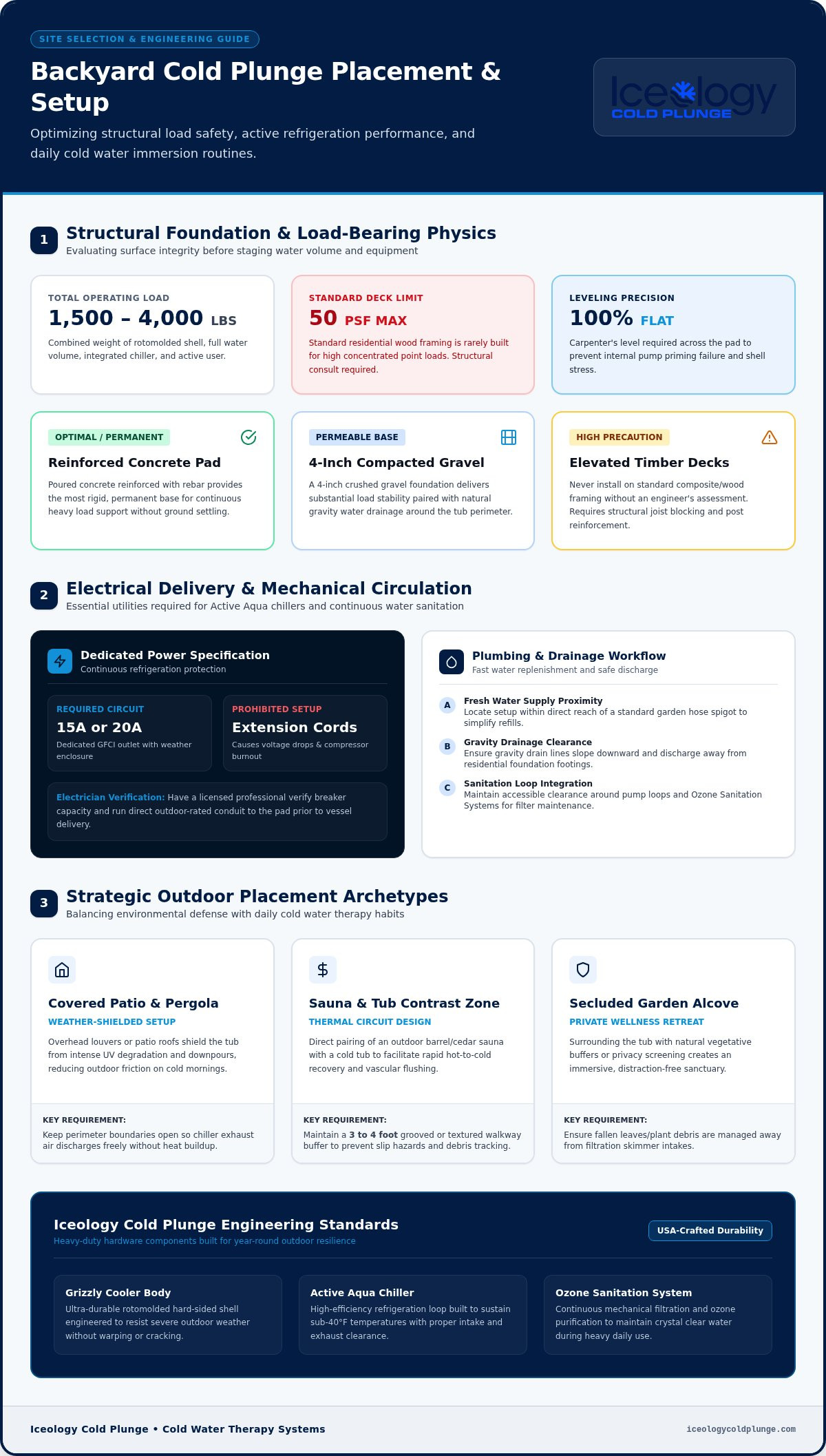
Curating effective cold plunge tub placement ideas for backyard wellness begins beneath the surface. Social feeds frequently showcase sleek tubs resting on open turf or raised timber patios, but seasoned planners know that physics dictates reality. A filled cold tub quickly reaches between 1,500 and 4,000 pounds once you account for water volume, durable rotomolded shells, and user weight. Neglecting structural foundations risks costly property damage, unprimed water pumps, and compromised equipment life.
Load-Bearing Foundations and Ground Leveling
Solid ground prevents equipment strain. Poured concrete pads reinforced with rebar offer the most reliable, permanent surface for heavy outdoor ice baths. If you prefer a permeable alternative, a four-inch compacted crushed gravel base provides exceptional stability alongside natural water drainage. Planning an installation on an elevated composite or wood deck? Always consult a structural engineer first. Standard residential decking is rarely framed to carry concentrated point loads exceeding 50 pounds per square foot. Use a carpenter's level across the pad before positioning the shell; an unlevel foundation creates asymmetric structural stress and starves internal pump intakes.
Electrical Proximity and Dedicated GFCI Outlet Planning
Continuous thermal regulation requires dedicated power delivery. High-efficiency chillers, including Active Aqua units and integrated filtration loops, need an outdoor-rated, weather-protected GFCI outlet on a dedicated 15-amp or 20-amp circuit. Never operate continuous-duty refrigeration equipment through standard residential extension cords. Undersized cords trigger voltage drops, overheating the chiller compressor and creating fire hazards. Enlist a licensed electrician to verify panel capacity and run conduit directly to the site prior to delivery.
Drainage Logistics and Fresh Water Access
Routine water care should never feel like a chore. Situate your vessel within easy reach of a standard garden hose to streamline refills. When cycling water, ensure natural gravity drainage paths route wastewater away from your home's foundation walls and hardscaped patios. Integrating these practical parameters into your cold plunge tub placement ideas for backyard sanctuaries ensures your focus stays on daily recovery rather than maintenance headaches. For step-by-step plumbing and mechanical staging, review our detailed guide on cold plunge tub setup.
Top Cold Plunge Tub Placement Ideas for Backyard Recovery Spaces
Transforming your property into a dedicated wellness hub demands an intentional architectural strategy. Rather than treating your cold tub as an isolated appliance, the best layouts weave thermal control, shelter, and transit flow directly into your living space. Evaluating functional cold plunge tub placement ideas for backyard wellness ensures you build an environment that encourages daily commitment, rain or shine.
Covered Patio and Pergola Retreats
Positioning your tub beneath an attached covered patio or an adjustable louvered pergola delivers an ideal balance of convenience and environmental defense. Overhead structures block direct ultraviolet degradation and keep torrential rain out of the water. Sliding door proximity reduces the hesitation of stepping outside on freezing mornings. To maintain optimal compressor efficiency, avoid enclosing the space entirely. Ensure open perimeter boundaries so the Active Aqua refrigeration loop can freely discharge warm exhaust air away from your seating area.
Contrast Therapy Zones: Sauna and Cold Tub Pairing
Pairing an outdoor barrel or cedar cabin sauna directly with a cold plunge creates an elite thermal recovery circuit. When executing this layout, spatial rhythm is everything. Maintain a dedicated three to four foot walkway of grooved composite decking or textured pavers between the heat and ice stations. This buffer provides an intentional transition zone, letting you step out safely without tracking debris between vessels. Aligning these elements supports the physiological vascular flush detailed in our resource on the benefits of cold plunge routines. To maintain sanitary conditions during frequent hot-to-cold transitions, adhere to public health best practices regarding routine water filtration and surface cleaning.
Secluded Garden Alcoves with Natural Privacy
Deep autonomic reset requires mental focus. Nestling your plunge inside a tucked-away garden pocket bordered by clumping bamboo, arborvitae hedges, or horizontal cedar slats shields you from neighborly sightlines and neighborhood noise. Stepping across smooth stone pavers through lush foliage turns every session into a grounding ritual. If you are ready to design a permanent recovery retreat tailored to your yard's natural contours, explore the heavy-duty lineup at Iceology Cold Plunge to discover shells built for year-round exposure.
Managing Sunlight, Ambient Heat, and Chiller Ventilation Outdoors
Solar radiation acts as the direct adversary of refrigeration efficiency. Placing an ice bath in open exposure forces internal compressors to cycle continuously, increasing operational hum and wearing down electrical components. Integrating sensible cold plunge tub placement ideas for backyard spaces requires mastering microclimates, where intelligent shading preserves water temperature and deliberate airflow corridors prevent thermal buildup.
Shading Strategies to Maximize Integrated Chiller Efficiency
Positioning your tub with northern or eastern exposure protects the water column from peak afternoon thermal spikes. Western sun adds massive heat loads right when ambient air hits peak daily temperatures. Utilizing architectural shade sails, timber pergola slats, or dense tree canopies creates cooler microclimates that cut refrigeration run times. Applying the six principles of design lets you balance protective shade structures seamlessly with surrounding garden lines. Discover how dense thermal barriers hold sub-forty-degree temperatures in our deep dive on selecting a cold plunge tub with chiller system.
Airflow and Clearances for External and Integrated Units
Refrigeration hardware requires unhindered ventilation to reject internal heat. Restricting fresh air intake around Active Aqua chillers forces compressors to inhale their own heated exhaust, triggering thermal overload trips.
- Perimeter clearance: Maintain at least twelve inches of unobstructed open space on all intake and exhaust grates.
- Cabinet hazards: Avoid enclosing mechanical components inside airtight timber storage benches or unvented masonry boxes.
- Exhaust corridors: Direct expelled hot air into open yard spaces rather than trapping it against adjacent exterior walls.
All-Weather Resilience and Freeze Management
Winter conditions present distinct placement challenges. Plunges engineered for outdoor resilience utilize heavy-duty polyurethane insulation to counter sub-freezing air, but stationary water inside external lines remains vulnerable to freezing. Situate the vessel where severe winter winds are broken by property fences or evergreen windbreaks. Keeping internal pumps circulating continually ensures water movement through manifolds, preventing crystalline ice formation from cracking plumbing fittings during cold snaps.
Backyard Ergonomics, Privacy Solutions, and Daily Immersion Routines
Friction kills consistency. Stepping into sub-forty-degree water requires intense mental discipline, so your spatial layout should eliminate every physical hesitation. The most successful cold plunge tub placement ideas for backyard wellness account for how your body travels before, during, and immediately following immersion. A thoughtfully planned circuit transforms a harsh shock into a seamless morning ritual.
Optimizing the Walking Route for Year-Round Consistency
Keep the distance between your back door and the tub shell short. A thirty-yard trek across cold flagstones during midwinter will quickly derail your routine. Position the vessel near primary thresholds like master bedroom sliders or mudroom exits. Illuminate the path with low-voltage landscape lighting to ensure confident footing during early morning or late-night dips. Smooth, well-drained stone pavers keep bare feet clean, preventing mud, grass clippings, and garden grit from fouling the water.
Privacy Screening and Acoustic Buffering
Sustained nervous system down-regulation demands absolute mental ease. Being visible to adjacent second-story windows breaks your concentration during deep breathwork. Strategically oriented cedar slat screens, frosted exterior glass panels, or dense planter troughs filled with feather reed grass establish an intimate sanctuary. These organic buffers double as acoustic baffles, dampening the faint hum of circulating pumps so your recovery space remains exceptionally peaceful.
Ergonomic Steps, Handrails, and Hard-Cover Handling
Safe entry and exit require intentional physical staging around the perimeter. Wet feet combined with cold-induced numbness increase slip risks if landing surfaces lack traction.
- Dedicated wet zone: Reserve at least 24 inches of clear, slip-resistant decking on your primary entry side for stable post-plunge footing.
- Accessory reach: Mount marine-grade hooks directly beside the steps so heavy robes, towels, and insulated footwear sit within arm's reach.
- Cover clearance: Allocate unobstructed deck clearance to flip, fold, and store insulated covers without awkward twisting or heavy lifting.
Examine how structural build standards influence daily accessibility in the ultimate guide to selecting a premium cold plunge tub in 2026.
Why Premium USA-Crafted Tubs Elevate Outdoor Backyard Installations
Selecting the right vessel transforms architectural concepts into a permanent wellness installation. Inexpensive drop-stitch inflatables might serve temporary travel, but they rapidly degrade under continuous sun, rain, and sub-freezing temperatures. Serious cold plunge tub placement ideas for backyard spaces demand hard-sided structural integrity. Premium rotomolded engineering anchors your outdoor layout, ensuring your recovery zone functions as an enduring home fixture rather than a fragile campsite setup.
Durability of Rotomolded Shells and Polyurethane Foam
Outdoor installations face relentless environmental exposure. American-manufactured rotomolded polyethylene shells resist ultraviolet degradation, surface punctures, and thermal warping through extreme summer heat and winter freezes. Beneath that rugged exterior, pressure-injected polyurethane foam insulation locks in chilled temperatures. This dense thermal barrier prevents exterior ambient heat from transferring into the water column, enabling Active Aqua chillers to reach and sustain 39°F with minimal compressor workload. Dive deeper into domestic manufacturing standards in our guide to choosing a cold plunge tub made in USA.
Effortless Outdoor Sanitation and Low Maintenance
Backyard environments inevitably introduce airborne pollen, lawn debris, and fine dust. Hard-sided plunge systems solve this challenge through continuous mechanical circulation and advanced water treatment. An integrated Ozone Sanitation System neutralizes biological contaminants and organic matter without relying on harsh chemicals that dry out your skin. Paired with high-flow particulate filtration, these closed-loop systems keep water pristine for weeks at a time. You eliminate tedious manual ice hauling across the yard entirely, stepping into clean, crystal-clear water every morning.
Investing in a Lifetime Backyard Wellness Center
Refining your cold plunge tub placement ideas for backyard wellness turns underutilized patio corners into high-performance sanctuaries. Heavy-duty rotomolded construction delivers the clean lines and solid aesthetic needed to complement stone hardscaping, natural wood decking, and architectural plantings seamlessly. When you build with purpose-engineered equipment, your daily cold water immersion becomes a sustainable, lifelong practice. Explore how American craftsmanship redefines outdoor durability with Iceology Cold Plunge.
Building Your Permanent Backyard Recovery Sanctuary
Designing a personal wellness space comes down to harmonizing structural readiness with environmental control. The most effective cold plunge tub placement ideas for backyard sanctuaries protect refrigeration systems with deliberate shade, preserve vital perimeter airflow, and eliminate physical transit friction between your home and the water. When your layout removes daily resistance, stepping into the ice bath becomes an effortless habit rather than an uphill test of will.
Sustaining that practice year-round demands unyielding hardware. Iceology Cold Plunge combines expert USA craftsmanship with heavy-duty, hard-sided polyurethane insulation that holds steady against harsh outdoor elements. Equipped with high-efficiency chilling that reaches an invigorating 39°F and an automated Ozone Sanitation System, your water remains crisp, clear, and ready whenever you need it.
Take command of your physical and mental recovery today with an intentional outdoor layout engineered for lasting performance.
Frequently Asked Questions
Can you put a cold plunge tub on an existing backyard wooden deck?
You should only place a cold plunge tub on a deck after a licensed structural engineer verifies its load capacity. A filled tub weighs between 1,500 and 4,000 pounds once you factor in water volume and user weight. Standard residential decks are typically built for 40 to 50 pounds per square foot, making reinforcement or a ground-level concrete pad essential for structural safety.
How much clearance does an outdoor cold plunge chiller need for proper airflow?
An outdoor cold plunge chiller requires at least 12 inches of unobstructed perimeter clearance around all intake and exhaust vents. High-efficiency units, including Active Aqua chillers, rely on continuous airflow to dissipate heat drawn from the water. Enclosing the chiller in unvented boxes or placing it against dense walls recirculates hot air, which triggers thermal overloads and shortens compressor lifespan.
Does a backyard cold plunge tub need to be covered when not in use?
Yes, keeping your tub covered is essential for thermal efficiency and water cleanliness. A dense, insulated hard cover locks in sub-forty-degree water temperatures, dramatically cutting chiller runtimes during hot afternoons. It also keeps out airborne dirt, tree pollen, and rain, allowing your Ozone Sanitation System and filtration loop to keep water clear without daily scrubbing.
What kind of electrical outlet is required for an outdoor cold plunge?
Outdoor cold tubs require a dedicated 15-amp or 20-amp, 115-volt exterior outlet equipped with GFCI protection. Running heavy-duty refrigeration systems on standard residential extension cords causes dangerous voltage drops and fire hazards. Always have a licensed electrician evaluate your panel and install a weather-rated, covered outlet within direct reach of the tub power cable.
Can you keep a cold plunge tub outside in freezing winter temperatures?
Yes, premium hard-sided cold plunge tubs can remain outdoors through freezing winters if properly insulated and circulating. Heavy-duty tubs built with pressure-injected polyurethane foam defend against sub-freezing exterior air. Keeping water pumps running continuously prevents ice crystals from forming in internal lines, allowing you to sustain your cold water therapy habit down to 39°F through every season.
How far should an outdoor cold plunge tub be located from a home sauna?
Position your plunge three to four feet away from your outdoor sauna door to balance transit speed with physical safety. When exploring cold plunge tub placement ideas for backyard contrast therapy circuits, this spacing provides enough room for a non-slip transition mat. It prevents sauna splashback while letting you step smoothly between extreme heat and freezing immersion.
How do you protect a backyard cold plunge tub from direct summer sunlight?
Protect your setup by positioning the vessel against northern or eastern exterior walls, or by installing architectural shade structures overhead. Louvered pergolas, weather-resistant shade sails, and cantilever umbrellas block intense solar radiation. Incorporating smart cold plunge tub placement ideas for backyard microclimates reduces heat absorption, helping your chiller sustain target temperatures without running continuously during peak heat waves.