
How Long to Cold Plunge: The Definitive Duration Guide for 2026
What if staying in your ice bath for ten minutes is actually doing less for your recovery than a quick three-minute dip? When you're standing at the edge of the water, the most common question is how long to cold plunge to actually see results without crossing into the danger zone of cold shock. It’s natural to feel overwhelmed by conflicting advice that swings from sixty seconds to ten minutes. You want the metabolic boost and that 250% surge in dopamine, but you don't want to turn a recovery tool into a test of ego that leaves you shivering for hours.
We understand that precision matters in your wellness routine. You deserve a protocol that balances safety with peak performance. This guide will help you master the science of cold water timing to maximize your recovery and boost your metabolism every time you submerge. We'll break down the 11-minute weekly rule and provide a clear, data-driven framework for your daily practice. You'll gain the confidence to step into the cold with purpose, knowing exactly when to step out to achieve the best physiological response.
Key Takeaways
- Identify the "Minimum Effective Dose" to trigger metabolic benefits with as little as 11 minutes of total weekly exposure.
- Master the "Inverse Rule" to determine exactly how long to cold plunge based on the precise temperature of your water.
- Implement a four-week acclimatization protocol that builds your resilience through disciplined, incremental exposure.
- Protect your body from the "after-drop" by applying the Soberg Principle, ensuring a safe and effective transition back to your baseline temperature.
- Learn why consistent thermal management is vital for tracking your progress and achieving predictable, repeatable results.
What is the Minimum Effective Dose for Cold Plunging?
In the pursuit of peak performance, more isn't always better. The concept of the Minimum Effective Dose (MED) is central to understanding how long to cold plunge without overtaxing your nervous system. For cold water immersion, the MED is defined as the point where the body initiates the 'cold shock' response and subsequent adaptation. Beyond this threshold, you've already triggered the primary physiological benefits; extra time often becomes a test of mental grit rather than a biological requirement. While the history of what is an ice bath involves various cultural traditions, modern science allows us to pinpoint the exact moment of benefit. Most practitioners find that sessions ranging from two to five minutes provide the optimal balance, though this duration depends heavily on the precision of your water temperature.
The 11-Minute Weekly Rule (The Soeberg Principle)
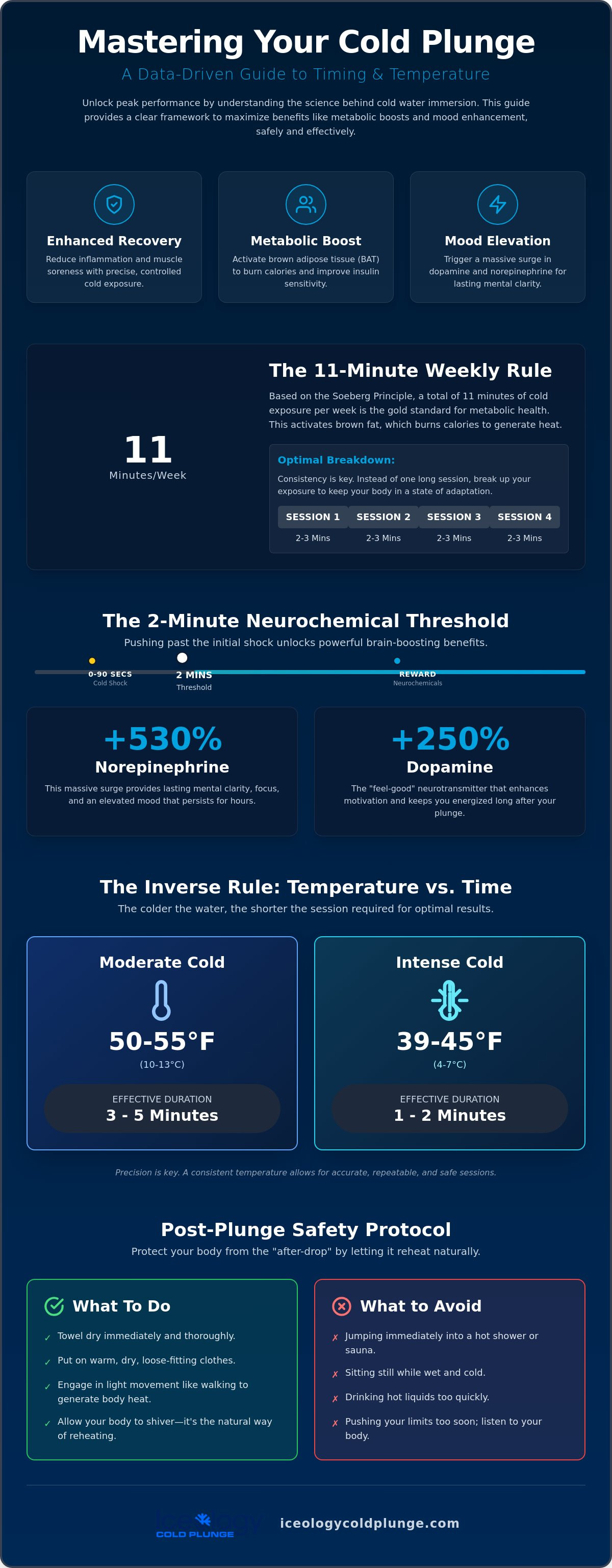
Dr. Susanna Soeberg's research has revolutionized our approach to duration. Her studies suggest that a total of 11 minutes of cold exposure per week is the gold standard for metabolic health. This specific duration is tied to the activation of brown adipose tissue (BAT), a specialized type of fat that burns calories to generate heat. You don't need to stay in for 11 minutes at once. In fact, breaking this total into three or four sessions of roughly three minutes is significantly more effective. This repeated stimulus keeps your insulin sensitivity high and your metabolic rate elevated throughout the week. By spreading the exposure, you ensure your body remains in a state of constant adaptation, turning your recovery routine into a powerful metabolic engine.
Norepinephrine and the 2-Minute Threshold
The first 60 to 90 seconds of a plunge are usually the most daunting. This is the peak of the cold shock response, where your heart rate climbs and your breath quickens as your body reacts to the thermal stress. However, pushing through to the two-minute threshold is where the chemistry shifts. At this mark, your body releases a massive surge of norepinephrine, which can increase by up to 530%. This neurochemical spike provides lasting mental clarity and a mood boost that can persist for several hours. Understanding these benefits of cold plunge helps you realize that the goal isn't just to survive the cold, but to stay long enough for your brain to reach this state of focus. Once you hit that two-minute mark, you've achieved the primary cognitive benefits, including a 250% increase in dopamine that keeps you energized long after you've dried off.
The Relationship Between Temperature and Time
A common mistake in the recovery community is treating duration as a static variable. In reality, the clock is entirely dependent on the thermometer. This is known as the "Inverse Rule": the colder the water, the shorter the session required to achieve physiological results. If you are submerging in water between 50°F and 55°F, a duration of three to five minutes is generally effective for muscle recovery. However, if you drop that temperature to the 39°F to 45°F range, your body reaches its metabolic threshold much faster, typically within one to two minutes. Understanding this balance is the key to mastering how long to cold plunge safely and effectively.
Precision is the foundation of a disciplined practice. Relying on bags of ice leads to inconsistent temperatures that fluctuate throughout your session, making it difficult to track progress. Integrated chillers solve this problem by maintaining a constant thermal environment. When your water temperature is locked in, you can plan your sessions with mathematical accuracy. This level of control transforms a shivering ordeal into a calculated recovery tool, allowing you to focus entirely on your breath and mental state rather than wondering if the water is cold enough.
Plunging at 39°F: The Iceology Standard
Reaching 39°F represents the "pro level" of cold water therapy. This temperature is specifically designed for rapid inflammation reduction and an immediate surge in neurochemicals. Because the intensity is so high, sessions at this level are brief and high-impact. It is vital to respect these temperatures to avoid cold water immersion risks such as sudden cold shock or excessive cardiovascular stress. Using high-quality cold plunge tubs with advanced thermal management ensures that you can safely hit these lower thresholds with total confidence in your equipment's reliability.
Climate Factors: Cold Plunging in Florida
Environmental conditions play a massive role in how your body perceives cold. In high-heat regions like Miami or Tampa, maintaining a sub-50 degree environment requires superior engineering. High-density polyurethane foam insulation is a critical feature for these climates. It acts as a thermal barrier, preventing the Florida sun from warming your water and ruining your timing protocol. Additionally, high ambient humidity can make the transition out of the tub feel more intense. When the air is thick and warm, your body's ability to regulate its temperature through evaporation changes, making precise water control even more important for a successful session.
Your 4-Week Progression: How to Build Cold Resilience
Resilience isn't built in a single session; it's forged through consistent, incremental stress. Just as you wouldn't attempt a marathon without prior training, understanding how long to cold plunge requires a structured roadmap that respects your body's current limits. This four-week progression is designed to safely transition your nervous system from initial shock to total mastery, ensuring you reap the benefits without unnecessary risk.
- Week 1: The Introduction Phase. Aim for one-minute sessions at 55°F. Your only goal this week is to overcome the mental hurdle of entering the water and staying submerged until the initial panic subsides.
- Week 2: The Acclimatization Phase. Increase your duration to two minutes. During this stage, your focus should shift entirely to rhythmic breathing to stabilize your heart rate and maintain calm.
- Week 3: The Performance Phase. Push your boundaries by extending your sessions to three minutes or dropping the temperature to 45°F. This is where metabolic adaptations, such as brown fat activation, begin to accelerate.
- Week 4: The Mastery Phase. Transition to variable timing. On heavy training days, you might plunge for four minutes to manage inflammation. On rest days, a quick ninety-second "reset" may be all you need to maintain your routine.
Mastering the First 30 Seconds
The most critical window of any session is the first 30 seconds. This is when the "gasp reflex" takes over, a primitive survival response that can lead to hyperventilation. To extend your duration, you must consciously override this reflex through deep, controlled exhales. This practice stimulates the vagus nerve, sending a signal to your brain that you're safe despite the thermal stress. By calming the nervous system early, you make the remaining minutes significantly more manageable and productive. For those just starting out, our cold plunge beginners guide offers additional techniques for managing this initial shock and building a sustainable practice.
Knowing When to Get Out
While a timer is a helpful tool for tracking progress, it should never override your body's intuition. You must learn to distinguish between "the shivers," which is a healthy metabolic response to cold, and "excessive shivering," which is a clear warning sign of overexposure. If you experience a loss of dexterity in your hands, mental confusion, or uncontrollable muscle tremors, exit the water immediately. These are indicators that your core temperature is dropping too fast for your body to compensate. True mastery isn't about staying in the longest; it's about knowing exactly when your body has reached its optimal limit for the day. Always prioritize physical cues over the digital display on your tub.
Safety Protocols and Post-Plunge Recovery
Your session doesn't conclude the moment you step out of the water. In many ways, the most critical physiological shifts occur during the first ten minutes of recovery. This is when you may experience the "after-drop," a phenomenon where your core body temperature continues to fall even after you've dried off. As your blood vessels dilate, cold blood from your extremities rushes back to your heart and brain. Understanding this process is just as vital as knowing how long to cold plunge in the first place. When determining how long to cold plunge for safety, always account for the ten minutes following your exit. To manage this transition safely, prioritize light movement like air squats or a brisk walk rather than remaining sedentary.
Adopting the Soberg Principle means resisting the urge to jump into a hot shower immediately. By allowing your body to warm itself naturally, you force your system to work harder, which maximizes the metabolic advantages of the practice. Hydration is equally essential; cold exposure can be dehydrating as your body works to maintain its core temperature. If you have underlying cardiovascular concerns, suffer from Raynaud’s, or are currently pregnant, you must consult a healthcare professional before establishing a routine. Professional guidance ensures your practice remains a tool for health rather than a source of strain.
The 'Ending on Cold' Debate
Skipping the immediate heat of a sauna or shower keeps your brown adipose tissue engaged. This specialized fat generates heat through thermogenesis, effectively turning your body into its own furnace to burn calories. If you override this process with external heat, you shorten the window of metabolic benefit. For those in warmer climates, stepping out into the Florida sun provides a gentle, natural way to assist this process without overriding your internal temperature regulation. This natural warming allows for a steadier return to your baseline state.
Mental Performance vs. Physical Recovery
The objective of your session dictates the clock. If you're plunging in the morning to prepare for a high-stakes meeting, your timing will look different than a post-workout recovery session focused on muscle repair. While a short, intense burst of two minutes is ideal for sharpening cognitive focus, managing deep systemic inflammation often requires a more sustained duration of four to five minutes at slightly higher temperatures. You can explore more about how these sessions influence cold plunge mental performance in our dedicated guide. Achieving this level of precision is only possible when you have total control over your environment. To elevate your recovery with professional-grade equipment, consider investing in Cold Plunge Tubs designed for consistent performance and thermal accuracy.
Precision Timing with Iceology Premium Tubs
Precision is the hallmark of any elite discipline. When you are calculating how long to cold plunge, your data is only as good as your equipment's ability to maintain a specific set point. Fluctuating water temperatures invalidate your progress tracking; a three-minute session at 42°F is physiologically distinct from three minutes at 50°F. USA-made hard-sided tubs equipped with integrated chillers provide the thermal stability necessary for a professional-grade protocol. This consistency ensures that every second spent submerged contributes directly to your 11-minute weekly goal, removing the guesswork from your recovery journey. By eliminating environmental variables, you can focus entirely on the mental and physical results of your practice.
Integrated Chillers vs. Manual Ice
The frustration of "guessing" the temperature with bags of ice often leads to inconsistent results and wasted effort. Manual ice baths are subject to rapid temperature "creep," where the water warms significantly during your session. Digital temperature control removes these variables, allowing you to focus entirely on your breath rather than your recovery math. Determining how long to cold plunge becomes a simple calculation when your equipment handles the thermal management for you. This precision is essential for those who treat their health as a serious investment. If you are ready to move beyond basic setups, our premium cold plunge tub buying guide provides the technical details needed to make an informed choice.
Durability for Daily Disciplined Practice
For those serious about a daily routine, the structural integrity of your equipment matters. Hard-sided tubs offer superior longevity compared to temporary alternatives, particularly in the demanding humidity of South Florida. High-performance insulation ensures that your tub can maintain a crisp 39°F environment year-round, regardless of external conditions. The insulation doesn't just keep the water cold; it protects the internal components from overworking, extending the life of your investment while keeping your energy costs manageable. This level of expert craftsmanship supports a "quality-first" mindset, providing a reliable partner in your pursuit of total-body optimization. It's about building a foundation for long-term health that doesn't fail when the weather gets hot. To take control of your physical and mental state today, Explore Iceology Cold Plunge Tubs and experience the difference that professional engineering makes.
Elevate Your Recovery Protocol
Mastering your response to the cold is a journey of disciplined practice and physiological precision. You now understand that determining how long to cold plunge isn't about endurance, but about hitting the Minimum Effective Dose. By aiming for 11 minutes of total weekly exposure and respecting the inverse relationship between temperature and time, you can unlock profound metabolic and cognitive benefits. Safety remains the foundation of this practice, so always prioritize your body's signals over the clock.
Achieving this level of accuracy requires professional-grade tools that eliminate environmental variables. Our tubs are handcrafted in the USA and engineered to chill down to a crisp 39°F, providing the thermal stability you need for a consistent routine. With superior polyurethane foam insulation, your water temperature remains locked in regardless of the external climate. Design Your Precision Recovery Station with Iceology and take command of your physical and mental peak. You have the roadmap; now it's time to step into the cold with total confidence.
Frequently Asked Questions
Is 1 minute enough for a cold plunge?
Yes, one minute is an excellent starting point for those learning how long to cold plunge safely. Even sixty seconds in cold water triggers a significant release of norepinephrine and initiates the cold shock response. For beginners, this short duration helps build the mental discipline required for longer sessions. It's a functional way to introduce your nervous system to thermal stress without the risk of overexposure or excessive discomfort.
Can you cold plunge for too long?
You can certainly stay in too long, as excessive exposure increases the risk of hypothermia and severe after-drop. Most physiological benefits, including dopamine spikes and metabolic activation, reach their peak within the first five minutes. Staying submerged beyond ten minutes often shifts the practice from a recovery tool to a dangerous physical strain. Always prioritize your body's feedback over a desire to prove your endurance through extended durations.
Should I cold plunge every day or just a few times a week?
Consistency is more valuable than frequency, and most practitioners find success with three to four sessions per week. This schedule makes it easy to reach the recommended 11-minute weekly total for metabolic health. While some athletes prefer a daily morning reset for cognitive clarity, your body needs time to adapt to the stress. Balancing your sessions throughout the week ensures you maintain high insulin sensitivity without overtaxing your central nervous system.
How long should I stay in the cold plunge for fat loss?
For fat loss, the focus should be on the cumulative weekly duration rather than a single session length. Research into brown adipose tissue activation suggests that 11 minutes per week is the ideal threshold for boosting metabolic rate. Breaking this into three sessions of roughly four minutes provides a repeated stimulus that keeps your body burning calories for heat production. This approach is more sustainable and effective for long-term weight management.
What is the best time of day to cold plunge?
The morning is the optimal time for cold exposure because it aligns with your body's natural circadian rhythm. A morning plunge provides an immediate spike in alertness and primes your metabolism for the day. Avoid plunging late in the evening, as the subsequent rise in core body temperature can interfere with your ability to fall asleep. Starting your day with the cold ensures you maximize the lasting neurochemical benefits.
How long should I wait to cold plunge after a workout?
If your primary goal is muscle hypertrophy, wait at least four hours after your strength training session before submerging. Cold water immersion can blunt the natural inflammatory response required for muscle growth and adaptation. However, if your focus is immediate pain relief or recovery between intense competitive events, plunging sooner is acceptable. For most fitness enthusiasts, a four-hour window preserves your hard-earned gains while still providing recovery benefits.
Is it better to cold plunge at 40°F for 1 minute or 50°F for 3 minutes?
Both protocols are effective, but they serve slightly different purposes based on the inverse rule of how long to cold plunge effectively. A one-minute session at 40°F is a high-intensity stimulus that triggers a more rapid neurochemical surge. Conversely, three minutes at 50°F allows for a more controlled, meditative experience that still achieves metabolic activation. Your choice should depend on your current resilience level and the specific goals of your recovery session.
What happens if I stay in a cold plunge for 10 minutes?
Staying in for ten minutes significantly increases your risk of cold shock and a dangerous drop in core temperature. While some elite practitioners use longer durations, the health benefits generally plateau long before the ten-minute mark. You are likely to experience intense shivering and a prolonged after-drop that makes rewarming difficult. For the majority of users, this duration provides diminishing returns and introduces unnecessary cardiovascular stress that outweighs any potential recovery gains.