
How to Prevent Mold in a Cold Plunge Tub: The 2026 Maintenance Guide
Imagine stepping into your Iceology Cold Plunge after a grueling workout, expecting a crisp, restorative soak, only to feel a slick, slimy film against your skin. It is a frustrating reality for many who realize that cold water alone does not stop biology from taking hold; you want a professional-grade recovery environment, not a petri dish of bacteria and biofilm. Understanding how to prevent mold in a cold plunge tub is the vital difference between a high-performance ritual and a maintenance nightmare that keeps you out of the water. We agree that your recovery tools should serve your goals, not add to your chores.
This 2026 maintenance guide provides the professional protocols and advanced sanitation technologies required to keep your cold water therapy environment crystal clear and mold-free. We will explore how the synergy of rotomolded Grizzly Cooler durability, Active Aqua chillers, and integrated Ozone Sanitation Systems creates a "set-and-forget" environment. You will learn the exact steps to automate your hygiene, manage thermal lid condensation, and ensure your Ice Bath remains a safe, empowering space for peak performance. From 20-micron filtration to ozone oxidation, we are covering the engineering secrets that make pristine water a permanent reality.
Key Takeaways
- Discover why hard-sided Grizzly Cooler tubs are structurally superior to inflatables, offering a non-porous surface that prevents biofilm and mold from anchoring.
- Understand the power of the Ozone Sanitation System, which provides automated, chemical-free oxidation to destroy organic contaminants before they cloud your water.
- Master the professional 2026 routine for how to prevent mold in a cold plunge tub, including high-efficiency Active Aqua filter maintenance and essential lid care.
- Learn how maintaining a steady 39°F temperature and constant circulation creates a hostile environment for cold-tolerant fungi.
- Transition from manual chemical balancing to a streamlined, automated recovery space that prioritizes your health and maximizes your time in the water.
Why Mold Grows in Cold Plunge Tubs (The Science of Biofilms)
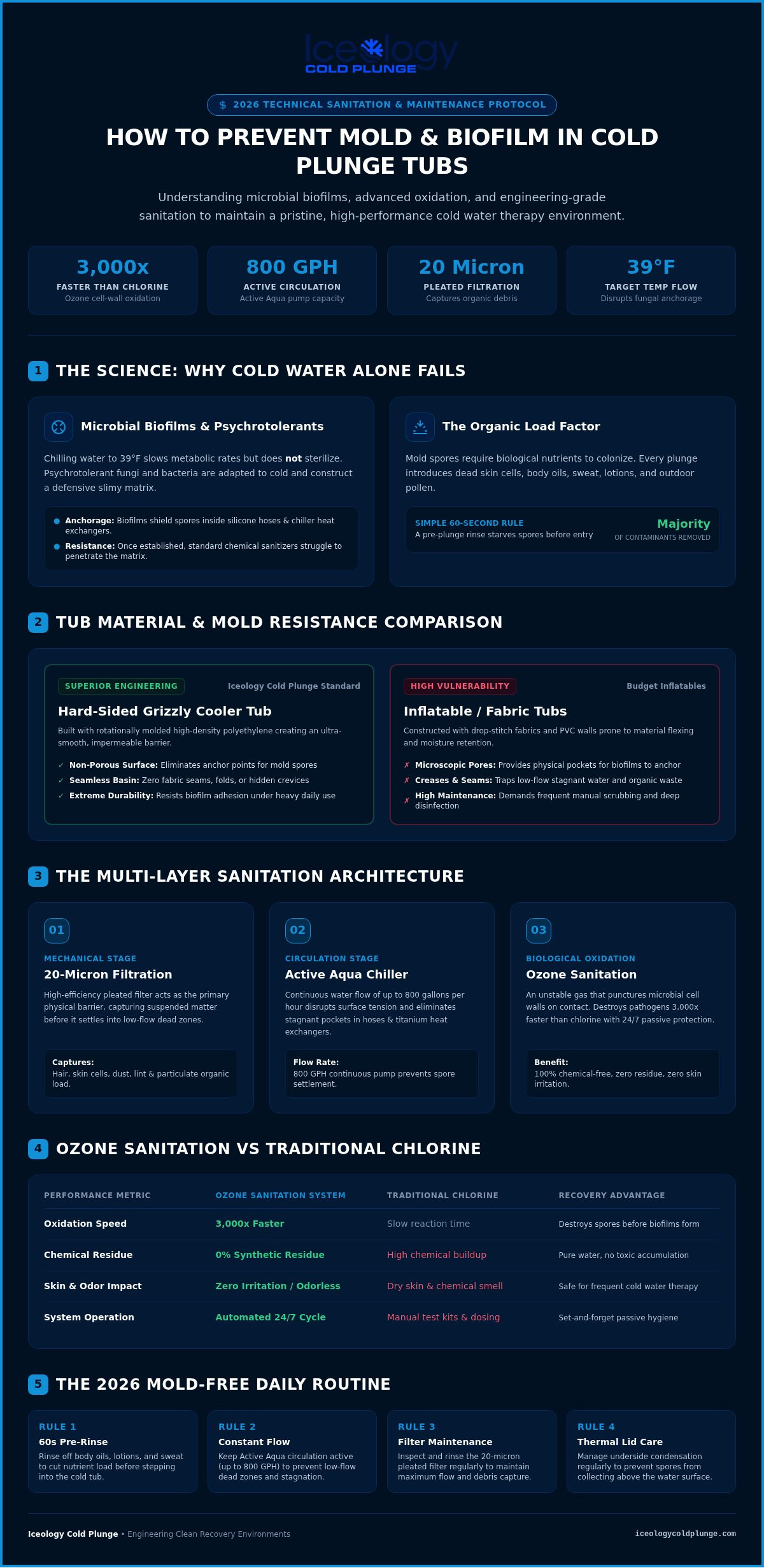
It's a common misconception that chilling water to 39°F creates a sterile environment. While extreme cold slows the metabolic rate of many pathogens, specific psychrotolerant fungi and bacteria are biologically adapted to thrive in these conditions. These organisms don't just float; they build complex structures known as microbial biofilms. This slimy matrix acts as a protective shield, anchoring mold spores to the walls of your tub and the internal plumbing of your chiller. Understanding the biological triggers for this growth is the first step in learning how to prevent mold in a cold plunge tub.
The Organic Load Factor
Mold requires a consistent nutrient source to colonize your recovery space. Every time you plunge, you introduce an "organic load" consisting of dead skin cells, body oils, sweat, and residual lotions. These substances serve as a feast for microscopic spores. If your Ice Bath is placed outdoors, you also contend with atmospheric debris like pollen and dust, which further increase the biological load. While the scientific benefits of cold plunge are extensive, they are quickly negated if you soak in a concentrated soup of organic waste. A simple sixty-second pre-plunge rinse removes the majority of these contaminants, effectively starving mold before it can take root.
Biofilm Formation in Cold Water
Stagnation is the greatest ally of fungal growth. In still water, organic particles settle into low-flow "dead zones" within your hoses and the corners of your basin. Once a colony establishes a biofilm, it becomes significantly harder to eradicate because the matrix resists standard chemical sanitizers. This is where tub design becomes critical. Lower-quality inflatable tubs often have microscopic pores and creases where these biofilms hide. In contrast, the smooth, rotationally molded high-density polyethylene of a Grizzly Cooler provides a non-porous surface that is hostile to adhesion.
Mold often begins its journey out of sight, colonizing the interior of the silicone tubing or the titanium heat exchanger within the chiller long before it becomes visible. This "hidden mold" is why professional-grade sanitation is non-negotiable. By maintaining constant circulation through an Active Aqua chiller, you disrupt surface tension and prevent spores from finding a place to anchor. When paired with an Ozone Sanitation System, the water stays moving and treated, ensuring that your Iceology Cold Plunge remains a pristine environment for elite recovery.
Leveraging Advanced Sanitation: Ozone and UV-C Systems
Systemic prevention is the hallmark of a professional-grade recovery setup. While many owners wait for visible slime to appear before they start scrubbing, the most effective strategy for how to prevent mold in a cold plunge tub involves an automated, multi-layered defense. By integrating advanced technology like UV-C light and ozone, you neutralize biological threats before they can settle into a biofilm matrix. This proactive approach ensures your water remains crystal clear without the constant need for manual intervention.
How Ozone Sanitation Works
Ozone is an unstable gas that destroys pathogens 3,000 times faster than chlorine. It functions by puncturing the cell walls of mold spores and bacteria on contact, a process known as oxidation. This method is exceptionally clean; it leaves no synthetic chemical residue, causes zero skin irritation, and eliminates the harsh odors common with traditional pool chemicals. When you invest in a cold plunge tub with chiller, the Ozone Sanitation System works in tandem with the cooling cycle to provide 24/7 protection. It transforms water maintenance into a passive, reliable feature of your daily wellness routine.
Filtration vs. Sanitation
Mechanical filtration and biological oxidation serve two distinct, yet complementary roles in your Ice Bath. A 20-micron pleated filter is the industry standard for capturing physical debris like hair, lint, and skin cells. However, filters alone cannot kill microscopic mold spores. This is where the Active Aqua chiller circulation pump becomes vital. By moving up to 800 gallons per hour, the system ensures water is constantly passing through the ozone injector and the secondary UV-C chamber. UV-C light provides an additional layer of defense by disrupting the DNA of any remaining microorganisms, rendering them unable to reproduce.
Adhering to CDC guidelines on residential water testing and treatment ensures your pH levels stay within the optimal 7.2 to 7.8 range, which maximizes the efficacy of these automated systems. Automated sanitation provides a level of precision that manual chemical dosing simply cannot match. You don't have to worry about the "hit or miss" nature of liquid additives or the complex math of parts-per-million. For those seeking a truly hassle-free recovery environment, these integrated technologies offer the ultimate peace of mind and long-term water clarity.
The 2026 Maintenance Routine: Keeping Your Water Pristine
While the Ozone Sanitation System and Active Aqua chiller do the majority of the heavy lifting, a structured rhythm of care ensures your environment remains uncompromisingly clean. Maintenance isn't a chore; it's a discipline that preserves your investment and your health. Knowing how to prevent mold in a cold plunge tub requires balancing automated technology with simple, consistent human oversight. By following a clear schedule, you eliminate the guesswork and keep your recovery space ready for peak performance.
Spend sixty seconds each morning skimming any surface debris and ensuring the thermal lid is seated correctly. A tight seal prevents atmospheric spores from entering and stops condensation from feeding mold on the underside of the cover. This simple daily check is the first line of defense against organic accumulation.
Step-by-Step Weekly Maintenance
Consistency is key to long-term water clarity. Every seven days, you should dedicate ten minutes to a more thorough inspection of your Ice Bath components. This prevents small issues from evolving into biological challenges.
- Remove the 20-micron pleated filter and rinse it with high-pressure water to clear trapped organic particulates.
- Wipe the waterline with a soft, non-abrasive cloth to remove any early biofilm buildup before it hardens.
- Confirm the Ozone Sanitation System is generating bubbles, which indicates the oxidation process is active and protecting your water.
Test your water chemistry every thirty days. Aim for a pH between 7.2 and 7.8 to prevent scaling on the Active Aqua titanium heat exchanger. Maintaining proper alkalinity protects the internal seals of your Cold Tub and ensures the water remains gentle on your skin during every session.
The Quarterly Deep Clean Protocol
Every ninety days, perform a full reset to remove microscopic accumulation that filtration might miss. Start by draining the Grizzly Cooler body safely using the integrated drain valve. According to the EPA moisture and mold control guide, cleaning hard, non-porous surfaces with mild detergents is the most effective way to eliminate fungal colonies. Use food-grade hydrogen peroxide or mild dish soap to scrub the basin walls, paying close attention to the corners. Avoid harsh abrasives that could scratch the HDPE surface. Once clean, follow the steps in our cold plunge tub setup guide to refill the unit and re-prime your chiller, ensuring a seamless transition back to your recovery routine.
How Tub Material and Design Affect Mold Resistance
The most effective strategy for how to prevent mold in a cold plunge tub begins long before you add water. It starts with material science. While entry-level inflatable tubs are popular for their price point, their flexible PVC and drop-stitch construction create a biological vulnerability. These materials possess microscopic textures and deep seams that act as anchors for biofilm. In contrast, a hard-sided basin provides a smooth, impenetrable barrier that makes it nearly impossible for fungal spores to colonize the surface.
Design plays an equally critical role in sanitation. Integrated systems reduce the number of crevices and "dead zones" where water might stagnate. By utilizing a rotationally molded body, you ensure that every interior surface is uniform and easy to wipe down. This structural integrity is the foundation of a low-maintenance recovery environment, allowing you to focus on your resilience rather than a scrubbing brush.
The Grizzly Cooler Structural Advantage
Iceology Cold Plunge utilizes USA-made Grizzly Cooler bodies for their uncompromising durability. These basins are crafted from non-porous Linear Low-Density Polyethylene (LLDPE), a material that bacteria and mold cannot penetrate. Because the surface is exceptionally resistant to scratches and abrasions, you don't have to worry about creating the tiny "pockets" where pathogens hide in softer materials. This American-made quality ensures consistency in the plastic density, providing a professional-grade finish that remains easy to sanitize for years of daily use.
Insulation and Exterior Mold
Mold prevention isn't limited to the water inside the tub; you must also manage the moisture on the outside. Poorly insulated tubs often "sweat" when the internal water is chilled to 39°F, creating condensation on the exterior shell that invites atmospheric mold growth. Every Grizzly Cooler features up to 2 inches of pressure-injected polyurethane foam insulation. This thermal barrier prevents exterior moisture buildup and keeps the cold exactly where it belongs. Additionally, the heavy-duty lid seal creates a vacuum-like environment that blocks environmental spores from entering the Cold Bath when it is not in use, preserving your water quality between sessions.
Professional-Grade Solutions for Worry-Free Cold Therapy
Transitioning from a constant battle against biofilm to a seamless recovery ritual is the ultimate goal for any cold water therapy enthusiast. When you choose a professional-grade system, you aren't just buying a tub; you're investing in reclaimed time. Learning how to prevent mold in a cold plunge tub becomes a secondary concern when the engineering itself does the heavy lifting. The peace of mind provided by a high-efficiency Active Aqua chiller, capable of maintaining a consistent 39°F, creates an environment where biological growth simply cannot gain a foothold.
Unlike budget-friendly alternatives that often use internal copper components prone to corrosion and fungal harboring, professional systems utilize anti-corrosive titanium heat exchangers. This distinction is vital for long-term sanitation. USA-made components and expert craftsmanship ensure that every fitting and seal remains airtight, preventing the moisture leaks that lead to structural mold issues. It's the difference between a tool that supports your health and one that adds to your stress.
The Iceology Engineering Difference
Integrated systems offer a level of reliability that DIY "Frankenstein" setups can't match. In a high-use environment, the Ozone Sanitation System provides a continuous, automated barrier against pathogens. Elite athletes and recovery professionals choose hard-sided Ice Baths because they prioritize results over maintenance friction. A Grizzly Cooler body doesn't just look premium; it functions as a non-porous fortress that simplifies your daily routine. You spend less time worrying about water chemistry and more time reaping the physiological benefits of deliberate cold exposure.
Next Steps for Your Recovery Space
If you're currently struggling with cloudy water or slippery surfaces, it's time to evaluate your setup for mold risk factors. Porous materials, stagnant water, and insufficient filtration are the primary culprits. Upgrading to a premium cold plunge tub is the most effective way to ensure long-term hygiene and structural durability. By addressing these factors at the source, you create a sustainable practice that lasts for years.
Take control of your recovery environment by choosing equipment designed for longevity. A meticulous approach to craftsmanship means your system will serve you for years, not just a single season. If you are ready to elevate your practice and eliminate the stress of sanitation, now is the time to act.
Elevate Your Recovery Standards
True recovery requires a space that is as clean as it is cold. We have explored how the synergy of material science and automated technology eliminates the maintenance friction that often derails a consistent practice. By utilizing USA-made Grizzly Cooler bodies, you ensure a non-porous environment where biofilms simply cannot anchor. The integration of an Ozone Sanitation System and high-efficiency Active Aqua chillers provides the continuous defense necessary for professional-grade results. You now possess the definitive blueprint for how to prevent mold in a cold plunge tub, allowing you to focus entirely on your physical and mental optimization. These advanced tools work together to create a reliable sanitation cycle that respects your time and protects your health.
Maintaining this high standard ensures that every soak is a pristine experience that empowers your daily discipline. You don't have to settle for cloudy water or the fear of bacteria when professional-grade engineering is available. Your journey toward peak performance deserves a recovery environment that reflects your dedication and drive. Take the next step in optimizing your wellness routine with confidence.
Frequently Asked Questions
How often should I change the water in my cold plunge tub?
You should change your water every 30 to 90 days if your system utilizes an Ozone Sanitation System and proper filtration. Without these automated defenses, you may need to drain and refill as often as every two weeks. High-performance setups like the Iceology Cold Plunge extend water longevity by continuously neutralizing contaminants. Always monitor for cloudiness or odor; if the water loses its crystal clarity, perform a full reset regardless of the schedule.
Can I use chlorine or bromine to prevent mold in my cold plunge?
You can use these chemicals, but they are often less effective in cold water and can cause skin irritation. Chlorine reactivity is significantly blunted at temperatures below 50°F, making it a secondary choice for cold tubs. The preferred method for how to prevent mold in a cold plunge tub is utilizing ozone oxidation. This provides a residue-free environment that is gentler on your skin and your equipment's internal components.
Does an Ozone Sanitation System completely eliminate the need for chemicals?
An Ozone Sanitation System handles the vast majority of biological oxidation, but you still need to monitor your water chemistry. While ozone destroys mold and bacteria on contact, it does not regulate pH or alkalinity. You should perform monthly assessments to ensure your pH stays between 7.2 and 7.8. This balance protects your Active Aqua chiller from corrosion and ensures the ozone remains highly effective at maintaining a pristine recovery space.
Why is there a slippery film on the walls of my cold tub?
That slippery sensation is a microbial biofilm, a protective matrix created by bacteria and mold spores. Biofilms act as a shield, allowing pathogens to thrive even in chilled water. This usually happens when the organic load from sweat and oils is high or when circulation is insufficient. To resolve this, wipe down the non-porous walls of your Grizzly Cooler and ensure your circulation pump is running at the recommended 800 gallons per hour.
How do I clean mold out of the chiller and hoses?
Use an enzymatic spa system flush every three to six months to break down internal biofilms in your hoses and chiller. Simply adding sanitizer to the tub won't always reach the colonies hidden inside the plumbing loop. Circulate the enzymatic cleaner through your Active Aqua system before a scheduled water change. This ensures that every internal surface is stripped of organic accumulation, preventing mold from immediately recolonizing your fresh water.
Is hydrogen peroxide a safe alternative for cold water therapy maintenance?
Yes, 3% food-grade hydrogen peroxide is an excellent, non-toxic alternative for sanitizing your cold water immersion environment. It is particularly effective for wiping down the waterline, the underside of the thermal lid, and the gasket seals. Unlike harsh bleach, peroxide breaks down into water and oxygen, leaving no harmful residues. It is a powerful tool for those who prioritize a holistic, chemical-free approach to their daily recovery routine.
Will keeping the water at 39 degrees prevent mold growth?
Chilling water to 39°F slows the metabolic rate of many pathogens, but it does not stop mold entirely. Specific psychrotolerant fungi are adapted to cold environments and can still form biofilms over time. Temperature is just one pillar of defense. For complete protection, you must combine extreme cold with active circulation and an Ozone Sanitation System to disrupt the biological processes that allow mold to germinate in your Ice Bath.
How often should I replace the water filter in my Active Aqua system?
You should rinse your 20-micron pleated filter every 7 to 14 days and replace it entirely every 30 to 90 days. Regular rinsing removes the physical debris that feeds mold spores, while replacement ensures the fibers haven't become a permanent home for bacteria. Maintaining a clean filter allows your Active Aqua chiller to operate with peak flow efficiency, which is essential for the even distribution of ozone throughout your tub.