
The Ultimate Miami Backyard Cold Plunge Setup Guide for 2026
What if your attempt at a refreshing recovery is actually draining your bank account and corroding your investment before your eyes? In the 90 degree humidity of South Florida, a standard Miami backyard cold plunge setup often becomes a battle against thermodynamics and salt air. You likely already know that keeping water at a crisp 39 degrees is a challenge when the sun is relentless. Cheap plastic tubs and poorly insulated chillers simply won't cut it when the heat index climbs and the salt air begins its work.
We understand the frustration of watching electricity bills spike while your equipment struggles against the elements. This guide shows you how to design a professional grade station that thrives in our unique climate. You will learn how to navigate the 2026 Miami-Dade permitting process, choose materials that resist corrosion, and implement high density insulation to slash operating costs. We are covering everything from hurricane anchoring to the latest in thermal management so you can focus on your performance instead of your maintenance. This is about creating a durable recovery oasis that delivers consistent results regardless of the temperature outside.
Key Takeaways
- Learn how to optimize your outdoor space, whether it's an urban patio or a garden retreat, to create a permanent recovery oasis that eliminates the need for manual ice runs.
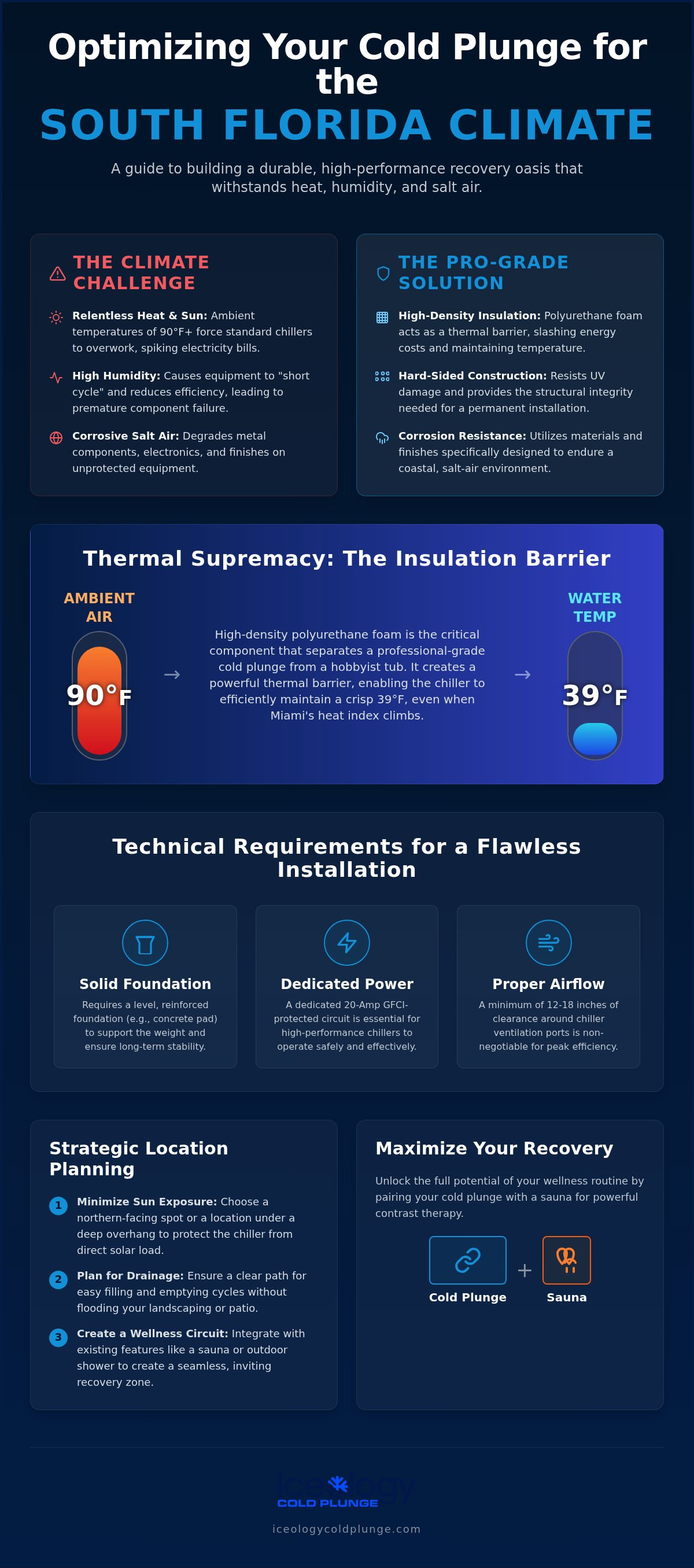
- Discover why hard-sided construction and polyurethane foam insulation are essential for a Miami backyard cold plunge setup to resist UV damage and maintain 39°F water in 90-degree heat.
- Understand the technical requirements for a South Florida installation, including the necessity of a level, reinforced foundation and dedicated circuits for high-performance chillers.
- Identify the specific features that protect your investment from salt air corrosion and ensure long-term durability in a coastal environment.
- Master your recovery protocol by pairing your cold plunge with a backyard sauna and timing your sessions to maximize the physiological benefits of contrast therapy.
Planning Your Miami Backyard Cold Plunge Oasis
Miami's relentless sun and high humidity demand more than a temporary solution. For serious practitioners of cold-water immersion, the transition from manual ice runs to a permanent station is a game-changer. Carrying bags of ice across a sweltering patio isn't just exhausting; it's inefficient. A dedicated Miami backyard cold plunge setup provides the thermal consistency required for true physiological adaptation. Local residents are increasingly moving toward hard-sided, permanent recovery tubs because they offer the structural integrity and thermal resistance that cheaper alternatives lack. It's about building a foundation for a daily habit that lasts for years, not just a single season.
Airflow is your second best friend in the South Florida heat. In the stagnant humidity of a mid-July afternoon, your chiller needs room to breathe. Proper ventilation prevents heat soak, ensuring the mechanical components operate at peak efficiency. This technical precision is why high-density polyurethane insulation is a requirement, not a luxury. It acts as a thermal barrier, fighting the 90-degree ambient air to keep your water at a consistent, bone-chilling temperature. When your equipment doesn't have to fight the environment, you save on energy and extend the life of your investment.
Selecting the Perfect Location
Location is the most critical variable in your planning phase. Evaluating sun exposure is the first step toward long-term energy efficiency. A northern-facing spot or a location under a deep overhang protects the chiller from direct solar load. This simple placement choice reduces the work your unit must do to maintain 39°F. Drainage and water access are equally vital. You need a clear path for easy fill and empty cycles to keep the water pristine without flooding your landscaping. Privacy and flow also matter. Positioning your tub near a primary exit or as part of a seamless wellness circuit ensures you actually use it. A setup that's difficult to access quickly becomes an expensive ornament.
Miami Design Aesthetics
A premium Miami backyard cold plunge setup shouldn't just function well; it should enhance your property value. Matching your tub to modern Miami architecture involves choosing clean lines and durable, hard-sided finishes that complement your home's exterior. You can use natural screening like silver saw palmettos or custom timber pergolas to create a tropical spa feel. This provides both necessary shade and a sense of seclusion for your recovery sessions. Integrating the unit with existing features like outdoor kitchens or saunas creates a comprehensive recovery zone. This holistic approach transforms a piece of equipment into a lifestyle destination that feels like a natural extension of your home.
Technical Requirements for a South Florida Installation
A successful Miami backyard cold plunge setup requires more than just a flat spot on the grass. You're installing a high-performance machine in an environment defined by corrosive salt air and extreme moisture. Technical precision isn't just about safety; it's about protecting the lifespan of your chiller. In South Florida, the ambient humidity can cause chillers to "short cycle," where the unit constantly turns on and off because it can't dissipate heat effectively. Providing at least 12 to 18 inches of clearance around the ventilation ports is a non-negotiable step for maintaining optimal performance.
Water management is another local hurdle. Miami’s municipal water often contains high levels of minerals and chlorine. These can degrade seals over time if left untreated. Using a pre-filter when filling your tub helps manage this, but the real solution lies in the Health effects of voluntary exposure to cold water, which are only achieved if the water remains chemically balanced and biologically safe. Proper filtration ensures that your recovery remains a health-positive experience rather than a maintenance headache.
Powering Your Recovery
Electrical safety in a tropical climate is paramount. While some basic units claim to run on standard outlets, a professional-grade 1 HP chiller system draws significant amperage. We recommend a dedicated 20-amp circuit to prevent tripping breakers when the compressor kicks in during the heat of the day. Every outdoor installation must utilize GFCI (Ground Fault Circuit Interrupter) protection to mitigate the risk of electrical shock in wet conditions. Proper cable management, including the use of weatherproof conduit, keeps your recovery zone clean and prevents trip hazards. If you are looking for a system designed to handle these rigorous demands, exploring hard-sided cold plunge tubs with integrated components can streamline your installation.
Foundation and Leveling
The sheer weight of a filled cold tub is often underestimated. A standard 100-gallon tub weighs over 800 pounds when occupied; this can cause pavers to shift or decks to sag over time. A reinforced concrete pad or a structurally rated deck is the only way to ensure long-term stability. Even a slight 1-degree tilt can disrupt the internal filtration system, leading to uneven water levels and potential pump cavitation. You also need to account for Miami's frequent downpours. Grading the area slightly away from the electrical components prevents water from pooling around the chiller’s sensitive electronics during a storm.
Choosing Equipment That Survives the Miami Climate
In the high-UV environment of South Florida, your choice of materials determines whether your recovery station lasts five years or five months. Inflatable tubs often struggle here. The intense sun causes expansion and material fatigue, leading to leaks and structural failure within a single season. A professional-grade Miami backyard cold plunge setup relies on hard-sided construction to withstand the elements. American-made craftsmanship ensures that the internal components are shielded against the corrosive effects of salt air, which is a constant presence in coastal Miami-Dade. This durability is the foundation of a reliable recovery routine.
Safety is just as important as durability. When selecting your tub, ensure your installation plan complies with Florida's Residential Swimming Pool Safety Act, which governs barriers and safety devices for any backyard water feature. Choosing the right equipment from the start means you spend less time worrying about liability or repairs and more time focusing on your metabolic health. It's a long-term investment in your physical well-being.
Why Insulation is Your ROI
Insulation is the silent engine of your recovery oasis. In Miami, where ambient temperatures frequently hover in the 90s, an uninsulated plastic shell forces your chiller to run constantly. This results in massive electricity bills and premature equipment failure. High-density polyurethane foam cold plunge technology creates a thermal vault that effectively traps cold air while repelling the external heat of a Miami afternoon. This stability ensures your water stays at the target temperature without the constant hum of a struggling compressor. You get a quieter backyard and a system that pays for itself through energy savings.
The Chiller Advantage
The transition to a cold plunge tub with chiller marks the difference between a hobby and a disciplined lifestyle. Reaching the 39°F gold standard for metabolic benefits is nearly impossible with manual ice runs in the Florida heat. A built-in chiller provides the convenience of on-demand recovery, removing the friction of planning your sessions around ice availability. Modern systems also integrate advanced filtration and ozone treatment. This keeps your water crystal clear for weeks, reducing the need for frequent water changes. When you choose a high-performance chiller, you are choosing a quiet, efficient partner in your wellness journey.
Step-by-Step Installation: From Delivery to First Dip
Your premium cold plunge has arrived. Before the delivery driver leaves, conduct a thorough inspection of the unit. Check the hard-sided exterior and the chiller housing for any signs of transit-related damage. Once cleared, move the tub to your prepared foundation. A precise Miami backyard cold plunge setup depends on meticulous leveling. Use a high-quality spirit level across both the width and length of the tub. This prevents pump cavitation and ensures the water line remains perfectly even, which is vital for the integrated filtration system to function as designed.
Connecting the chiller and hoses requires a firm hand but a careful touch. Hand-tighten all fittings before using a tool to ensure a leak-proof seal. Cross-threading is a common error that leads to persistent drips and potential component damage. After securing the lines, begin the initial fill. We strongly recommend using a hose-end filter to strip out the heavy minerals and chlorine found in South Florida tap water. This small step significantly extends the life of your internal components and makes initial chemical balancing much simpler.
The First Chill
Patience is part of the recovery practice. In the peak of a Miami summer, your initial fill water might start at 80 degrees or higher. Reaching the 39°F mark can take several hours as the system fights the ambient tropical heat. During this period, monitor the filtration flow and observe the chiller cycles. Listen for the smooth, rhythmic operation of the compressor. Double-check your GFCI outlet and grounding to ensure the system is electrically sound before your first immersion. If you're ready to elevate your daily routine, you can browse our professional-grade cold tubs to find the perfect fit for your space.
Maintenance Routine for Miami Owners
The tropical climate accelerates biological growth, so your maintenance schedule must be disciplined. Weekly tasks include checking the water chemistry and skimming any fine debris that may have bypassed your cover. Monthly, you should inspect the chiller air intake for salt buildup or dust, which can restrict airflow and force the motor to work harder. High-use recovery stations in humid environments require a more frequent filter replacement schedule than units located in drier climates. For a detailed breakdown of every step, refer to our cold plunge tub setup guide for a full checklist.
Maximizing Your Recovery Routine in South Florida
A professional Miami backyard cold plunge setup is more than a piece of hardware; it is a gateway to a higher state of physical and mental performance. In a city defined by its fast pace and high energy, creating a dedicated space for stillness is essential. Many South Florida residents are now pairing their cold tubs with backyard saunas to create the "Miami Contrast." This circuit provides a powerful physiological reset that helps you stay sharp and resilient amidst the urban hustle. By establishing a permanent station, you transform your backyard into a high-performance recovery lab that is available whenever you need it.
Timing your sessions can significantly influence your results. While an afternoon dip provides relief from the tropical heat, a morning plunge often yields superior metabolic and mental benefits. Stepping into 39°F water at sunrise triggers a surge in norepinephrine that sustains focus throughout the day. This proactive approach also benefits your equipment. Plunging before the afternoon sun reaches its zenith allows your chiller to maintain target temperatures with less mechanical strain. It is a strategic choice that optimizes both your biology and your investment's lifespan.
Contrast Therapy Protocols
The core of contrast therapy lies in the rhythmic dance of vasodilation and vasoconstriction. Heat exposure expands your blood vessels, while the sudden shift to cold water causes them to constrict rapidly, effectively "pumping" the lymphatic system and accelerating the removal of metabolic waste. We recommend a structured ratio of 15 minutes in the heat followed by 3 to 5 minutes of cold. This cycle can be repeated two or three times for maximum effect. To dive deeper into the physiological changes triggered by this practice, explore our guide on the benefits of cold plunge for a comprehensive look at the latest 2026 recovery data.
Long-Term Wellness Integration
Success in recovery is measured by consistency rather than intensity. Tracking metrics like Heart Rate Variability (HRV) or deep sleep duration provides the data needed to refine your routine over time. You should also feel empowered to customize your temperature settings. While our chillers are designed for the 39°F gold standard, finding your personal "cold-enough" sweet spot ensures you maintain the habit without unnecessary friction. This is a journey of self-mastery and physical optimization. If you are ready to elevate your lifestyle with a system built for the South Florida climate, Design your dream Miami backyard setup with Iceology today.
Elevate Your Recovery Standards in South Florida
Building a resilient Miami backyard cold plunge setup is about more than just surviving the heat; it's about mastering your environment to achieve peak physical results. Prioritizing hard-sided construction and high-density foam insulation is essential for resisting the intense UV rays and salt air of the coast. By adhering to these engineering standards, you ensure your water stays at a consistent 39°F without draining your bank account through inefficient energy use. You're no longer at the mercy of the Florida sun or the logistics of manual ice runs.
Your recovery journey is a personal commitment to longevity and mental clarity. Choosing equipment designed with American-made durability means you spend less time on maintenance and more time on the transformative power of cold water therapy. It's time to stop settling for temporary solutions and invest in a permanent station that matches your dedication to wellness. Upgrade your Miami recovery game with a premium Iceology Cold Plunge and experience the precision of a system built to thrive in high ambient temperatures. Take control of your recovery today. You have the knowledge; now it's time to take the plunge.
Frequently Asked Questions
Will a cold plunge chiller work effectively in 90-degree Miami heat?
Yes, high-performance chillers are engineered to maintain 39°F even when ambient temperatures reach 90 degrees. Integrated systems with powerful compressors and high-density polyurethane insulation are specifically designed for these thermal challenges. To maximize efficiency, you should place your unit in a shaded area and provide 12 to 18 inches of ventilation clearance. This prevents heat soak and allows the mechanical components to dissipate warmth effectively in the South Florida humidity.
How much does it cost to run a cold plunge in South Florida per month?
Monthly electricity costs typically range from $25 to $80. This variance depends on your chiller's efficiency and the quality of your tub's insulation. Using a hard-sided unit with polyurethane foam insulation creates a thermal vault that slashes energy consumption by preventing heat transfer. By shielding the water from the tropical sun, the system doesn't have to work as hard to maintain a bone-chilling temperature, keeping your bills manageable.
Do I need a special permit to install a cold plunge in my Miami backyard?
Yes, a building permit from the Miami-Dade County Department of Regulatory and Economic Resources (RER) is mandatory for any installation. Because cold plunges are classified as spas or hot tubs, you'll also need separate electrical and plumbing permits. All residential setups must follow the Florida Building Code, which requires a safety barrier at least 48 inches high and self-latching gates with mechanisms located at least 54 inches from the ground.
How do I protect my cold plunge from salt air and coastal corrosion?
Selecting American-made equipment with hard-sided, corrosion-resistant finishes is the most effective way to combat salt air. In coastal Miami-Dade, salt mist can quickly degrade inferior materials and clog chiller intakes. You should regularly wipe down the exterior and check the ventilation ports for buildup. A high-quality insulated cover also provides a vital physical barrier that shields your internal components from the corrosive atmosphere and intense UV radiation.
Can I install my cold plunge on a second-story Miami balcony?
Only if your balcony is structurally rated to support the significant weight of a filled tub. A 100-gallon cold tub weighs over 800 pounds when occupied, which exceeds the load-bearing capacity of many standard residential balconies. You must consult a structural engineer to verify your floor's limits before proceeding. If approved, ensure you have access to a dedicated 20-amp GFCI circuit and a drainage plan that prevents water from affecting the units below yours.
What is the best temperature for a cold plunge in a tropical climate?
The gold standard for metabolic and recovery benefits is 39°F. While the contrast to Miami’s heat feels intense, this specific temperature is what triggers vasoconstriction and the release of cold-shock proteins. Finding your personal "cold-enough" sweet spot is important for long-term consistency, but maintaining a temperature below 50°F is generally necessary to achieve meaningful physiological results. A built-in chiller makes reaching and holding these precise levels effortless regardless of the weather.
How often should I change the water in my Miami cold plunge setup?
With a high-quality filtration and ozone system, you only need to change the water every few weeks. Miami’s high humidity can accelerate biological growth, so maintaining proper water chemistry is vital for your Miami backyard cold plunge setup. Using a pre-filter when filling the tub and showering before each session helps keep the water crystal clear. These simple habits extend the time between full drain-and-refill cycles while keeping your recovery environment pristine.
Is an insulated cover necessary for a cold plunge in Florida?
An insulated cover is absolutely essential for maintaining temperature stability and energy efficiency in the tropics. It acts as a thermal seal that prevents the humid Miami air from warming your water and forcing the chiller to run constantly. A well-fitted cover also keeps out local debris and insects, which are prevalent in South Florida backyards. This protection ensures your filtration system isn't overwhelmed by organic material, keeping your water ready for your next session.