
UV Filter for Cold Plunge Tubs: The Science of Chemical-Free Sanitation
What if the secret to a professional grade recovery session isn't just the temperature, but the biological purity of the water itself? Most dedicated athletes eventually face the same frustrating reality: slimy tub walls and the pungent, stinging scent of chlorine that lingers on the skin long after the session ends. You shouldn't have to choose between a sanitary environment and the natural, refreshing feel of pure water. It's time to move beyond the high maintenance of DIY ice baths and embrace the precision of advanced engineering.
Integrating a UV filter for cold plunge tub systems transforms your maintenance routine from a labor intensive chore into a seamless, high performance experience. This technology acts as a biological kill switch, neutralizing contaminants at the DNA level without the need for harsh irritants. In this article, you'll discover how UV-C technology maintains crystal clear water for months, protects your skin from irritation, and provides a superior return on investment for your recovery space. We'll break down the science behind chemical free sanitation and show you how to achieve a truly professional standard of water quality.
Key Takeaways
- Learn why the 254nm wavelength is the scientific "sweet spot" for neutralizing pathogens and preventing slimy biofilm buildup on tub walls.
- Compare the benefits of UV-C against traditional chemicals to understand how to achieve a sanitary environment without skin or eye irritation.
- Understand the critical role of dwell time and flow rate when integrating a UV filter for cold plunge tub into a professional recovery setup.
- Discover how high-quality filtration systems allow you to maintain crystal-clear water for months, significantly reducing the labor of frequent water changes.
- See how USA-made craftsmanship and integrated chilling systems work together to provide a stable, "natural" water feel for peak physical performance.
The Challenge of Maintaining Pristine Cold Plunge Water
A common misconception in the recovery community is that near-freezing temperatures act as a natural disinfectant. It's an easy mistake to make. While 39°F water certainly feels sterile, cold water is far from self-cleaning. Every time you enter your tub, you introduce organic matter: skin cells, sweat, and body oils. This organic load serves as the primary fuel source for bacterial growth, turning your private sanctuary into a biological challenge that requires more than just a low thermostat to manage.
Without a robust sanitation strategy, your water quality will degrade rapidly. This isn't just about aesthetics; it's about the safety of your recovery environment. Relying on a UV filter for cold plunge tub systems has emerged as the professional standard because it addresses the biological threats that physical filters simply cannot touch. Understanding why your water turns "swampy" is the first step toward achieving a truly maintenance-free experience.
Why Temperature Alone Isn't Enough
Nature is resilient. Certain microorganisms, known as psychrophilic bacteria, are specifically adapted to survive and even flourish in cold environments. When water remains stagnant, these microbes congregate and multiply. While the integrated chillers in premium hard-sided tubs provide essential circulation, moving water is not the same as clean water. Circulation prevents the water from freezing or becoming thermally stratified, but it doesn't neutralize the pathogens living within it. You need a germicidal solution that actively destroys the reproductive capability of these cold-loving microbes.
The Limitations of Traditional Filters
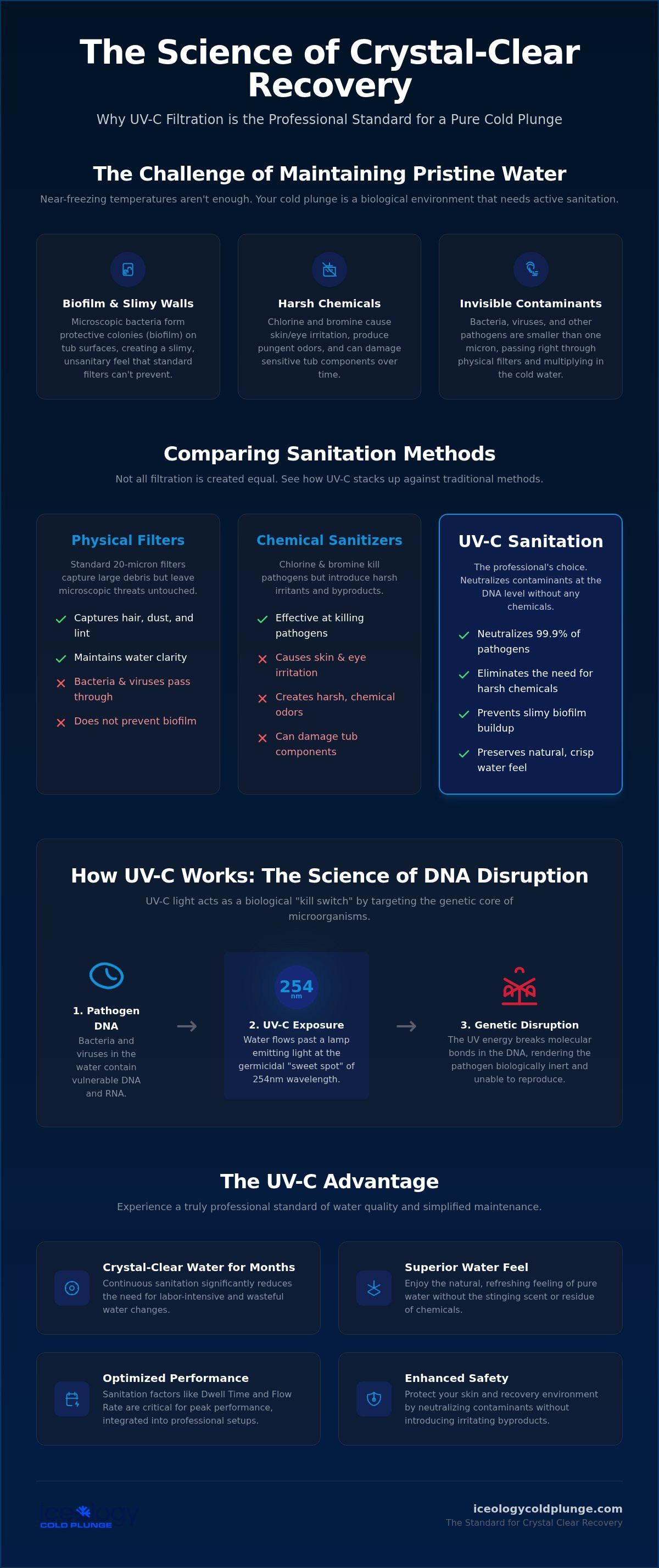
Most high-end setups utilize 20-micron pleated filters to maintain clarity. These are highly effective at capturing physical debris like dust, hair, or lint. However, they face significant hurdles when dealing with the microscopic world. Bacteria and viruses are often smaller than one micron, allowing them to pass through standard filter media with ease. This gap in protection leads to the development of biofilm, the invisible, slippery enemy that coats the walls of your tub. Biofilm is a complex colony of bacteria that creates a protective matrix, making it incredibly difficult to remove once established.
- Physical Filtration: Captures visible particulates but leaves DNA intact.
- Chemical Sanitation: Effective but often causes skin irritation and harsh odors.
- UV-C Technology: Provides a non-chemical "kill switch" for bacteria and viruses.
The modern recovery enthusiast is increasingly moving away from chlorine and bromine. These chemicals can be harsh on the skin and damaging to the mechanical components of a premium tub. Transitioning to a UV-C based system allows you to maintain that natural, crisp water feel without the chemical trade-off. By focusing on biological purity, you can spend less time scrubbing and more time focusing on your personal results.
How UV-C Sanitation Works: The Science of DNA Disruption
What if you could sanitize your water with the speed of light? While physical filters trap hair and skin cells, a UV filter for cold plunge tub systems works at the molecular level. It utilizes the germicidal spectrum of light to render pathogens harmless. This process doesn't rely on chemical reactions; instead, it uses electromagnetic energy to target the very foundation of biological life. It is the gold standard for those who prioritize a pure, chemical free recovery environment.
The core of this technology lies in the 254nm wavelength. This specific "sweet spot" is where DNA and RNA absorb light energy most efficiently. When bacteria or viruses pass through the UV chamber, the light initiates a process called photolysis. This high energy light breaks the molecular bonds within the microorganism's genetic material. By creating thymine dimers in the DNA strand, the UV-C light effectively "zips" the genetic code shut. The pathogen remains in the water but is now biologically inert. It cannot replicate, it cannot infect, and it cannot cause the "swamp water" conditions that plague untreated tubs.
One of the most significant advantages of this method is the lack of residual byproducts. Unlike chlorine, which creates chloramines that off-gas into your breathing space, UV-C leaves nothing behind. The water is sanitized instantly as it flows past the bulb. This ensures that your premium cold plunge experience remains focused on your breath and mental clarity rather than the stinging scent of industrial cleaners.
Germicidal Effectiveness against Common Pathogens
UV-C is exceptionally effective against some of the most resilient waterborne threats. It easily neutralizes E. coli and Giardia, but its real strength lies in its ability to destroy Cryptosporidium. This particular parasite is notoriously resistant to chlorine, yet it is highly susceptible to UV disruption. Additionally, consistent UV exposure inactivates algae spores before they can colonize your tub surfaces. Achieving a 99.9% reduction in these pathogens typically requires a UV-C dose of at least 30,000 microwatt seconds per square centimeter.
UV-A and UV-B vs. UV-C
It is a common mistake to assume that all ultraviolet light is the same. UV-A and UV-B are the wavelengths found in natural sunlight. These actually promote algae growth and provide the energy needed for biological blooms. UV-C, however, is filtered out by the Earth's atmosphere and is purely germicidal. To harness this power, the bulb is encased in a high purity quartz sleeve. This sleeve allows the UV-C waves to pass through into the water while insulating the bulb from the cold temperature of the tub. Because these rays are powerful enough to disrupt DNA, they are always contained within a durable, opaque housing to ensure user safety.
UV-C vs. Chemicals vs. Ozone: Comparing Sanitation Methods
Choosing the right sanitation method is a critical decision for any recovery enthusiast. While traditional pool chemicals like chlorine and bromine have been the industry standard for decades, they aren't always the best fit for the intimate, high-frequency environment of a cold plunge. Chemicals are reactive. They work by oxidizing organic matter, but that same oxidative power can be abrasive to the high-grade components of your chiller and irritating to your body. Transitioning to a UV filter for cold plunge tub setups offers a more refined, engineering-led approach to water purity.
Ozone generators are another popular alternative, known for their ability to break down oils and sweat. However, ozone is a gas that must be carefully managed. If not properly dissolved into the water, it can lead to lung irritation or a metallic smell in your recovery space. UV-C provides a distinct advantage here because it is a physical process, not a chemical one. It stays contained within the housing, providing a "set and forget" solution that maintains water stability without the need for constant testing and balancing.
The most effective professional systems often utilize a multi-barrier approach. By combining a micron filter to remove physical debris with a UV-C chamber to neutralize biological threats, you create a comprehensive defense system. This synergy ensures that your water remains crystal clear and biologically safe, allowing you to focus entirely on the mental and physical challenge of the plunge itself.
Impact on Skin and Respiratory Health
Many users who practice cold therapy in enclosed garages or small rooms report a "cold plunge cough" when using high concentrations of chlorine. This respiratory sensitivity is caused by chloramines, which are the byproducts of chemicals reacting with organic matter. UV-C eliminates this concern entirely. Because it doesn't rely on additives, it preserves your skin's natural oils and prevents the stinging eyes often associated with traditional sanitation. It is the preferred choice for athletes with eczema or sensitive skin who need to maintain a daily recovery rhythm without side effects.
Maintenance and Long-Term Costs
From a logistical standpoint, UV-C is remarkably efficient. Instead of the weekly ritual of measuring and dosing chemicals, a UV system typically only requires a bulb replacement once a year to maintain peak intensity. This saves significant time and reduces the ongoing cost of consumables. When it comes to your electricity bill, the draw of a UV-C bulb is negligible, often consuming less power than a standard household lightbulb. By keeping the water cleaner for longer, you also protect your chiller's internal heat exchanger from scaling and buildup, extending the lifespan of your entire investment.
Integrating UV Filtration into Your Cold Plunge Setup
How you install a UV filter for cold plunge tub systems determines whether you achieve laboratory-grade purity or just an expensive light show. Professional setups prioritize an inline configuration. Unlike unsightly submersible units that sit in the water, inline systems are integrated directly into the plumbing. This containment ensures all water must pass through the germicidal chamber. It's a cleaner, more efficient approach that reflects the standards of a high-performance recovery space.
Effective sanitation depends on dwell time. This is the duration the water is exposed to the UV-C light. If the flow rate is too high, the pathogens won't receive a lethal dose. Proper placement of the UV filter for cold plunge tub is equally vital. You should install the UV unit after the mechanical micron filter but before the chiller. This ensures the water is clear of debris that could shield bacteria from the light, allowing the UV-C rays to penetrate the water column with maximum intensity.
For users in high-UV regions like Miami or Naples, managing water quality is an uphill battle against the heat. High ambient temperatures and humidity accelerate algae growth and bacterial blooms. In these environments, a robust UV system isn't just an accessory; it's a necessity for maintaining a sanitary environment. Consistent circulation through a germicidal chamber prevents the "swamp water" conditions that often plague outdoor setups.
The Role of the Chiller in Sanitation
Premium cold plunge tubs with chillers thrive when paired with integrated UV units. When the Florida sun pushes ambient temperatures above 90°F, your chiller works overtime to maintain that crisp 39°F baseline. Hard-sided, USA-made insulation helps maintain water stability, allowing the filtration system to work more efficiently by preventing rapid temperature swings. This thermal stability reduces the biological load, making it easier for the UV-C light to maintain pristine conditions.
Maintenance Checklist for UV Systems
Maintaining your system is straightforward but essential for long-term performance. You must periodically clean the quartz sleeve to prevent mineral buildup, known as scaling. Even a thin layer of scale can block the UV-C rays from reaching the water. Most systems include an "On" indicator light so you can verify the bulb is functioning. Never look directly at the bulb while it's active. Since germicidal intensity drops over time, replace the bulb annually to ensure you're getting the full protection your recovery routine demands.
Discover the difference of a professionally engineered cold plunge designed for uncompromising water purity and peak performance.
The Iceology Standard: Crystal Clear Recovery
Iceology approaches recovery with a quality-first mindset. It's not just about the cold. It's about the environment you create for your body and mind. Integrating a UV filter for cold plunge tub systems into our designs ensures your water remains as disciplined as your training schedule. We prioritize water purity because it directly supports your physical performance. Clean water feels different. It's crisp. It's inviting. It allows you to immerse yourself fully without the distraction of chemical odors or skin irritation.
Our commitment to USA-made craftsmanship extends to every component of the filtration system. While some alternatives rely on generic, external pumps that sit in the water, Iceology utilizes high-pressure, integrated housing designed to withstand constant use. This precision engineering reduces the maintenance burden significantly. You shouldn't have to be a plumber to enjoy your recovery session. By mastering the technical details of flow rate and dwell time, we've created a system where you focus on the results while we handle the sanitation.
Engineered for Longevity and Performance
A premium hard-sided tub provides the ideal environment for UV-C technology. Unlike flexible or inflatable alternatives, our rigid construction allows for a stable, high-performance filtration loop. We match the germicidal power of the UV unit to the exact volume of our tubs, ensuring no corner remains untreated. There's a unique synergy between our precise 39°F cooling and UV sanitation. Cold water slows biological growth, while the UV filter for cold plunge tub provides the final kill switch. This dual-action approach ensures your USA-made tub stays clear for months, not just days.
Your Path to Chemical-Free Recovery
Setting up your recovery station should be the start of a transformation, not a new list of chores. The mental peace of mind that comes from laboratory-grade water purity cannot be overstated. When you step into an Iceology tub, you're entering a space optimized for total-body wellness. It's a professional tool for those who refuse to compromise on their health or their time. By eliminating the need for harsh oxidizers, we preserve the natural feel of the water and the integrity of your skin.
Explore Iceology's Premium Cold Plunge Tubs and elevate your recovery routine with the power of advanced sanitation today.
Elevate Your Standard of Pure Recovery
Achieving a pristine cold water environment requires more than just low temperatures. It demands a sophisticated approach to biological management. By integrating a UV filter for cold plunge tub systems, you eliminate the need for harsh chemicals while ensuring your water stays laboratory-grade pure for months. This technology doesn't just clean; it neutralizes pathogens at the molecular level, preserving your skin's health and your mental focus. You deserve a recovery space that is as disciplined and high-performing as your training routine.
Iceology provides the professional foundation for your wellness journey. Our tubs are hand-crafted in the USA with premium hard-sided insulation and integrated 39°F chilling systems for maximum efficiency. This engineering-led approach removes the maintenance burden so you can focus entirely on the transformative power of the plunge. It's time to invest in a system that values both your time and your physical well-being. Upgrade your recovery with an Iceology Cold Plunge Tub and experience the clarity of a truly chemical-free session today.
Frequently Asked Questions
Do I still need to use chlorine if I have a UV filter for my cold plunge?
You don't need chlorine if your system is engineered correctly. A UV filter for cold plunge tub systems serves as a powerful primary sanitizer for the low volume water found in recovery tubs. While public pools require a chemical residual, private cold plunges can remain sanitary through a combination of UV-C light and regular mechanical filtration. This allows you to enjoy a natural water feel without the skin irritation or harsh odors associated with traditional pool chemicals.
How often do I need to replace the UV bulb in my cold plunge tub?
Replace your UV-C bulb every 12 months to maintain peak performance. Although the bulb may appear to be functioning, its germicidal effectiveness drops significantly after 9,000 hours of operation. The 254nm wavelength must remain at a specific intensity to successfully disrupt the DNA of pathogens. If you miss this annual replacement, you might notice the water quality begins to degrade, as the light can no longer neutralize resilient bacteria and algae spores effectively.
Can a UV filter clear up green or cloudy water?
UV-C is a preventative sanitizer, not a physical cleaner. It works by neutralizing the DNA of algae spores so they cannot reproduce, but it won't remove existing cloudiness or dead algae from the water. To clear up cloudy water, you must rely on your 20-micron mechanical filter to capture physical debris. If your water has already turned green, the most efficient solution is to drain, clean, and refill your tub with fresh water to reset the environment.
Is UV-C light dangerous to have near my cold plunge?
UV-C light is not dangerous to the user because it stays entirely contained within a shielded, opaque housing. Professional systems are engineered to ensure that germicidal rays never escape the internal chamber. You can plunge with total peace of mind, knowing that the DNA-disrupting light is only interacting with the water as it passes through the plumbing. This containment makes UV-C one of the safest and most effective chemical-free sanitation methods available for home recovery stations.
Does a UV filter remove hair and skin cells from the water?
A UV unit is a biological sanitizer, not a physical one. It doesn't remove physical debris like hair, lint, or skin cells from the water. To maintain crystal clear water, you must use a high-quality mechanical filter alongside your UV filter for cold plunge tub. The mechanical filter traps the visible particles, while the UV-C light targets the microscopic bacteria and viruses that pass through standard filter media, providing a comprehensive and reliable two-stage cleaning process.
How long should I run my UV filter every day?
Run your filtration and UV system 24/7 to maintain laboratory-grade water quality. Constant circulation ensures that all the water in your tub is treated multiple times per day, leaving no opportunity for bacteria to colonize stagnant areas. Continuous operation also supports your chiller in maintaining a steady 39°F temperature. By keeping the water moving through the germicidal chamber at all times, you ensure your cold plunge is always sanitary and ready for your next session.
Will a UV filter work if my water temperature is as low as 39°F?
UV-C light remains highly effective even in water as cold as 39°F. The bulb is encased in a protective quartz sleeve that acts as an insulator, allowing the bulb to maintain the heat necessary for peak germicidal output. While the cold temperature slows bacterial growth, it doesn't eliminate it. The UV system provides the final kill switch for these microbes, ensuring that your water stays biologically pure regardless of how low you set your integrated chilling system.
Is a UV filter better than an Ozone generator for ice baths?
UV-C is generally preferred over Ozone for indoor recovery spaces because it produces no off-gassing or respiratory irritants. Ozone is an effective oxidizer but requires careful management to avoid a metallic scent or lung irritation in enclosed rooms. UV-C is a physical process that stays contained within the system housing, making it a safer and simpler set and forget option. It provides a natural water feel that athletes with sensitive skin or respiratory systems find superior.