
What to Wear in a Cold Plunge: The Definitive 2026 Gear Checklist
What if the difference between a panicked thirty-second exit and a disciplined three-minute recovery session isn't your mental toughness, but the fabric on your skin? When you're staring down the 39°F water of an Iceology Cold Plunge, uncertainty about what to wear in a cold plunge can lead to more than just discomfort; it can compromise the physiological benefits of the session. You likely already know that the initial sting in your fingers and toes is the hardest part to overcome. It's a natural response to intense cold, yet it often cuts sessions short before the real metabolic activation begins.
This guide promises to demystify your gear choices so you can focus entirely on your performance. We'll explore the essential 2026 checklist, from 2mm neoprene booties that shield distal capillary beds to why 100% synthetic materials are non-negotiable for maintaining the Ozone Sanitation System. You'll discover how to transition seamlessly from the heat of a sauna to the insulated Grizzly 450 tub while protecting your body's thermal boundary layer. Whether you're using an Active Aqua chiller to maintain a precise 39°F or just starting out, you'll have a professional-grade strategy to maximize every second of your cold water immersion.
Key Takeaways
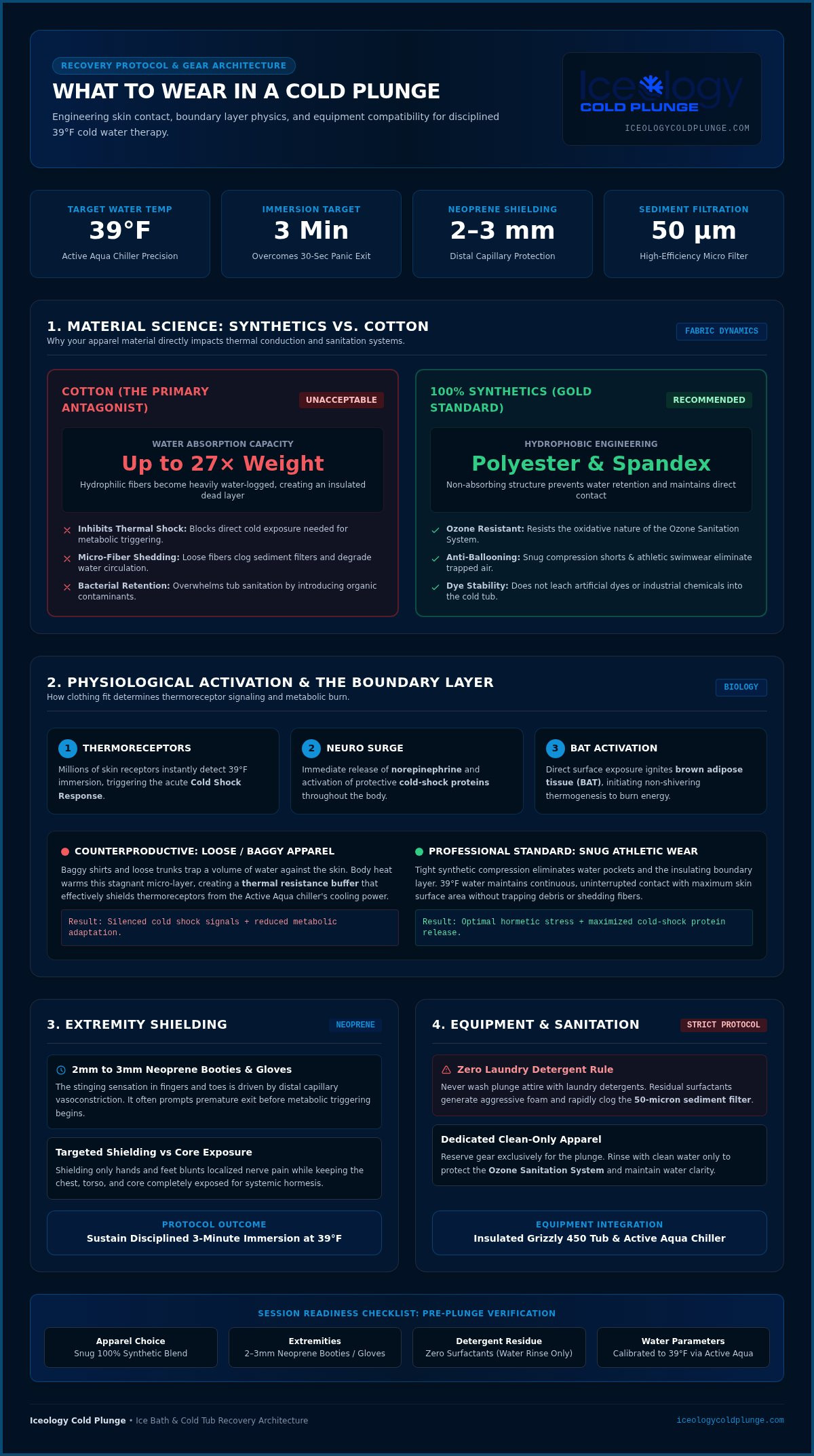
- Prioritize synthetic fabrics like polyester and spandex blends to prevent water absorption and maintain the efficiency of your Ozone Sanitation System.
- Use 2mm to 3mm neoprene booties and gloves to mitigate the stinging sensation in your extremities while keeping your core exposed for maximum metabolic benefits.
- Understand the definitive checklist for what to wear in a cold plunge to ensure you can comfortably handle the consistent 39°F temperatures provided by an Active Aqua chiller.
- Avoid using laundry detergents on your plunge attire; residual surfactants can cause foaming and clog the 50-micron sediment filters in your Iceology Cold Plunge.
- Balance modesty with performance by choosing snug, minimalist gear that allows for immediate skin contact to trigger the release of cold-shock proteins.
The Science of Skin Contact: How Clothing Affects Cold Exposure
Your skin serves as a sophisticated sensory interface between your internal biology and the external environment. It's populated with millions of thermoreceptors that monitor temperature fluctuations with extreme precision. When deciding what to wear in a cold plunge, you're essentially choosing how much data these receptors can collect. The "Cold Shock Response" is the immediate physiological reaction to 39°F water; it's the driver behind the surge in norepinephrine and the activation of cold-shock proteins. If your clothing is too thick or covers too much surface area, you're effectively silencing these signals and reducing the hormetic stress required for recovery. Understanding what to wear in a cold plunge ensures that your gear supports, rather than hinders, your physiological goals.
The Surface Area Debate: Naked vs. Clothed
Scientific consensus indicates that the benefits of cold water immersion are largely dependent on the total surface area exposed to the water. Maximizing this exposure is critical for brown adipose tissue (BAT) activation, which is the metabolic process where your body burns energy to maintain its core temperature. While complete nudity offers the most direct contact, minimalist synthetic swimwear provides a practical balance for most users. You might opt for more coverage if you struggle with nerve sensitivity in specific areas, but remember that the goal of ice bath therapy protocols is to challenge the body's thermal regulation. Covering your core too heavily can prevent your system from reaching the threshold needed for long-term adaptation.
Thermal Resistance and Water Layering
Baggy clothing creates a counterproductive phenomenon known as the "boundary layer" effect. Loose shorts or oversized shirts trap a thin volume of water against your skin. Your body heat quickly warms this stagnant layer, creating a thermal buffer that shields you from the consistent 39°F temperature of your Iceology Cold Plunge. This is why tight-fitting athletic wear is the professional standard for high-performance recovery. Thermal resistance in cold water immersion is the capacity of a material or a stagnant water layer to impede the transfer of heat from the skin to the surrounding water. By choosing snug fabrics, you ensure that the Active Aqua chiller's cooling power reaches your muscles without interference. This direct contact is also better for the Ozone Sanitation System, as tight synthetics shed fewer fibers and trap less debris than loose cotton alternatives.
Essential Swimwear: Choosing the Right Materials for 39°F
Selecting what to wear in a cold plunge is as much about protecting your equipment as it is about personal comfort. Cotton is the primary antagonist in a cold tub environment. It's a hydrophilic fiber that can absorb up to 27 times its weight in water, which creates a heavy, water-logged barrier that inhibits the thermal shock you're seeking. Beyond the personal discomfort, cotton sheds micro-fibers and retains bacteria, which can quickly overwhelm your sanitation setup. Following Cleveland Clinic cold plunge safety guidelines helps you understand that maintaining a clean environment is vital for safe, repetitive exposure.
Synthetic blends, specifically polyester and spandex, are the gold standard. These materials are hydrophobic, meaning they don't hold water or collapse your thermal boundary layer. In an Iceology Cold Plunge, the Ozone Sanitation System works continuously to eliminate pathogens. Synthetic fabrics are highly durable and resistant to the oxidative nature of ozone, ensuring your gear doesn't degrade or release chemical dyes into the water. Using dedicated, clean-only swimwear is the most effective way to maintain water clarity.
Top Picks for Men and Women
Men often prefer compression shorts over traditional trunks because the snug fit prevents the "ballooning" effect that occurs during immersion. This streamlined profile ensures consistent skin contact with the 39°F water. For women, a high-performance one-piece or an athletic bikini provides the necessary freedom of movement for active plunging. Standard swimwear thickness is usually sufficient because the goal is minimal interference with the cooling process. If you're looking to upgrade your recovery ritual, choosing a premium cold tub designed for durability makes these gear choices even more impactful.
Fabric Care and Tub Longevity
Your maintenance routine starts with the "Rinse First" rule. Even "clean" clothes often harbor residual laundry detergents or body oils that can cause persistent foaming in your tub. These surfactants disrupt the water's surface tension and can clog the 50-micron sediment filter. To protect your filtration system, rinse your gear in plain water before every session. This simple step prevents detergent bleed from impairing the Active Aqua chiller's efficiency and ensures your Ozone Sanitation System remains focused on neutralizing organic contaminants rather than fighting soap suds.
Protecting Your Extremities: When to Use Neoprene Accessories
The most common barrier to a successful three-minute session isn't core temperature; it's the intense "stinging" sensation in your fingers and toes. This discomfort occurs because your body initiates a "shunting" effect. In 39°F water, your system prioritizes vital organs by constricting peripheral blood vessels and moving warm blood toward the core. This rapid shift can lead to a loss of dexterity and increased pain sensitivity. Consulting cold water hazards and safety guidance reveals how quickly cold incapacitation can affect motor function in extreme environments. For many users, choosing what to wear in a cold plunge includes adding a layer of "neoprene armor" to these sensitive zones.
Neoprene accessories act as a vital bridge for both beginners and seasoned athletes. They allow you to endure the full duration of your session without your extremities becoming the limiting factor. Because neoprene traps a micro-thin layer of water that your body heat warms, it creates a thermal buffer. This protection doesn't reduce the systemic benefits of the plunge; your torso and large muscle groups remain fully exposed to trigger the desired hormonal and metabolic responses. It's a strategic way to build resilience while maintaining focus on your breathing and mental state.
Neoprene Booties and Gloves
For the consistent 39°F environment provided by an Active Aqua chiller, a thickness of 2mm to 3mm is the verified standard. While 5mm options exist, they often feel too bulky for a standard cold tub. The 2-3mm range provides enough insulation to mitigate vasoconstrictive pain while maintaining a professional-grade experience. Using these tools helps you reach the recommended thresholds for how long to cold plunge to achieve peak recovery. Unlike wool or cotton socks, which clog 50-micron sediment filters with lint, neoprene is a "clean" material that integrates perfectly with the Ozone Sanitation System.
The Role of the Head: To Wear a Hat or Not?
The idea that you lose 50% of your body heat through your head is a common myth, but the reality is still significant. Your scalp is highly vascularized and lacks the insulating fat found elsewhere on the body. Wearing a thermal beanie or neoprene skull cap is essential during outdoor winter plunging to stabilize blood pressure and prevent "brain freeze" headaches. Keeping your hair dry is also a strategic choice. Wet hair accelerates cooling once you exit the tub, which can make the "afterdrop" phase more difficult to manage. If you're focusing on total-body optimization, deciding what to wear in a cold plunge should always account for how you'll manage your temperature once the session ends.
The Cold Plunge Checklist: Gear for Every Environment
Your environment dictates your attire strategy. At home, your Iceology Cold Plunge offers a private sanctuary where you can prioritize minimalist gear for maximum skin contact. You don't have to worry about studio modesty, so you can focus entirely on the physiological response. In a public setting, however, hygiene protocols are paramount. Most high-end recovery centers require snug, synthetic swimwear to protect their filtration systems. Regardless of the setting, the goal remains the same: optimizing your recovery without compromising the Ozone Sanitation System. Understanding what to wear in a cold plunge ensures you remain respectful of the equipment while hitting your personal performance goals.
Contrast therapy introduces a unique challenge for your gear. Moving between extreme temperatures requires materials that maintain their structural integrity. When you are transitioning from a 190°F sauna into a 39°F Grizzly Cooler tub, your clothing undergoes rapid thermal contraction. High-quality spandex and polyester blends are essential here because they don't lose their elasticity or trap excessive heat. Knowing what to wear in a cold plunge during these intense sessions prevents skin irritation and ensures your focus stays on your breathwork rather than adjusting your gear.
The Contrast Therapy Protocol Attire
Safety is the primary concern when heat meets cold. Metal zippers, clasps, or heavy plastic toggles are significant hazards in a sauna; they can reach temperatures high enough to cause skin burns before you even enter the water. Stick to "clean" athletic synthetics that feature flat-lock stitching and zero hardware. These materials handle the 190°F environment safely and won't warp when you hit the 39°F water provided by the Active Aqua chiller. Following established sauna and cold plunge routines helps you build the resilience needed for these advanced recovery techniques.
Post-Plunge Recovery Wear
The "After-Drop" is a critical phase where your core temperature continues to fall even after you've exited the tub. This happens as cold blood from your extremities circulates back to your heart. To manage this safely, your "Dry Gear" kit must be ready the moment you step out. A heavy, moisture-wicking parka or a thick cotton robe provides immediate insulation. While we previously discussed why wool is a poor choice inside the tub, thick wool socks are your best friend once you're dry. They provide the rapid warming your feet need to restore circulation. Layering up immediately helps your body transition back to its natural state without the shivering response becoming overwhelming.
Maximizing the Iceology Experience: Setup and Sanitation
The engineering of your Iceology Cold Plunge directly informs your gear strategy. Because the tub features a hard-sided, rotomolded Grizzly Cooler shell, you don't have to worry about clothing hardware like zippers or buckles snagging a flimsy inflatable liner. This structural durability allows you to focus entirely on the science of your recovery. When you're deciding what to wear in a cold plunge, remember that USA-made quality ensures the tub surfaces are non-reactive. You won't have to worry about high-end athletic dyes leaching into or staining the interior walls of your unit. It's a premium environment where the equipment is as resilient as the athlete using it.
Sanitation is a collaborative effort between your gear and your tub's technology. The Ozone Sanitation System acts as a silent guardian, working continuously to oxidize organic matter. While it's powerful, its efficiency is preserved when you choose the right attire. Minimalist, synthetic fabrics shed fewer fibers than natural materials, ensuring that the 50-micron sediment filter remains clear for longer intervals. By maintaining a dedicated towel station nearby, you also prevent external debris from entering the water when you transition between your "Dry Gear" and the tub.
Maintaining Water Purity with the Ozone System
The Ozone Sanitation System is designed to handle the biological load of daily immersion, but "clean plunging" is the best practice for home units. Dedicate a specific set of synthetic swimwear for your sessions and avoid washing them with heavy detergents. Residual surfactants from laundry soap can cause cloudiness and foaming that even ozone struggles to neutralize quickly. For more details on integrating these habits into your home routine, explore our comprehensive cold plunge tub setup guide. Keeping your gear free of oils and soaps ensures the Active Aqua chiller and filtration loop operate at peak performance.
Creating Your Premium Recovery Station
Efficiency is key to a disciplined practice. Position sturdy hooks and a recovery bench within arm's reach of your Iceology Cold Plunge to facilitate a swift transition. This setup allows you to move into your post-plunge layers immediately, which is essential for managing the "After-Drop" phase. Your insulated hard lid also plays a role here; keep it closed until the moment of entry to ensure the water stays at a precise 39°F. Our final recommendation for the ultimate session is a minimalist synthetic kit paired with 2mm neoprene booties. This combination provides the necessary extremity protection while allowing your core to experience the full metabolic benefits of the cold.
Elevate Your Recovery Standards
Mastering your recovery environment requires more than just mental discipline; it requires the right tools for the job. You now understand that prioritizing synthetic fabrics and 2mm neoprene protection allows you to sustain the necessary exposure for metabolic benefits while managing peripheral pain. By keeping your gear clean and free of laundry detergents, you ensure the Ozone Sanitation System in your Iceology Cold Plunge operates with maximum efficiency to maintain pristine water purity.
Choosing what to wear in a cold plunge is the final step in professionalizing your recovery routine and ensuring every session is as effective as the first. Our USA-made hard-sided tubs are engineered to maintain a consistent 39°F, providing a reliable foundation for your physical and mental optimization. You have the knowledge to handle the cold and the strategy to protect your equipment. Now, it's time to experience the results of a dedicated and well-equipped practice.
Take control of your performance and embrace the transformative power of a disciplined cold water therapy routine.
Frequently Asked Questions
Can I cold plunge naked in my home tub?
Yes, plunging naked in your private Iceology Cold Plunge is a practical way to maximize skin exposure. This approach ensures there's zero interference with your thermoreceptors, allowing the 39°F water to trigger a full metabolic response. It also protects your Ozone Sanitation System from laundry detergents and micro-fibers. When considering what to wear in a cold plunge, going minimalist is often the most effective method for total-body optimization.
Should I wear a hat during a cold plunge?
Wearing a hat is a strategic choice rather than a requirement. In outdoor winter environments, a thermal beanie or neoprene cap helps stabilize blood pressure and prevents brain freeze headaches. It also keeps your hair dry, which is essential for managing your body temperature during the recovery phase. If you're plunging indoors at a consistent 39°F, you might skip the hat to allow for a more natural sensory experience.
Do neoprene socks actually work for cold plunges?
Neoprene socks are highly effective tools for managing peripheral pain during a session. They work by trapping a micro-thin layer of water against your skin, which your body heat warms to create a thermal buffer. This protection allows you to stay in the 39°F water longer without the stinging sensation in your toes becoming a distraction. For most users, 2mm to 3mm thickness provides the perfect balance of insulation and comfort.
What is the best material for cold plunge swimwear?
Synthetic blends like polyester and spandex are the superior choice for cold water therapy. These materials are hydrophobic, so they don't become heavy or water-logged like cotton. They're also durable enough to withstand the oxidative environment of an Ozone Sanitation System. When deciding what to wear in a cold plunge, choosing high-quality synthetics ensures your gear lasts longer while keeping your water clear of organic contaminants and loose fibers.
Can I wear my workout clothes directly into the cold plunge?
You shouldn't wear workout clothes directly from the gym into your tub. Sweat, body oils, and residual laundry detergents can quickly cause foaming and overwhelm your filtration system. These contaminants can clog the 50-micron sediment filter and reduce the efficiency of your Active Aqua chiller. It's best to rinse off in a shower and change into dedicated, clean-only swimwear to maintain the pristine water quality of your Iceology Cold Plunge.
How does clothing affect the benefits of cold water immersion?
Clothing acts as a thermal barrier that can blunt the physiological impact of the cold. Minimalist gear ensures that the 39°F water makes direct contact with your skin's thermoreceptors. This contact is what triggers the release of cold-shock proteins and the surge in norepinephrine. If you wear too many layers, you're essentially insulating yourself from the very stressor that provides the metabolic and recovery benefits you're seeking.
Should I change clothes between the sauna and the cold plunge?
Changing or rinsing between the sauna and the cold tub is a vital hygiene practice. Sweat contains high concentrations of salts and minerals that can impact the effectiveness of your sanitation system. Additionally, you must ensure your attire has no metal zippers or clasps, as these can reach dangerous temperatures in a 190°F sauna. A quick rinse ensures you don't introduce heat-related oils or debris into the precisely chilled water.
What should I wear after a cold plunge to warm up safely?
After exiting the tub, you should prioritize immediate insulation with moisture-wicking layers. A heavy parka, thick robe, and wool socks are essential for managing the after-drop phase. This occurs as cold blood from your extremities returns to your core, causing your temperature to fall further even after you're out. Layering up helps your system transition back to a normal state slowly and safely while preventing an overwhelming shivering response.