
Cold Plunge Tub Dimensions: A 2026 Guide to Sizing and Space Planning
The most common mistake in cold recovery isn't the temperature of the water; it's the depth of the tub. Many enthusiasts prioritize a long footprint only to realize their shoulders remain exposed, which occurs when they don't account for specific cold plunge tub dimensions during the planning phase. You deserve a sanctuary that provides full, neck-deep immersion without overcrowding your home or straining your flooring.
It's easy to feel overwhelmed by technical specs, but finding the right fit is essential for a disciplined recovery practice. This guide empowers you to master ergonomic requirements and technical details so you can select a perfectly sized, insulated tub that suits your build. We'll help you balance your body's needs with your home's physical constraints for a seamless, professional installation.
We'll examine the critical "Volume-to-Footprint" ratio that defines the best models in 2026. This includes understanding why a filled 100-gallon tub can weigh over 800 pounds and how to ensure your floor load capacity is ready for that weight. From two-foot clearance requirements for chiller ventilation to optimal thermal retention, you'll gain the clarity needed to build a high-performance recovery zone.
Key Takeaways
- Prioritize a minimum interior depth of 30 inches to ensure full neck-deep immersion, which is essential for total body recovery and effective thermal stress.
- Evaluate cold plunge tub dimensions carefully to balance the external footprint with the 2-4 inches of high-density insulation required for superior energy efficiency.
- Select between standard and XL basin lengths based on your height to ensure your shoulders remain fully submerged without the basin feeling restrictive.
- Apply the "12-Inch Rule" for clearance around your chiller unit to maintain optimal airflow and prevent equipment overheating, especially in high-humidity climates.
- Learn how integrated chiller designs and precision-engineered frames can minimize your total floor space requirements without sacrificing interior capacity.
Understanding Cold Plunge Tub Dimensions: Why Size Matters for Recovery
Selecting the right recovery equipment requires a shift in perspective. You aren't just buying a piece of furniture; you're investing in a technical tool designed to trigger specific physiological responses. To get this right, you must distinguish between three distinct measurements. The internal basin size determines your comfort and immersion level. The external frame footprint dictates where the unit can physically sit. Finally, total clearance accounts for the breathing room your chiller needs to operate efficiently. Balancing these cold plunge tub dimensions ensures your daily practice remains a source of calm rather than a logistical headache.
There is a significant difference between a temporary ice bath and a permanent installation. Traditional cold-water immersion setups often rely on thin-walled stock tanks that offer little in the way of ergonomic support or temperature stability. In contrast, a modern cold plunge utilizes high-density insulation and integrated plumbing. This added technology means the external footprint is often 15 to 20 percent larger than the interior soaking area. You should also consider water volume. A higher gallon capacity, typically ranging from 80 to 150 gallons for single-user units, provides greater thermal mass. This helps the water stay at your target temperature even when your body heat begins to transfer into the basin.
The Importance of Vertical Depth
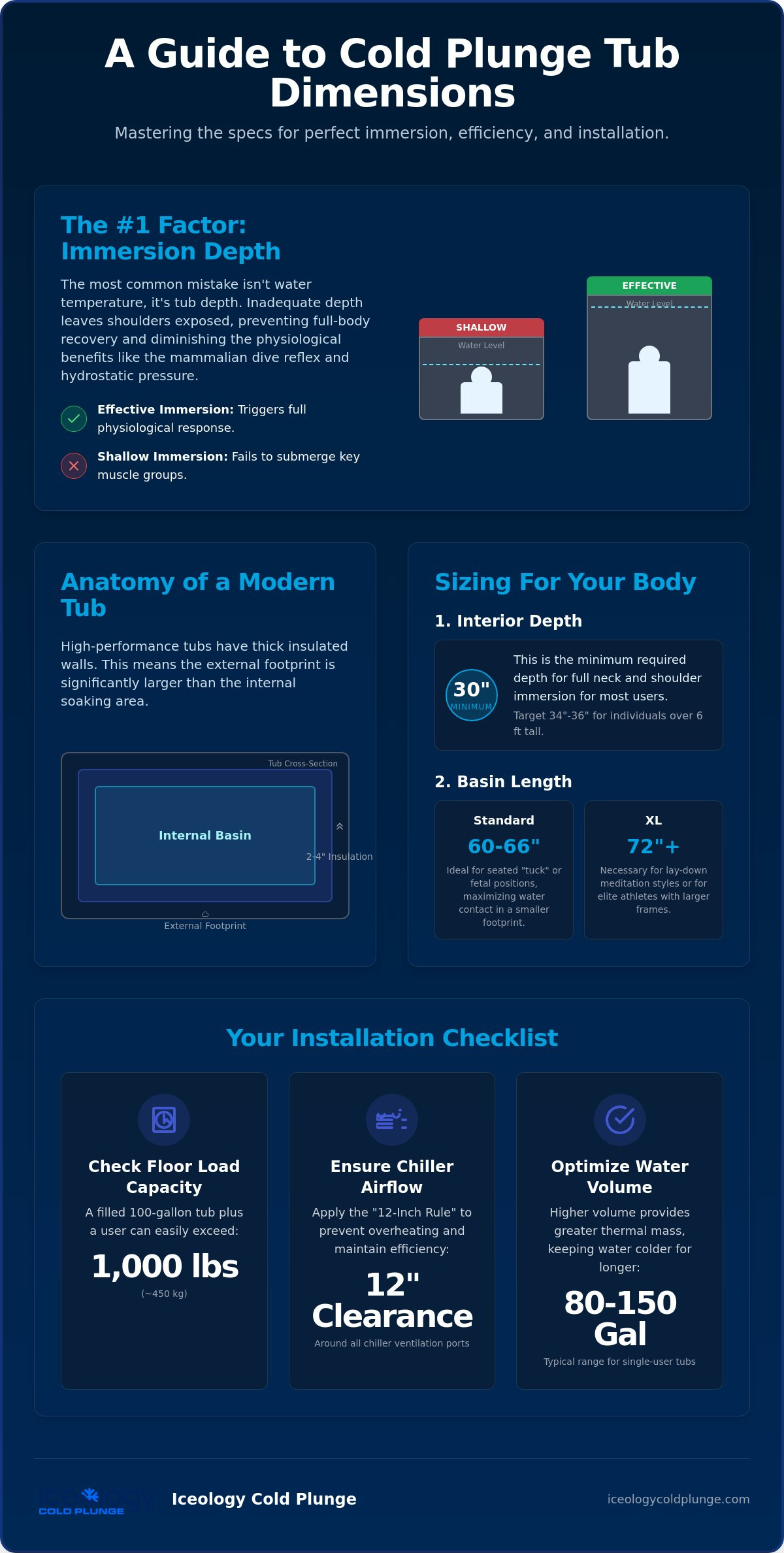
Depth is the most overlooked factor in recovery. Shallow tubs often fail to submerge the shoulders, which prevents the body from fully triggering the mammalian dive reflex. This reflex is a series of physiological responses that optimize oxygen distribution and lower the heart rate. To achieve this, you need a water depth of at least 30 inches. For athletes over six feet tall, targeting 34 to 36 inches is ideal. Beyond the metabolic boost, deeper water increases hydrostatic pressure. This pressure exerts force on the limbs, which helps reduce exercise-induced edema and promotes more efficient blood flow during the rewarming process.
Internal Basin vs. External Frame
Don't assume that a 60-inch internal basin will fit into a 60-inch corner. High-performance tubs feature thick walls, often 2 to 4 inches wide, to house polyurethane insulation. This material is what keeps your electricity costs low by preventing heat gain. If a tub includes integrated steps or an internal slope for lounging, the external frame might extend to 75 or 80 inches. When evaluating cold plunge tub dimensions, always verify the total length including the chiller housing. A "tuck" style basin allows for a smaller footprint by keeping the user in a seated, upright position, while a "lounge" style requires more floor space but offers a more relaxed, horizontal experience.
Choosing the Right Size for Your Body Type: Length, Width, and Depth
Your physical stature serves as the primary blueprint for your recovery space. While many manufacturers promote a "one-size-fits-most" approach, true cold therapy requires precision to ensure every muscle group is reached by the chill. Selecting the right cold plunge tub dimensions means moving beyond simple length and considering how your unique frame interacts with the water's volume and the basin's geometry.
Choosing between standard and XL models depends largely on your preferred plunging style. Standard units usually range from 60 to 66 inches in length. These are ideal for those who prefer a "fetal position" or a seated tuck, which maximizes water contact without requiring a massive footprint. If you prefer a "lay-down" style for a more meditative experience, or if you are an elite athlete with a larger frame, XL sizing of 72 inches or more becomes a necessity. This extra length prevents the cramped feeling that can lead to an early exit, allowing you to focus on your breath rather than your discomfort.
Structural integrity is a non-negotiable factor when planning your installation. A filled 100-gallon tub, when combined with the weight of the unit and the user, can easily exceed 1,000 pounds. It's vital to confirm your floor load capacity, especially for second-story home gyms or wooden decks. Professional-grade units are designed with these tolerances in mind, adhering to structural safety and CDC guidelines for hydrotherapy equipment to ensure surfaces are non-porous and easy to sanitize.
Recommended Dimensions by User Height
For users under 5'8", a more compact basin of 48 to 54 inches is often the most efficient choice. This size conserves water and reduces the energy required by the chiller to maintain temperature. Those in the average height range of 5'9" to 6'2" find the sweet spot in 60-66 inch basins, which offer enough room to stretch slightly while maintaining the depth requirements discussed previously. Tall users and elite athletes over 6'3" should strictly look at 72-inch basins or larger to avoid having their knees or chest exposed to the air.
Shoulder Width and Ergonomics
Width is the silent hero of ergonomic design. An internal width of 24 to 28 inches is standard, but those with broader shoulders should prioritize the upper end of that range. If your arms are forced against the sides, it can create cold spots or physical tension that disrupts the experience. Sloped backrests can mitigate the need for extreme length by allowing you to recline comfortably, effectively lowering your profile in the water. If you're ready to find a basin that honors your physical requirements, explore our range of precision-crafted cold tubs designed for elite performance.
External Footprint vs. Interior Capacity: The Role of Insulation
When you view a premium recovery unit, the first thing you'll notice is the visual weight of the frame. This isn't just for aesthetic appeal; it's a functional requirement of high-performance thermal management. The "Insulation Gap" represents the difference between your interior soaking space and the total footprint. To maintain a consistent 39°F without forcing your equipment to work overtime, an insulated cold plunge tub requires walls that are typically 2 to 4 inches thick. These dimensions are a deliberate engineering choice that prioritizes longevity and temperature stability over a slim profile.
Choosing a hard sided cold plunge tub ensures these dimensions remain stable and structurally reinforced. Unlike inflatables, which rely on air pressure and thin PVC layers, hard-sided units use their cold plunge tub dimensions to house a rigid, permanent thermal barrier. We analyze this through the "Thermal Efficiency Ratio," which compares interior water volume to the total exterior surface area. A well-designed tub minimizes the surface area exposed to ambient air while maximizing the thickness of the insulation, creating a sanctuary that stays cold with minimal energy input.
Polyurethane Foam and Wall Thickness
Polyurethane foam is the gold standard for modern recovery. Two or more inches of high-density foam creates a superior thermal break that prevents ambient heat from penetrating the basin walls. This level of protection is what allows for a cold plunge that doesn't need ice, even in demanding environments. In high-humidity regions like Florida, this thickness is critical. It prevents condensation from forming on the exterior and maintains efficiency when outdoor temperatures climb toward 90 degrees. You're trading a few inches of floor space for a system that is fundamentally more reliable.
Energy Efficiency and Dimension Planning
Insulation thickness is directly tied to your monthly utility bill. A compact tub without proper insulation might save a few inches of room, but it'll cost significantly more in electricity as the chiller runs constantly to combat heat gain. High R-value insulation necessitates a slightly larger external footprint but provides the thermal stability required for a truly passive, energy-efficient system. Just as Third Coast Spray Foam utilizes high-performance materials to optimize home efficiency, your recovery tub relies on these same principles to maintain performance. By planning for these extra inches now, you ensure your equipment doesn't burn out prematurely from constant operation. It's a "quality-first" mindset that values long-term performance and user comfort over temporary convenience.
Planning Your Space: Installation Requirements and Airflow Clearance
Successful integration of a recovery system depends on a "Space-First" strategy. You've already considered the cold plunge tub dimensions for your body; now, you must account for the mechanical requirements that ensure your chiller performs at peak efficiency. This involves more than just measuring the floor. It requires understanding how air moves and how weight is distributed within your chosen environment. A well-planned installation protects your investment and ensures your daily practice remains uninterrupted.
The "12-Inch Rule" is the industry standard for safe, long-term operation. Your chiller acts like a specialized air conditioner, pulling heat from the water and exhausting it into the surrounding environment. Without at least a foot of clearance on all sides of the ventilation fans, the unit will recirculate its own hot exhaust. This feedback loop causes the compressor to work harder, which leads to higher electricity bills and a significantly shorter equipment lifespan. Beyond ventilation, ensure you have clear access to the drainage valves and filter housing for routine maintenance.
Environmental conditions in regions like Miami or Tampa present unique challenges for recovery equipment. High humidity and direct tropical sun can significantly impact how quickly your water reaches target temperatures. If you're placing your unit on a patio, choose a shaded area to minimize solar heat gain. You also need to confirm your electrical access. Standard units typically run on a dedicated 110V outlet, but high-performance chillers may require 220V to combat extreme ambient heat effectively. Avoid using extension cords, as they can cause voltage drops that damage sensitive internal electronics.
Chiller Ventilation and Heat Exhaust
Proper airflow is non-negotiable for indoor setups. In small home gyms or garages, "Heat Trapping" occurs when the ambient air temperature rises too high for the chiller to shed heat. For a successful cold plunge tub setup, prioritize well-ventilated areas or install a dedicated exhaust fan if the room is enclosed. This ensures your cold plunge tub dimensions include the necessary "breathable" volume of air surrounding the unit.
Floor Load and Structural Support
Precision planning must include a calculation of the "Wet Weight." A 100-gallon tub contains approximately 834 pounds of water. When you add the weight of the insulated frame and a 200-pound user, the total load often exceeds 1,100 pounds. Apartment dwellers should verify balcony load limits with a structural engineer before installation. A perfectly level surface is also essential; even a slight tilt can cause uneven wear on the pump bearings and reduce the longevity of your entire system. If you're ready to transform your home into a professional-grade recovery zone, browse our collection of elite cold tubs today.
The Iceology Advantage: Precision-Engineered Dimensions for Elite Recovery
True recovery is built on a foundation of precision. When we discuss cold plunge tub dimensions, we aren't just looking at length and width; we're analyzing how every millimeter contributes to your physical optimization. At Iceology, our commitment to being a cold plunge tub made in USA means we maintain superior tolerances that imported models simply cannot match. This meticulous attention to detail ensures that your unit fits your space as perfectly as it fits your body. By mastering the technical specifications of our frames, we provide a reliable partner for your daily discipline.
Modular systems often clutter your recovery zone with external hoses, separate chiller boxes, and exposed wiring. This creates a fragmented footprint that is difficult to manage and visually distracting. We take a different path. By integrating high-performance components directly into the frame, we minimize the total area required for installation. This "quality-first" mindset allows us to deliver a consistent 39°F environment without the massive bulk typically associated with industrial-grade cooling. Whether you're a South Florida homeowner looking for a patio upgrade or a commercial wellness center optimizing a floor plan, our designs prioritize efficiency and aesthetic harmony.
Space-Saving Integrated Design
Managing your floor space shouldn't be a compromise. Choosing a cold plunge tub with chiller from our collection can save up to 30% of floor space compared to traditional modular systems. This all-in-one approach provides a clean, professional aesthetic that elevates any room. Our hard-sided construction is specifically engineered to withstand high-salt Florida air, ensuring your investment remains durable and beautiful for years to come. It's a streamlined solution for those who value both form and function. You get the power of a professional system within a footprint that respects your home's architecture.
The 39-Degree Performance Standard
Consistency is the hallmark of elite recovery. Our specific cold plunge tub dimensions are calculated to optimize water flow, ensuring that every inch of the basin maintains a uniform temperature. This prevents the "thermal layer" effect where body heat warms the water immediately surrounding your skin. Iceology uses USA-sourced materials to ensure dimensional accuracy and insulation density, providing a thermal barrier that holds the cold even in extreme heat. This level of engineering allows you to focus entirely on your mental and physical discipline rather than adjusting your equipment. If you're ready to master your recovery with a system designed for longevity and comfort, Explore Iceology Cold Plunge Tubs and find the perfect fit for your lifestyle.
Elevate Your Recovery with Precision Planning
Designing your recovery zone is a strategic investment in your daily discipline. By prioritizing vertical depth for total immersion and accounting for the essential airflow clearance, you protect both your body and your equipment. Your choice of cold plunge tub dimensions should reflect a balance between ergonomic comfort and technical efficiency, ensuring your practice remains a seamless part of your lifestyle.
Iceology provides the expert craftsmanship needed to bridge the gap between technical specs and peak performance. Our units are Made in the USA and utilize high-density polyurethane insulation to achieve a consistent 39°F standard. We offer dedicated local Florida support and expertise to ensure your installation is precise and professional. Every detail is engineered to help you focus entirely on your results.
Find Your Perfect Fit: Shop Iceology Cold Plunge Tubs
Take the next step in your wellness journey with a partner committed to durability and precision. You've mastered the planning; now it's time to experience the transformation.
Frequently Asked Questions
What is the standard size of a 1-person cold plunge tub?
Standard 1-person tubs typically require a footprint of approximately 4x3 feet with interior dimensions around 60 inches long. This size provides a balanced environment for most adults to achieve full immersion without excessive water waste. It's a versatile choice for home installations where space is a premium but performance is non-negotiable. Choosing this size ensures you have enough room to breathe while the water works on your recovery.
Can a tall person (over 6ft 4in) fit in a standard cold plunge?
Users over 6'4" generally require XL basins measuring 72 inches or more to avoid feeling cramped. Standard cold plunge tub dimensions often leave taller individuals with their knees or chest exposed, which limits the metabolic benefits of the session. Prioritizing an elongated basin ensures your entire frame remains submerged for a more effective recovery experience. It's about ensuring your body has the space it needs to fully relax into the cold.
How much extra space do I need for the chiller system?
You should plan for a minimum of 12 inches of clearance around the chiller's intake and exhaust fans. This breathing room prevents the unit from recirculating hot air, which can lead to mechanical failure and increased energy costs. Integrated systems often minimize this requirement by housing the chiller within the main frame, creating a cleaner aesthetic. Proper ventilation is the secret to maintaining a consistent 39°F in any environment.
Can I put a cold plunge tub on my apartment balcony?
Installation on an apartment balcony is only advisable after a structural engineer verifies the floor load capacity. A filled 100-gallon tub can weigh over 900 pounds, which often exceeds the safety limits of standard residential balconies. Always prioritize safety by confirming that your building's architecture can support this concentrated weight before proceeding. Your recovery practice should always be built on a stable and secure foundation.
How deep should a cold plunge be for full-body immersion?
A depth of at least 30 inches is required to ensure the water reaches neck level for most adults. For taller athletes, aiming for 34 to 36 inches provides the hydrostatic pressure needed for effective muscle recovery. This depth is critical for triggering the body's natural physiological responses to cold water. Proper depth ensures that your shoulders and neck are fully submerged, which is where the most significant recovery benefits occur.
Does the thickness of the insulation affect the internal tub size?
High-density insulation adds 2 to 4 inches to the external frame without reducing the internal soaking area. While this increases the total cold plunge tub dimensions, it's a necessary trade-off for superior thermal retention and lower utility bills. Thick polyurethane walls act as a thermal break, keeping the water at a consistent 39°F even in high-humidity environments. This design allows for a more efficient system that respects your interior space.
What is the total weight of a cold plunge tub when filled with water?
The total "wet weight" of a filled unit typically ranges from 1,000 to 1,200 pounds. This calculation includes the weight of the water, the insulated tub itself, and the user's body mass. Ensuring your subfloor or patio is level and reinforced is essential for maintaining the structural integrity of your recovery system over time. This weight is a testament to the durability and quality of the materials used in professional-grade tubs.
How much clearance is needed for a cold plunge tub in a home gym?
Most home gyms require a total clearance area that is roughly 2 feet larger than the tub's footprint on at least one side. This space allows for safe entry and exit while providing the necessary 12 inches of ventilation for the chiller. Proper spacing ensures your gym remains a functional, high-performance environment rather than a cluttered storage area. It's about creating a dedicated zone where you can focus entirely on your personal results.