
Designing the Ultimate Fort Lauderdale Backyard Cold Plunge Setup (2026)
What if your morning recovery ritual didn't involve hauling forty pounds of melting ice across a humid patio just to reach a lukewarm soak? In the relentless South Florida heat, the traditional ice bath often feels like a losing battle against physics. You've likely realized that a temporary solution won't survive the salt air or the June humidity. Building a permanent, high-performance Fort Lauderdale backyard cold plunge setup is about more than just water; it's about engineering a sanctuary for physical and mental peak performance.
We understand that you're looking for a seamless, "always cold" station that complements your home's aesthetic without skyrocketing your utility bills. This guide provides a comprehensive roadmap to planning your recovery zone, from navigating LauderBuild permit requirements to selecting insulated, American-made equipment that reaches 39°F even in mid-August. You'll discover how to balance strict city noise ordinances with powerful thermal management systems. By the end of this article, you'll have the technical knowledge to install a durable, professional-grade station that turns daily recovery into a frictionless reality.
Key Takeaways
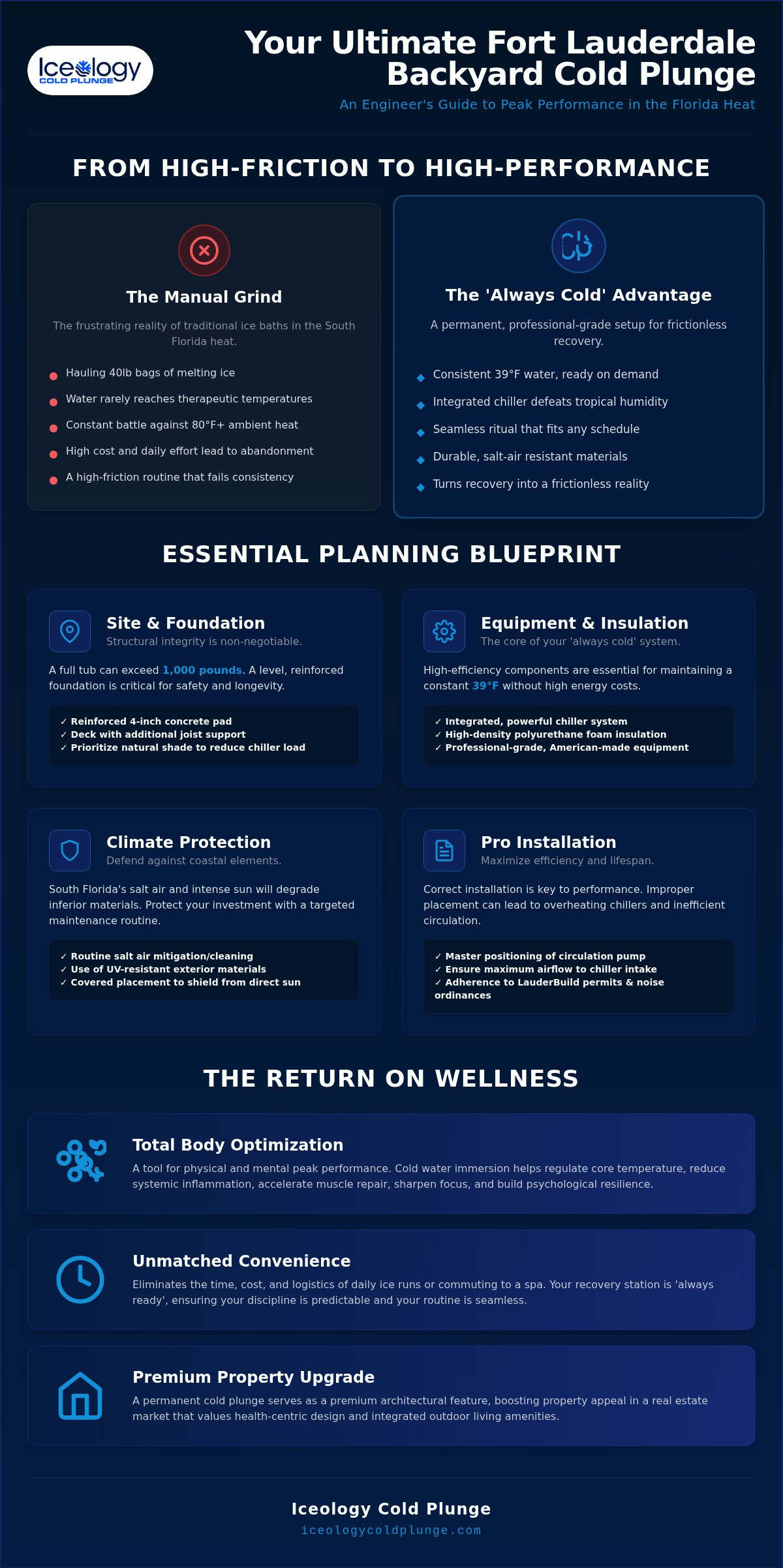
- Identify the ideal location for your recovery station by prioritizing natural shade and a reinforced foundation like a concrete pad to handle the weight of a full tub.
- Optimize your Fort Lauderdale backyard cold plunge setup with integrated chiller systems and polyurethane insulation that sustain 39°F temperatures regardless of the tropical humidity.
- Protect your investment from the coastal elements by implementing a maintenance routine focused on salt air mitigation and UV-resistant exterior care.
- Streamline your daily ritual by transitioning from high-maintenance manual ice baths to a permanent, filtered system that offers "always ready" recovery.
- Ensure a professional-grade installation by mastering the positioning of your circulation pump and ensuring maximum airflow to your chiller’s intake.
Why a Backyard Cold Plunge is the Essential Fort Lauderdale Wellness Upgrade
Fort Lauderdale has seen a significant shift in how high-performers approach wellness. While commercial spas offer luxury, the "always ready" nature of a home station provides a distinct advantage for those with tight schedules. A dedicated Fort Lauderdale backyard cold plunge setup transforms your outdoor space into a high-utility recovery zone. It eliminates the time spent commuting to a facility and provides a clear return on investment compared to expensive monthly membership fees. Beyond the financial logic, a permanent hard-sided tub serves as a premium architectural feature. It boosts property appeal in a local real estate market that increasingly values health-centric home design and integrated outdoor living amenities.
Health Benefits for the Active Florida Lifestyle
South Florida's climate is physically demanding. Whether you're training for a marathon or navigating a high-stakes corporate environment, heat-induced fatigue and inflammation are constant challenges. Engaging in regular cold-water immersion helps regulate your core temperature and resets your autonomic nervous system. The benefits of cold plunge extend far beyond simple cooling. The practice is essential for reducing systemic inflammation and accelerating muscle repair after a sunset run along the beach. For the busy professional, a three-minute plunge offers a forced mental reset. This ritual sharpens focus and builds the psychological resilience needed to thrive in a fast-paced city. It's a tool for total-body optimization that fits seamlessly into a morning routine.
The "Always Cold" Advantage in a Hot Climate
Attempting a manual ice bath in Fort Lauderdale is often a frustrating, labor-intensive exercise. When ambient temperatures regularly exceed 80 degrees, the thermal transfer is so rapid that bags of ice melt before the water reaches an effective therapeutic range. This creates a high-friction routine that most people eventually abandon due to the sheer cost and effort involved. A professional-grade Fort Lauderdale backyard cold plunge setup removes these barriers entirely. By utilizing integrated chillers and high-efficiency polyurethane insulation, your water stays at a consistent 39°F regardless of the midday sun. This transition from a hobbyist ice bath to a permanent station ensures your recovery is disciplined and predictable. You don't have to plan your day around an ice delivery. The cold is simply there, waiting to help you perform at your peak.
Essential Planning for Your Florida Outdoor Cold Plunge Station
Planning a Fort Lauderdale backyard cold plunge setup involves more than simply clearing a space on the patio. The South Florida environment presents unique challenges, from corrosive salt air to intense UV exposure that can degrade inferior materials. A successful installation begins with a meticulous site assessment that prioritizes structural integrity and equipment longevity. You don't want to overlook the logistical details that ensure your recovery station remains a sanctuary rather than a maintenance burden.
Site Selection and Foundation Prep
A level foundation is the most critical factor for the long-term health of premium cold plunge tubs. When you consider that water weighs approximately 8.34 pounds per gallon, a filled tub plus an occupant can easily exceed 1,000 pounds. This concentrated load requires a reinforced surface such as a four-inch concrete pad, interlocking pavers, or a deck with additional joist support. Beyond the weight, you must account for the sun. Positioning your tub in a naturally shaded area or under a high-quality umbrella prevents the chiller from overworking, which extends the life of the motor and reduces energy consumption. If you're looking for a system designed to withstand these thermal demands, exploring professional-grade cold tubs with high-density insulation is a wise first step.
Electrical and Safety Requirements
Electrical safety is paramount in high-humidity zones. Your setup requires a dedicated circuit and a Ground Fault Circuit Interrupter (GFCI) outlet to prevent electrical hazards near water features. Most high-performance chillers operate on a standard 110V plug, but some heavy-duty models may require a 220V connection for maximum efficiency. Always use weather-rated, "in-use" outlet covers to protect the connection from sudden tropical downpours. Additionally, be mindful of local regulations. The City of Fort Lauderdale requires specific safety barriers for permanent water features through the LauderBuild portal. You should also consider the city's noise ordinance, which limits daytime sound to 60 decibels. Placing your chiller away from shared property lines ensures your Fort Lauderdale backyard cold plunge setup remains compliant and neighbor-friendly.
Finally, consider your drainage strategy. While most modern tubs only require a full water change every few months due to advanced filtration, you'll need a clear path for the water to exit. Avoid draining directly near your home's foundation. Instead, route the water toward a lawn area or a dedicated drain. Proper planning in these early stages guarantees a frictionless transition from installation to your first therapeutic soak.
Selecting the Right Equipment: Chiller Systems vs. Traditional Ice Baths
Choosing the right hardware is the difference between a daily wellness habit and a backyard eyesore. In South Florida, the technical requirements for a Fort Lauderdale backyard cold plunge setup are significantly higher than in more temperate regions. Traditional ice baths fail because they rely on passive cooling in an environment that actively transfers heat into the water. To maintain therapeutic temperatures, you need a system engineered for thermal resilience and consistent performance. Investing in professional-grade equipment ensures your recovery routine isn't dictated by the local weather forecast.
Thermal Management in High Ambient Heat
Modern cold plunge tubs with chillers solve the heat problem through active refrigeration and superior insulation. While many budget options use simple air-gapped plastic, premium units utilize high-efficiency polyurethane foam. This material acts as a robust thermal break, preventing energy loss and stopping the tub from "sweating" in Fort Lauderdale's thick humidity. Industrial-grade chillers eliminate the need for 40lbs of ice per session. This allows the system to reach and hold a consistent 39°F, even when the afternoon sun is at its peak. This technical consistency is vital for metabolic health, ensuring that every session provides the specific thermal shock required for optimal recovery without the friction of manual prep.
American Craftsmanship vs. Mass-Produced Imports
Durability is a non-negotiable factor when your equipment lives outdoors. A cold plunge tub made in USA offers a level of engineering that mass-produced imports rarely match. Hard-sided tubs provide the structural integrity needed to resist salt air corrosion, which is a constant threat for waterfront properties in Broward County. Unlike fragile inflatable alternatives that can puncture or degrade under intense UV rays, American-made hard-sided tubs are built for decade-long longevity. This focus on quality also ensures better serviceability. Having access to local parts and expert support means your Fort Lauderdale backyard cold plunge setup remains operational for years, protecting your investment in long-term health. These premium systems often feature advanced filtration and ozone sanitation, keeping the water crystal clear for months and reducing the physical labor of frequent water changes.
Step-by-Step Guide to Installing Your Backyard Cold Plunge
Setting up your professional-grade recovery station is a straightforward process when approached with precision. Once your unit arrives, the first priority is positioning. For a successful Fort Lauderdale backyard cold plunge setup, you must ensure the chiller has at least 12 to 18 inches of clearance on all sides. This airflow is essential in the Florida heat. Without it, the heat exchange process slows down, forcing the motor to work harder than necessary. After the tub is level on your reinforced foundation, connect the circulation pump and filtration housing using the provided high-pressure hoses. Double-check that all O-rings are seated correctly to prevent leaks. Unboxing your equipment is an exciting milestone, but take a moment to inspect the hard-sided exterior for any transit damage before moving it to the final pad.
The First 24 Hours: Setup and Cooling
Flushing the system is a step many homeowners skip, but it's crucial for long-term performance. Fill the tub halfway and run the pump for ten minutes to clear any residual manufacturing debris. Drain this initial water before a final fill. Refer to a detailed cold plunge tub setup guide to verify each plumbing connection is secure. Once filled, program your chiller to its target temperature. Keep in mind that the initial pull-down from tap temperature to 39°F can take several hours depending on the ambient heat. It's best to let the system stabilize overnight before your first session. This period allows the polyurethane insulation to fully regulate the internal water temperature.
Water Chemistry and Sanitation
Maintaining crystal clear water in your Fort Lauderdale backyard cold plunge setup requires a proactive approach to chemistry. South Florida’s municipal water supply often contains high levels of minerals that can affect pH and alkalinity. Use a digital tester to ensure your pH stays between 7.2 and 7.6. We recommend using non-chlorine sanitizers to preserve the tub’s interior finish. Set your filtration schedule to run for at least 4 to 6 hours daily. This keeps the water moving and prevents stagnation. Start with a metal sequestrant if your water comes from older pipes to prevent staining. Once the water is balanced and the chiller has hummed to life, you're only hours away from a transformative recovery experience. If you're ready to upgrade your backyard with a system built for these conditions, order your premium cold plunge tub today.
Maintenance and Optimization for the South Florida Climate
Owning a Fort Lauderdale backyard cold plunge setup means managing an environment that is uniquely aggressive toward mechanical equipment. The combination of high humidity, intense UV radiation, and corrosive salt air requires a proactive maintenance strategy to ensure your station remains a high-performance asset. While the integrated chillers in premium tubs are designed for durability, the tropical climate can shorten the lifespan of inferior components if they are neglected. Meticulous care preserves the aesthetic of your hard-sided tub and guarantees that your water remains at a crisp 39°F even during the most oppressive July heatwaves.
Filter replacement cycles are particularly important for high-use backyard setups. In South Florida, wind-blown sand and organic debris often find their way into the water, even with a lid. You should plan to replace your pleated filters every four to six weeks to maintain optimal flow rates. A clogged filter forces the circulation pump to work harder, which increases energy consumption and can lead to premature wear. Additionally, the chiller intake requires regular attention. Use a soft brush or compressed air to clear the condenser coils of dust and salt residue. This simple task ensures the heat exchange process remains efficient, keeping your electricity costs low while the ambient temperature climbs.
Protecting Your Investment from the Elements
The exterior finish of your tub is your first line of defense against the Florida sun. Hard-sided tubs offer superior resilience compared to disposable alternatives, but they still benefit from a layer of UV protection. Applying a marine-grade protectant to the exterior surfaces every few months prevents the finish from fading or becoming brittle. If you live within a few miles of the coast, wiping down the exterior with a damp cloth once a week is essential to prevent salt air pitting. Florida homeowners should perform a monthly maintenance check that includes rinsing the chiller condenser coils, inspecting the GFCI outlet, and verifying the water’s alkalinity levels. Using a high-quality insulated cover is also non-negotiable. A thick, well-fitted lid blocks heat transfer from the sun and prevents the "greenhouse effect" from warming your water between sessions.
Optimizing Your Recovery Routine
Once your maintenance routine is established, you can focus on maximizing the physiological results of your practice. Many high-performers in Fort Lauderdale are now pairing their cold tubs with infrared saunas to create a complete contrast therapy station. This "fire and ice" approach further stimulates blood flow and enhances the metabolic benefits of your routine. To ensure you are getting the most out of every minute in the water, it is helpful to follow established cold water immersion therapy protocols. These science-backed methods help you determine the ideal duration and temperature for your specific recovery goals. Whether you are a competitive athlete or a professional seeking mental clarity, a well-maintained station is the key to long-term success. Experience the Iceology difference today.
Elevate Your Recovery Ritual for the Florida Climate
A successful Fort Lauderdale backyard cold plunge setup is a commitment to your long-term physical and mental peak performance. You've learned that navigating the South Florida humidity requires more than a simple tub; it demands a system built with climate-resilient engineering and meticulous planning. By prioritizing a reinforced foundation and a proactive maintenance schedule, you ensure your recovery station remains a frictionless part of your daily routine. The transition from labor-intensive ice baths to a professional-grade station allows you to focus entirely on the transformative power of cold water therapy.
Don't let the tropical heat dictate your results. Choosing equipment designed for thermal efficiency means you can enjoy consistent, therapeutic temperatures without the logistical burden of hauling ice. It's time to invest in a sanctuary that matches your home’s aesthetic and your personal standards of excellence. Build Your Dream Backyard Recovery Sanctuary with Iceology and experience the benefits of American-made durability. Our tubs feature proprietary polyurethane insulation and integrated chillers that reach 39°F in any weather. Take control of your recovery today and step into a new standard of wellness.
Frequently Asked Questions
Do I need a special permit for a cold plunge in Fort Lauderdale?
Yes, you likely need a permit for a permanent installation through the LauderBuild portal. The Fort Lauderdale Department of Sustainable Development often classifies permanent water features similarly to residential pools. Your application must include a safety barrier mitigation plan that complies with the Florida Building Code. Ensuring your Fort Lauderdale backyard cold plunge setup meets these local regulations prevents legal issues and ensures the safety of your household.
How much does it cost to run a cold plunge chiller in Florida?
Running a high-efficiency chiller typically costs between $10 and $45 per month in electricity. This is a fraction of the cost associated with manual ice baths, which can exceed $200 monthly in ice alone. Our integrated chillers utilize polyurethane foam insulation to maintain 39°F efficiently. This technical advantage ensures your recovery routine remains cost-effective even during the peak of the Florida summer when ambient temperatures are highest.
Can I leave my cold plunge tub outside during a hurricane?
You should drain and secure your tub if a hurricane warning is issued. The Atlantic hurricane season runs from June through November, bringing high winds that can turn unsecured equipment into a hazard. While our hard-sided tubs are built for American-made durability, protecting the integrated chiller from flying debris is essential. We recommend moving the unit to a covered area or using heavy-duty tie-downs if the station must remain outdoors.
What is the best temperature for a backyard cold plunge in the summer?
Most users find that a range between 39°F and 45°F provides the best results during the summer months. The significant thermal contrast between the 90-degree Florida humidity and the chilled water triggers a robust metabolic response. Because our systems are engineered to hold 39°F regardless of external heat, you can maintain a consistent practice year-round. This predictability allows you to focus on your recovery goals rather than monitoring a thermometer.
How often do I need to change the water in my Iceology tub?
You typically only need to change the water every three to six months. Our tubs feature advanced filtration and ozone sanitation systems that keep the water crystal clear with minimal intervention. Maintaining proper pH and alkalinity levels is crucial for extending the life of the water. Regular filter replacements every four to six weeks will ensure the circulation pump operates at peak efficiency, keeping your Fort Lauderdale backyard cold plunge setup pristine.
Is a hard-sided cold plunge better than an inflatable one for Florida?
Hard-sided tubs are significantly superior to inflatable options in the South Florida environment. Inflatables lack the high-efficiency polyurethane insulation required to combat 80-degree ambient temperatures and often degrade under intense UV exposure. A hard-sided, American-made tub provides the structural integrity needed to withstand the elements while maintaining a consistent 39°F. This professional-grade construction ensures your investment lasts for years rather than a single season.
Does salt air affect the chiller system of my cold plunge?
Salt air can lead to corrosion on metal components if they are not maintained. If you live near the 300 miles of navigable waterways in Fort Lauderdale, regular rinsing of the chiller’s condenser coils is vital. This prevents salt buildup from pitting the metal and obstructing airflow. A simple weekly wipe-down of the exterior finish with a damp cloth will also protect the aesthetic of your hard-sided tub from the corrosive coastal atmosphere.
How much space do I need for a full backyard cold plunge setup?
You should plan for an area approximately 8 feet long by 5 feet wide. This footprint accommodates the tub itself while providing the necessary 12 to 18 inches of clearance for optimal chiller airflow. Proper spacing is essential to prevent the motor from overheating in the humid Florida climate. Ensuring your foundation is level and reinforced will provide a stable base for the weight of the water and the user during your sessions.