
Integrating Breathwork with Your Cold Plunge Routine: A 2026 Mastery Guide
The true power of a cold plunge isn't found in the ice; it's found in the oxygen flowing through your lungs. You've likely experienced that frantic, panic-induced gasping the moment your skin hits 39°F water. It's a primal response that often forces you out of the tub before the physiological magic happens. Integrating breathwork with your cold plunge routine is the essential operating system that allows your body to fully utilize high-performance recovery hardware. When you control your breath, you control your nervous system. This shifts the experience from a survival struggle into a disciplined ritual of peak performance.
We understand that the confusion between complex methods like Wim Hof and Box breathing can make the water feel even more intimidating. You want to stay in long enough to trigger a real anti-inflammatory response without losing your mental composure. This mastery guide will show you how to bridge the gap between your lungs and the cold. We'll explore the specific techniques required to suppress the initial shock and achieve a state of deep, meditative calm. You'll learn to use the stability of a hard-sided tub to support deep diaphragmatic breathing, ensuring every session in your Florida home delivers professional-grade results.
Key Takeaways
- Learn to override the primal cold shock response by using specific breathing patterns to manually control your sympathetic nervous system.
- Understand the science of CO2 tolerance and how the Bohr Effect optimizes oxygen delivery to sore muscles during 39°F exposure.
- Master the nuances of integrating breathwork with your cold plunge routine by choosing between the activating Wim Hof method or the stabilizing Box Breathing protocol.
- Follow a structured, phased timeline to manage the initial gasp and transition into a state of deep mental clarity and systemic resilience.
- Discover how precision-chilled, hard-sided tubs provide the thermal stability and quiet environment necessary for advanced meditative practices.
The Symbiotic Relationship Between Breath and Cold Exposure
The moment you submerge into 39°F water, your body initiates the "Cold Shock Response." This is an immediate, involuntary gasp followed by rapid, shallow breathing. It's your sympathetic nervous system sounding the alarm. Integrating breathwork with your cold plunge routine transforms this chaotic reaction into a controlled state of hormesis. Hormesis is the biological phenomenon where a brief, high-intensity stressor triggers cellular repair and systemic resilience. By mastering your breath, you signal to your brain that the cold isn't a threat, but a tool for growth.
Precision cooling at 39°F demands a proactive strategy. Unlike a melting bag of ice in a plastic tub, a professional chiller maintains a relentless, consistent temperature. This requires the Iceology Cold Plunge Mindset, where premium American craftsmanship meets rigorous biological discipline. You aren't just enduring the water; you're mastering it. Whether you're training in the heat of Miami or recovering in Tampa, the internal environment of your tub remains a sanctuary for focus.
The Autonomic Nervous System: From Panic to Peace
As you settle into the water, your goal is to bridge the gap between "Fight or Flight" and "Rest and Digest." This transition is governed by the Vagus nerve, the primary component of the parasympathetic nervous system. Slow, controlled exhales stimulate this nerve, increasing your heart rate variability (HRV) and lowering your pulse. The high-efficiency polyurethane foam insulation in your tub plays a critical role here. By maintaining a silent, stable thermal environment, it removes external sensory distractions. This stability allows you to focus entirely on your internal rhythm, turning a potentially stressful event into a meditative practice.
Why Proper Breathwork is Non-Negotiable at 39°F
Entering a professional-grade plunge without a breathing plan is risky. Uncontrolled hyperventilation can lead to respiratory alkalosis, causing dizziness or muscle spasms. This is why many practitioners study the Wim Hof Method to build CO2 tolerance and metabolic heat. Nasal breathing is particularly effective in these conditions. It filters and warms the air, protecting your lungs from the sharp bite of a chilled environment.
Consistent practice ensures you reap the scientific benefits of cold plunge, such as reduced systemic inflammation and faster metabolic recovery. Integrating breathwork with your cold plunge routine isn't just about comfort. It's about safety and maximizing the physiological yield of every minute spent in the water. By owning your breath, you own the experience.
The Physiology of Resilience: How Breathwork Controls Cold Shock
Most beginners believe the desperate urge to gasp in cold water is caused by a lack of oxygen. In reality, it's a chemical signal triggered by the buildup of carbon dioxide. By integrating breathwork with your cold plunge routine, you learn to manage this CO2 tolerance. When you suppress the initial panic, you prevent the respiratory alkalosis that leads to lightheadedness. This shift allows you to move past the survival phase and into the recovery phase, where the real metabolic work happens.
The Bohr Effect is the hidden engine behind this process. This physiological principle dictates that hemoglobin releases oxygen more readily to your tissues when CO2 levels are slightly elevated. By slowing your breathing, you optimize oxygen delivery to sore muscle groups. This isn't just about mental grit; it's about chemical efficiency. When your body is submerged in 39°F water, this oxygen exchange becomes a critical component of cellular repair.
Achieving this level of physiological control requires physical stability. It's difficult to focus on your diaphragm if you're struggling to balance in a flimsy, unstable tub. The USA-made hard-sided construction of a premium tub provides the necessary structural integrity to maintain a tall, open posture. This stability ensures that your only focus is your internal rhythm, not the integrity of your equipment.
Carbon Dioxide: The Secret to Staying Under
Slow, controlled exhalations are your most powerful tool for staying submerged. They signal the brain that you're safe, even as the cold triggers a massive release of norepinephrine. This surge in norepinephrine increases focus and alertness without the jittery edge of a caffeine spike. To reset your nervous system instantly during a session, use the "physiological sigh." Take a deep double-inhale through the nose followed by a long, audible exhale through the mouth. This simple mechanic clears excess CO2 and lowers your heart rate in seconds.
Muscle Oxygenation and Recovery Mechanics
Controlled breathing serves as a manual pump for your lymphatic system. As your diaphragm expands and contracts, it assists in moving metabolic waste away from your muscles. This synergy enhances the anti-inflammatory effects of cold water immersion therapy by ensuring fresh, oxygenated blood reaches the areas that need it most. Integrating breathwork with your cold plunge routine turns a simple soak into a high-performance ritual.
Precision is mandatory for these biological shifts to occur. If the water temperature fluctuates, your nervous system remains in a state of high alert. Iceology’s precision chillers maintain a steady 39°F environment, allowing your body to settle into the deep states of resilience required for elite recovery. For those ready to master their environment, investing in performance-grade cold tubs is the first step toward professional-level consistency.
Choosing Your Protocol: Wim Hof vs. Box Breathing for Cold Therapy
Selecting the right breathing strategy is as critical as the temperature of the water itself. When integrating breathwork with your cold plunge routine, you must choose between a "Top-Down" mental reset and a "Bottom-Up" physiological activation. Box Breathing represents the top-down approach, using the mind to settle the body. Conversely, the Wim Hof Method is a bottom-up technique that uses physical manipulation of blood chemistry to prepare for stress. For athletes in Miami and Tampa, the choice often depends on the day's training volume and the desired mental state.
Iceology's integrated chillers provide a distinct advantage here. Because our systems maintain a precise 39°F without the mental friction of hauling ice bags, you can dedicate 100% of your cognitive bandwidth to the protocol. Total focus is the key to mastery. You aren't just enduring cold; you're practicing a specific biological skill.
Box Breathing: The Tactical Approach to Calm
Box Breathing is the tactical gold standard for maintaining composure under duress. Used extensively by Navy SEALs, the 4-4-4-4 method involves a four-second inhale, a four-second hold, a four-second exhale, and a four-second hold. This structured rhythm is particularly effective during the first 60 seconds of a plunge, when the "gasp reflex" is most aggressive. It provides a reliable anchor for the mind. This level of disciplined, structured recovery is why many professionals prefer cold plunge tubs made in USA, where precision engineering supports precision performance. The symmetry of the breath mirrors the symmetry of the craft.
The Wim Hof Method: Igniting the Inner Fire
The Wim Hof Method is a more aggressive, activating protocol designed to ignite "the inner fire." It involves rounds of deep, rhythmic breathing to hyperoxygenate the blood and temporarily shift blood pH. This preparation makes the 39°F water feel significantly more manageable upon entry. It's an excellent tool for elite athletes looking to build metabolic heat and increase their cold tolerance over time.
However, safety is paramount. The "Retention" phase, where you hold your breath after an exhale, must only be performed before you enter the water. Never practice retention or power breathing while submerged. Doing so carries a severe risk of shallow water blackout, a dangerous loss of consciousness. For the South Florida athlete, the Wim Hof Method is a powerful pre-plunge tool, but it requires strict adherence to safety boundaries to remain effective and secure.
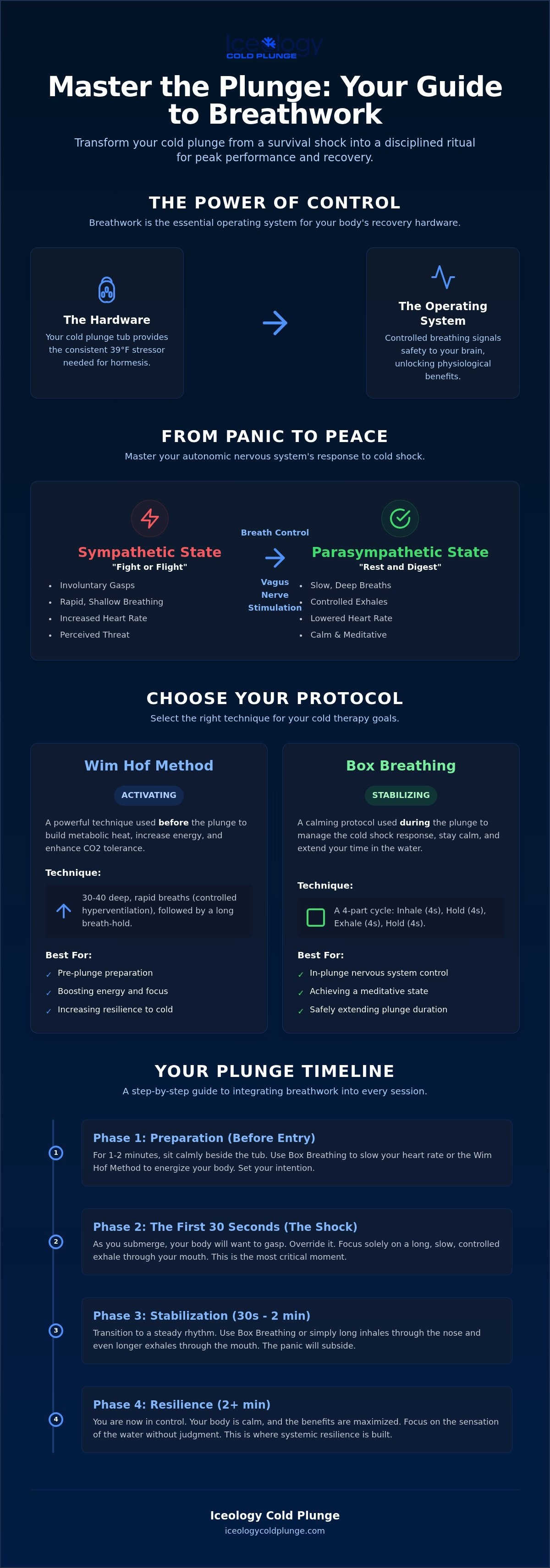
Step-by-Step: Integrating Breathwork into Your Plunge Timeline
Mastery is a process, not an event. Successfully integrating breathwork with your cold plunge routine requires a methodical timeline that begins before you even touch the water. By breaking the experience into five distinct phases, you move from reactive survival to proactive performance. This structure ensures your nervous system remains under your direct command throughout the entire ritual.
- Phase 1: Pre-Plunge (5 Minutes): Stand beside your tub. Set a clear intention for the session. Use slow nasal breathing to lower your baseline heart rate and prepare your mind.
- Phase 2: The Entry: Step into the water with a long, controlled exhale. This is the critical moment where you decide who is in charge of your physiological response.
- Phase 3: The Submergence: Lower yourself to the shoulders. Focus on rhythmic, shallow but controlled breathing to maintain metabolic heat without panicking.
- Phase 4: The Exit and 'Horse Breath': As you stand up, vibrate your lips forcefully. This "Horse Breath" releases facial tension and signals to the brain that the perceived threat has passed.
- Phase 5: Post-Plunge Integration: Stand tall. Allow the Florida heat to naturally warm your skin while you continue to breathe deeply into your belly.
The First 30 Seconds: Overcoming the Gasp Reflex
The first 30 seconds are the most volatile. Your body wants to hyperventilate. To counter this, utilize the "Extended Exhale" technique. Focus entirely on blowing air out through pursed lips as if you're exhaling through a thin straw. A long exhale naturally triggers the parasympathetic nervous system, countering the initial shock. Use the sturdy, hard-sided ledge of your tub to ground your physical body; this tactile feedback provides a sense of security that flimsy alternatives lack. To stabilize your vestibular system and prevent dizziness, fix your gaze on a single, unmoving point directly in front of you.
Post-Plunge: Thermal Regulation in South Florida
In locations like Miami or Naples, the transition from 39°F water to 90°F humidity can be jarring. This massive thermal gap often triggers the shivers as your body tries to redistribute heat. To manage this, perform a "Somatic Shake" immediately after exiting. Vibrate your arms, legs, and torso while maintaining a steady breath to encourage blood flow from your core back to your extremities. Proper cold plunge tub setup in a shaded, well-ventilated area is essential for this transition. A shaded environment prevents the sun from artificially spiking your skin temperature too quickly, allowing for a more stable biological recovery.
Ready to elevate your home recovery ritual? Explore our collection of premium USA-made cold tubs and start your journey toward total nervous system mastery today.
Elevating Your Practice with Iceology’s Precision Cooling Technology
The hardware you choose is the foundation upon which your recovery ritual is built. Integrating breathwork with your cold plunge routine is a skill that requires extreme repetition to master. If you're constantly hauling ice bags or waiting hours for a manual bath to reach temperature, the mental friction will eventually erode your consistency. A professional-grade cold plunge tub with chiller removes this logistical burden entirely. It transforms the experience from a chore into a reliable, always-ready sanctuary for performance.
High-efficiency polyurethane foam insulation does more than just lower energy costs. It creates a quiet, stable thermal environment that is essential for advanced meditative practices. In the intense heat of Orlando or Fort Lauderdale, this thermal barrier ensures that the water temperature remains a relentless 39°F. This consistency allows you to focus 100% of your cognitive energy on your diaphragm rather than the fluctuating conditions of your equipment. When the environment is silent and stable, your breath becomes the only variable.
The Chiller Advantage: Consistency Creates Mastery
For the busy professional in Tampa or Naples, time is the most valuable resource. Manual ice baths are inherently inconsistent; the temperature spikes the moment you enter, making it impossible to track your physiological progress accurately. Iceology chillers offer a "Set and Forget" solution. By maintaining a precise, unwavering baseline, you can measure exactly how your CO2 tolerance and breath control improve over weeks and months. You aren't just guessing; you're engineering a better version of yourself through data-driven recovery.
Hard-Sided Stability for Meditative Focus
The psychological benefit of a permanent, high-quality recovery station cannot be overstated. A hard-sided tub provides the structural integrity needed to maintain the tall, open posture required for deep diaphragmatic breathing. Flimsy, unstable models often force you to tense your core just to stay upright, which directly conflicts with the relaxation needed for parasympathetic activation. A stable tub floor and sturdy ledges allow you to ground your body and fully surrender to the cold. This stability is the difference between a panicked soak and a masterclass in resilience.
USA-made craftsmanship isn't just about durability; it's about the pride of ownership that motivates daily discipline. When your equipment reflects the same level of precision you demand from your training, you're more likely to stick to the routine. Ready to master the cold? Explore Iceology’s premium cold plunge tubs today.
Mastering the Biological Bridge to Peak Performance
The cold is not an enemy to be endured; it's a stressor to be managed through the power of oxygen. By integrating breathwork with your cold plunge routine, you transform a primal survival response into a disciplined recovery ritual. Whether you choose the tactical calm of Box Breathing or the metabolic fire of the Wim Hof Method, your breath serves as the manual override for your nervous system. This control allows you to remain in the water long enough to trigger the deep systemic resilience that 39°F exposure provides.
Consistency is the final pillar of mastery. Maintaining a professional-grade routine requires equipment that is as disciplined as your training. Our USA-made, hard-sided tubs provide the structural stability and precision cooling needed to hit 39°F without the hassle of ice. We're proud to serve dedicated athletes in Miami, Tampa, and throughout Florida who value durability and performance. Design your ultimate recovery station with an Iceology Cold Plunge and take command of your physical and mental resilience today. The path to total-body optimization is waiting for you.
Frequently Asked Questions
Is it safe to do breathwork while cold plunging?
Safety is the primary priority. You should never perform breath retention or forceful hyperventilation while submerged in water due to the severe risk of shallow water blackout. Instead, focus on slow, rhythmic exhales to stimulate the Vagus nerve while in the tub. Integrating breathwork with your cold plunge routine means using activating techniques like the Wim Hof Method safely on dry land before you step into the 39°F water.
How long should I do breathwork before entering the cold plunge?
A five-minute pre-plunge session is the professional standard for most athletes. This window allows you to transition from a high-stress state into a focused, meditative mindset. During these minutes, you set your intention and prepare your blood chemistry for the thermal shock. Consistency in this preparation ensures your body is primed to handle the precision cooling of your tub without triggering an overwhelming panic response during entry.
Should I breathe through my nose or mouth while in the water?
Nasal breathing is the superior choice for the duration of your soak. It naturally filters the air and helps maintain a parasympathetic "rest and digest" state by engaging the diaphragm. While mouth breathing can be useful for the initial "Horse Breath" exit, keeping your mouth closed while submerged prevents the heat loss associated with rapid oral gasping. This technique is essential for staying calm in chilled environments.
What happens if I start shivering during my breathwork routine?
Shivering is your body's natural thermogenic defense mechanism. If it begins during your session, don't fight the sensation with physical tension. Instead, acknowledge the response and maintain a steady, deep breathing rhythm to support your core temperature. Once you exit into the Florida humidity, use the Somatic Shake to redistribute blood flow. This helps your extremities warm up naturally while you continue your post-plunge integration and recovery.
Can breathwork help me stay in the cold plunge for more than 3 minutes?
Breathwork is the primary tool used to extend your immersion time beyond the initial shock. Most participants struggle with the first 30 seconds, but integrating breathwork with your cold plunge routine helps you bypass the "gasp reflex" entirely. By managing CO2 tolerance, you can comfortably reach the three to five-minute mark. This duration is critical for eliciting the full hormetic response and maximizing the anti-inflammatory benefits of the cold.
What is the best breathing technique for beginners in a 39°F plunge?
Box Breathing is the most effective protocol for beginners. The 4-4-4-4 rhythm provides a clear, structured framework that prevents the frantic breathing often caused by 39°F water. This tactical approach allows you to focus on a count rather than the cold sensation. Because Iceology tubs provide a stable, hard-sided environment, you can maintain the tall posture necessary for these deep, diaphragmatic breaths without struggling for physical balance.
How does the Florida humidity affect my post-plunge breathing?
The heavy humidity in cities like Miami or Fort Lauderdale can make post-plunge breathing feel more laborious. As you move from 39°F water to 90°F air, your lungs may feel a slight constriction. Focus on slow, intentional nasal inhales to help your respiratory system adjust to the moisture. Performing your recovery in a shaded, well-ventilated area ensures the transition doesn't overwhelm your autonomic nervous system or your thermal regulation.
Do I need a special app to integrate breathwork with my Iceology tub?
You don't need a specialized app to achieve professional results. While digital guides can be helpful, the mastery of breath is an internal skill. Our integrated chillers remove the distraction of temperature management by holding a steady 39°F, allowing you to practice manual protocols with total focus. This "set and forget" convenience ensures that your cognitive bandwidth is dedicated entirely to your personal recovery and achieving deep mental clarity.