
The Real Cost of a Bargain: Hidden Costs of Cheap Cold Plunge Tubs in 2026
That $500 budget tub looks like a steal until you realize it's actually a high-interest subscription paid in heavy ice bags and lost time. It's understandable to seek an affordable entry point into cold therapy. You're chasing the mental clarity and physical restoration that a daily soak provides, and a lower price tag feels like a smart way to begin your journey without a massive upfront investment.
However, the hidden costs of cheap cold plunge tubs quickly emerge as a relentless drain on your resources. Between the potentially massive annual cost for ice and the constant battle against mold in low-grade materials, that "bargain" often becomes a source of friction rather than a tool for peak performance. You deserve a setup that's ready when you are, not one that requires an hour of prep for three minutes of benefit.
This guide uncovers the long-term financial, physical, and time-based taxes you pay when choosing budget gear over a premium system. We'll show you how to transition from a temporary fix to a durable, 24/7 recovery station that adds genuine value to your home gym and your health for years to come.
Key Takeaways
- Identify the "Bargain Trap" to distinguish between a low entry price and the escalating lifetime costs of manual maintenance.
- Calculate the recurring "Ice Tax." See how daily manual cooling creates a significant financial and logistical drain on your recovery routine.
- Uncover the hidden costs of cheap cold plunge tubs. This includes the physical risks of bacterial growth in non-filtered, porous materials.
- Evaluate the role of high-efficiency polyurethane foam. Learn how it creates a "cooler effect" that maintains consistent temperatures even in high-heat environments.
- Compare the two-year total cost of ownership. Understand why American craftsmanship offers a superior return on your wellness investment.
The 'Bargain' Trap: Why Initial Price Is a Distraction
The "Bargain Trap" is a common hurdle for wellness enthusiasts. It represents the significant gap between a low sticker price and the high lifetime expenses required to keep the unit functional. When you purchase a budget tub, you aren't just buying a product. You're often opting into a high-maintenance lifestyle that demands constant attention. These entry-level models are typically "ice-only" systems. They lack integrated thermal management and filtration. This means you're responsible for every degree of temperature drop and every gallon of clean water.
Understanding the difference between price and cost is essential for any serious athlete. Price is the number on the receipt today. Cost is the cumulative total of your time, electricity, and ice purchases over the next two years. The hidden costs of cheap cold plunge tubs often exceed the price of a premium system within the first twelve months of regular use. Choosing a budget option might save money upfront, but it creates a recurring "tax" on your wallet and your schedule.
The Reality of Inflatable vs. Hard-Sided Tubs
Structural integrity is the foundation of a reliable recovery routine. Budget inflatable models often suffer from puncture risks and material degradation that can end your practice prematurely. Beyond durability, these units offer near-zero thermal resistance. Air-filled walls cannot compete with high-density polyurethane foam. This foam acts as a thermal barrier to keep heat out and cold in, ensuring your chiller doesn't have to work overtime. A hard-sided, USA-made station provides a professional aesthetic that elevates your home gym. It transforms a corner of your house from a temporary setup into a dedicated sanctuary for performance.
Plunge Abandonment: The Hidden Mental Cost
Mental friction is the silent killer of new habits. If your recovery requires a "20-minute prep" involving multiple trips for ice and water testing, you're likely to stop within 90 days. This is known as recovery abandonment. Consistency is the primary driver behind the long-term benefits of cold plunge therapy. When the water is kept at a precise 39°F around the clock, the barrier to entry vanishes. You simply step in, focus on your breath, and emerge renewed. Removing the chore of setup allows you to focus entirely on the mental and physical transformation that disciplined cold water immersion provides.
The Ice Tax: Calculating the Monthly Cost of Manual Cooling
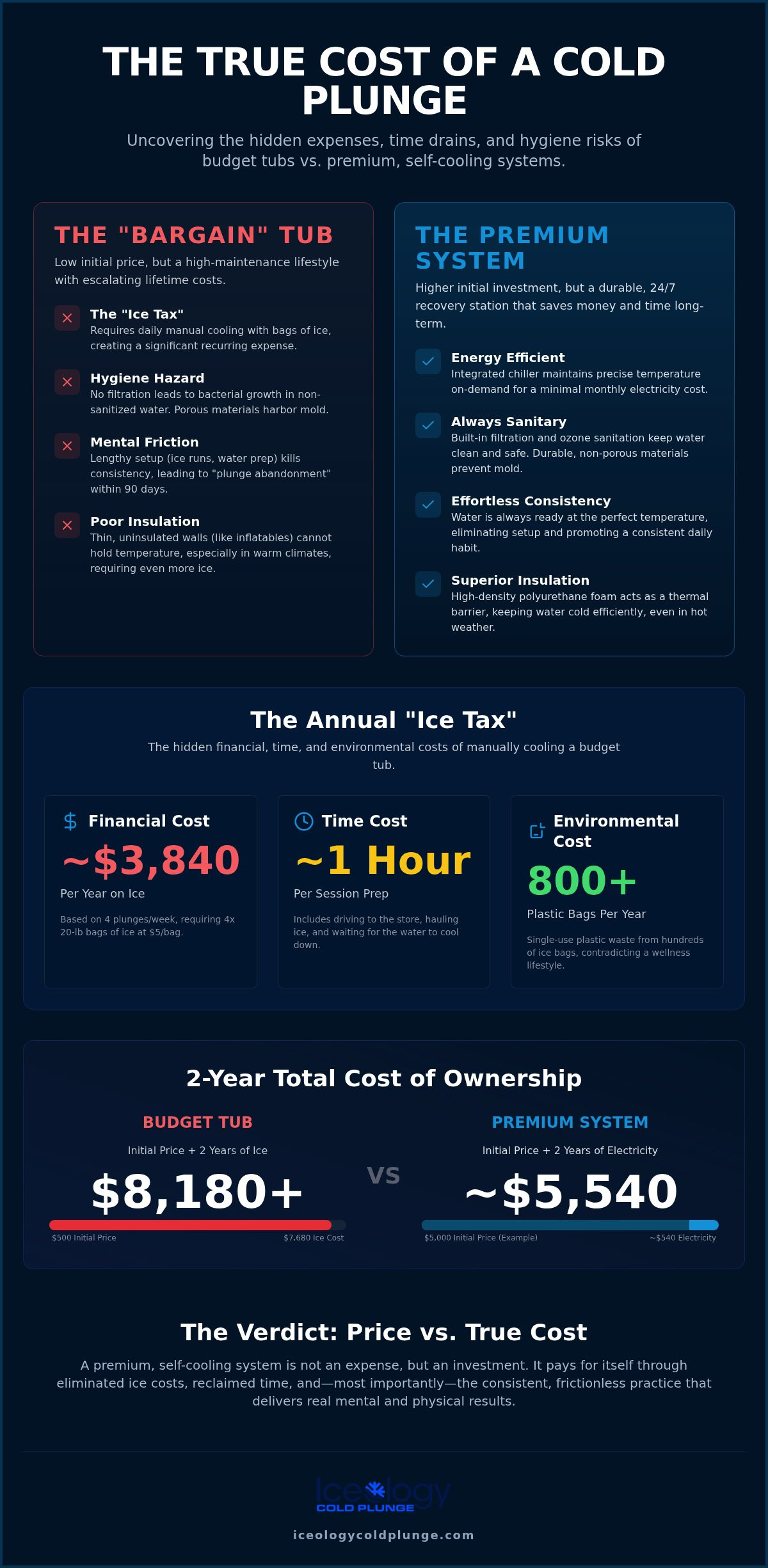
Convenience is often the first casualty of a budget purchase. While a low-cost tub seems economical at checkout, the ongoing "Ice Tax" quickly erodes those initial savings. To reach a therapeutic range of 40-50°F in a standard uninsulated tub, you typically need at least four 20-pound bags of ice per session. At an average price of $5 per bag, a single plunge costs $20. For a dedicated athlete plunging four times a week, the monthly expenditure hits $320. Over a year, you are spending nearly $4,000 just to keep the water cold.
The hidden costs of cheap cold plunge tubs extend beyond the receipt. There is a logistical burden to consider. You must factor in the time spent driving to the store, hauling heavy bags, and waiting for the ice to melt sufficiently to drop the temperature. This process turns a five-minute recovery session into a sixty-minute chore. Environmentally, the impact is equally staggering. A year of manual icing generates over 800 single-use plastic bags, creating a significant waste footprint that contradicts the holistic wellness lifestyle.
Why Chillers Are the Real Financial Bargain
An energy efficient cold plunge utilizes advanced thermal management to eliminate the ice run entirely. While a chiller system requires electricity, the monthly operating cost typically ranges from $10 to $45. When compared to a $320 monthly ice bill, the breakeven point arrives surprisingly fast. Beyond the math, a chiller provides precision. It maintains a consistent 39°F regardless of the ambient temperature, a feat that is physically impossible to achieve with melting ice alone. If you are ready to reclaim your time, exploring a built-in cooling system is the most logical step forward.
The South Florida Factor: Heat vs. Ice
In regions like Miami and Tampa, the climate acts as a relentless enemy to cold water. High humidity and 90°F temperatures accelerate ice melt, turning non-insulated budget tubs into lukewarm baths within minutes. Without high-density polyurethane foam insulation, your "cold" plunge struggles to stay below 60°F. In the Florida heat, premium insulation isn't a luxury; it is a functional requirement. A professional-grade tub acts like a high-end cooler, locking in the cold and protecting your investment from the sweltering environment.
The Hygiene Hazard: Filtration and Material Integrity
A recovery routine should enhance your health, not compromise it. One of the most significant hidden costs of cheap cold plunge tubs is the invisible accumulation of bacteria and biofilm. Budget models rarely include integrated filtration systems like ozone generators or UV-C light. Without these professional tools, the water becomes stagnant the moment you step out. This stagnation creates a breeding ground for pathogens. This leads to skin irritation and the unpleasant "locker room" odors that often plague low-end setups.
Material science plays a critical role in sanitation. Many budget-friendly options utilize porous plastics or thin liners that feature microscopic textures. These surfaces allow bacteria to anchor and form biofilm. This is a slimy layer that is notoriously difficult to scrub away. While you might save money on the purchase price, you pay for it in the labor required to keep the unit even remotely sanitary. Draining and scrubbing a tub every two to three sessions is a massive waste of water and time. It turns your recovery practice into a recurring plumbing project.
Hard-Sided Durability and Sanitation
Selecting a premium cold plunge tub ensures you are working with non-porous, high-grade materials. Hard-sided construction isn't just about structural strength; it is a fundamental hygiene feature. These surfaces resist bacterial attachment, making them much easier to maintain. Additionally, integrated chillers do more than just cool. They provide 24/7 circulation and filtration. This constant movement prevents the "dead zones" where bacteria thrive, ensuring your water remains crisp and clear with minimal effort.
The 'Chemical' Cost
Owners of cheap tubs often find themselves trapped in a cycle of chemical over-correction. To keep unmanaged water safe, you might rely on heavy doses of chlorine or bromine. These harsh chemicals are effective at killing bacteria, but they are aggressive on low-quality materials. Over time, high chemical concentrations can cause cheap liners to become brittle and seals to fail. Premium systems are engineered for efficiency. They require significantly fewer additives to maintain water quality. This low-intervention approach reduces the hidden costs of cheap cold plunge tubs by protecting your skin and ensuring the longevity of your equipment, providing a cleaner experience without the chemical burn.
Thermal Management: Polyurethane Foam vs. The World
Thermal efficiency isn't just a technical specification. It's the difference between a system that works and one that drains your bank account. Most budget tubs rely on thin plastic or air-filled walls. These materials have high thermal conductivity, meaning they let heat in almost as fast as you can pull it out. This is a major part of the hidden costs of cheap cold plunge tubs. In contrast, a polyurethane foam cold plunge creates a "yeti cooler" effect. High-density foam acts as a robust barrier, locking in the cold and protecting the water from the external environment.
When insulation is poor, your chiller pays the price. A motor forced to fight a non-insulated tub works up to three times harder than one in a sealed environment. This constant strain leads to premature mechanical failure, often just after the short warranty expires. There is also the "sweat" factor to consider. Poorly insulated tubs produce massive amounts of condensation. This moisture can pool on your floor, causing expensive water damage to tile, wood, or home gym mats.
Energy Bills: The Silent Budget Killer
The monthly electricity cost of a non-insulated tub can be double that of a premium unit. Cheap chillers often use generic components that lack the efficiency of high-end American-made parts. Thermal bridging is the process where heat bypasses insulation through conductive materials, creating an energy leak that forces your chiller to run indefinitely. This inefficiency is one of the most persistent hidden costs of cheap cold plunge tubs.
Outdoor Placement Risks
If you're planning outdoor cold plunge setups, material choice is non-negotiable. The Florida sun is brutal on cheap PVC, causing it to become brittle and crack within a single season. Premium hard-sided tubs use UV-stabilized materials designed for longevity in high-heat environments. Choosing USA-made quality gives you the peace of mind of a reliable warranty and local support. If you're ready to stop replacing disposable gear, it's time to invest in a professional-grade cold plunge built for the long haul.
The Verdict: Why Premium Recovery Is the Only Real Bargain
When you evaluate the two-year cost of ownership, the math is undeniable. A budget tub is often a revolving door of recurring expenses. Between the escalating ice bills and the inevitable replacement of degraded components, the hidden costs of cheap cold plunge tubs eventually dwarf the price of a professional system. Choosing a premium setup isn't just about luxury. It's about securing a fixed cost for your wellness. By investing in quality upfront, you eliminate the "Ice Tax" and the stress of constant maintenance. You're buying back your time and your peace of mind.
American craftsmanship offers more than just a label. It represents a commitment to precision and local reliability. When your equipment is built in the USA, you gain access to high-quality components designed to last a decade, not a single season. This durability ensures that your cold water immersion therapy remains a consistent, frictionless part of your life. A constant 39°F temperature provides the metabolic and mental benefits that lukewarm, ice-depleted water simply cannot match. It's the "Buy Once, Cry Once" philosophy applied to peak performance.
The Iceology Advantage
We've engineered our systems to thrive where others fail. Our built-in chillers eliminate the need for ice runs forever, giving you back hours of your life every week. Because we serve the South Florida market, our high-density polyurethane insulation is a foundational feature, not an optional upgrade. This ensures your water stays at a crisp 39°F even in sweltering 90°F humidity. Combined with professional-grade filtration, you enjoy crystal clear water with almost zero effort. It's a hands-off system designed for those who value results over chores.
Next Steps for Your Recovery Station
Setting up a permanent recovery station requires a shift in mindset. Assess your space for a hard-sided installation that adds long-term value to your home gym. For residents in Miami, Orlando, and across Florida, local support is a critical factor. Having experts nearby for maintenance and guidance ensures your investment stays in peak condition for years to come. Don't let the friction of budget gear hold back your physical progress. Discover why Iceology is the smartest investment for your recovery and take full control of your physical and mental state today.
Elevate Your Daily Recovery Standards
Achieving peak performance requires tools that support your discipline rather than draining your mental energy. The hidden costs of cheap cold plunge tubs are measured in more than just dollars; they're found in the lost hours of maintenance and the frustration of inconsistent temperatures. By prioritizing a high-quality system, you replace a high-friction chore with a seamless daily ritual that respects your time and your health.
Choosing a professional-grade station means investing in USA-made durability and high-density polyurethane insulation. With an integrated chiller capable of maintaining a steady 39°F, you can focus entirely on your breath and your results. It's time to move beyond temporary fixes and establish a permanent foundation for your wellness journey. This decision marks the end of logistical headaches and the beginning of true physical optimization.
Stop paying the 'Ice Tax' and upgrade to an Iceology Premium Plunge
Your path to resilience deserves a partner that values precision and longevity as much as you do. Step into a better standard of recovery today.
Frequently Asked Questions
How much does it cost to run a premium cold plunge per month?
Running a premium cold plunge typically costs between $10 and $45 per month in electricity. This high level of efficiency is achieved through high-density polyurethane foam insulation that maintains the water temperature with minimal chiller intervention. In the South Florida heat, where ambient temperatures often exceed 90°F, this thermal management is vital. Unlike budget setups that lose cold rapidly, a professional system operates with precision; it ensures your recovery station remains ready at 39°F without a significant impact on your utility bill.
Is buying ice actually cheaper than an integrated chiller for a cold plunge?
Buying ice is rarely cheaper for regular users. For those plunging four times a week, the monthly ice cost can exceed $200, reaching up to $2,400 annually. These recurring expenses are one of the most significant hidden costs of cheap cold plunge tubs. An integrated chiller eliminates this "Ice Tax" completely. While the upfront investment is higher, the system pays for itself by removing the need for daily ice runs and providing a more consistent recovery experience.
How long do cheap inflatable cold plunge tubs typically last?
Cheap inflatable models often last only six to twelve months before failing. These units are prone to punctures, seam leaks, and material degradation from UV exposure. Because they lack the structural integrity of hard-sided, USA-made equipment, they're frequently treated as disposable items. For serious athletes in Miami or Tampa, a "throwaway" tub represents a wasted investment that fails to provide the long-term reliability required for a consistent, year-round recovery practice. Quality craftsmanship is the only way to avoid frequent replacements.
What is the difference between air insulation and polyurethane foam?
The primary difference lies in thermal resistance. Air-filled walls in budget tubs provide very little insulation, allowing heat to transfer into the water quickly. High-density polyurethane foam acts like a high-end cooler for your body; it creates a robust thermal barrier. This material science is mandatory in Florida's humidity. It prevents the chiller from overworking and stops condensation from damaging your floors. It provides a level of efficiency and protection that air-filled models simply cannot achieve in high-heat environments.
Do cheap cold plunges come with filtration systems?
Most budget-friendly cold tubs don't include integrated filtration. Without ozone or UV-C systems, the water becomes stagnant and harbors bacteria almost immediately. This lack of hygiene forces you to drain and refill the tub every few days, wasting hundreds of gallons of water and significant time. Premium systems utilize 24/7 circulation and advanced filtration to keep the water crystal clear. This ensures your recovery environment is always sanitary and safe for your skin, removing the need for harsh chemical over-correction.
Why is a USA-made cold plunge better than an imported budget model?
USA-made plunges prioritize craftsmanship and durability over mass production. These units are engineered with superior components, such as high-efficiency chillers and non-porous materials that resist biofilm. Choosing a domestic manufacturer also ensures you have access to local support and reliable warranties. For residents in Fort Lauderdale or Naples, this means peace of mind; you know your equipment is built to handle the local climate and is backed by experts who understand your specific recovery needs and performance goals.
Can I leave a cheap cold plunge outside in the Florida sun?
Leaving a cheap PVC or inflatable tub in the Florida sun is not recommended. Intense UV radiation causes these materials to become brittle and crack within a single season. Additionally, without professional insulation, the water will likely reach lukewarm temperatures within minutes. A premium, hard-sided tub is built with UV-stabilized materials and high-density foam. It's designed to withstand the heat in Orlando or West Palm Beach while maintaining a precise 39°F environment for your daily recovery ritual.
What is the 'break-even' point for a premium cold plunge investment?
Most regular users reach the break-even point within twelve to eighteen months. When you calculate the $2,000 to $4,000 spent annually on ice, the transition to an integrated chiller becomes a clear financial win. Beyond the money saved, you also reclaim the hours spent hauling ice and prepping the tub. These hidden costs of cheap cold plunge tubs add up quickly. Investing in a durable recovery station adds long-term value to your home and ensures your health isn't sidelined by equipment failure.