
Cold Plunge Sanitation System: The 2026 Guide to Crystal Clear Recovery
Draining your cold plunge every few days isn't just a chore; it's a failure of modern engineering. You likely started this practice to sharpen your mind and accelerate recovery, not to spend your valuable time scrubbing biofilm or managing cloudy, foul-smelling water. It's frustrating when the tool meant to optimize your health ends up causing skin irritation from an overreliance on harsh chemicals. A professional grade cold plunge sanitation system should handle the heavy lifting for you, maintaining a pristine environment that's ready whenever you are.
We understand that you want a low-maintenance routine that doesn't compromise on safety or water quality. This guide will show you how to maintain crystal clear water for months without the constant need for draining. We'll explore the three pillars of modern sanitation: mechanical filtration, active oxidation, and thermal stability. By the end of this article, you'll understand the sophisticated technology that keeps your recovery water skin-safe and biologically secure, allowing you to focus entirely on your personal performance goals.
Key Takeaways
- Understand why cold water immersion requires a specialized sanitation approach that differs fundamentally from traditional pool or hot tub maintenance.
- Discover how a multi-pillar cold plunge sanitation system utilizes micron filtration and ozone oxidation to neutralize contaminants while protecting your skin.
- Transition from the labor-intensive "old way" of manual chemical dosing to automated systems that sync perfectly with your chiller's performance cycle.
- Learn how hard-sided, USA-manufactured tubs prevent the bacterial buildup common in porous materials, ensuring hygiene in high-humidity environments.
- Gain the knowledge to maintain pristine, 39°F water for months, allowing you to focus on your recovery rather than your maintenance schedule.
What is a Cold Plunge Sanitation System?
A cold plunge sanitation system is a dedicated, integrated network of mechanical and chemical components engineered to keep standing water biologically safe and aesthetically clear. While many people associate water treatment with the steaming heat of a hot tub, cold water therapy requires a completely different logic. In a hot tub, heat accelerates bacterial growth and consumes chemicals rapidly. In a cold environment, the low temperature acts as a natural inhibitor, slowing down microbial reproduction. However, cold water is not a disinfectant. Without an active system, organic matter like skin oils, sweat, and environmental debris will still accumulate, eventually turning your sanctuary into a breeding ground for pathogens.
The core of a modern system relies on a high-flow pump, a fine-micron filter, and an active purifier like an ozonator or UV-C light. Understanding How Advanced Filtration and Purification Technologies Work is essential for any owner. This combination ensures that physical particulates are trapped while microscopic bacteria are neutralized on contact. It's a proactive approach that keeps the water moving and treated, rather than letting it sit stagnant.
The Hygiene Stakes: Why Sanitation Matters
Maintaining water purity isn't just about appearances; it's about protecting your health. Every time you submerge, you introduce microscopic contaminants. Without consistent circulation and filtration, these elements settle on the interior surfaces to form biofilm. This slippery, protective layer of bacteria is notoriously difficult to remove once it takes hold and can cause skin irritation or unpleasant odors. A robust cold plunge sanitation system prevents this buildup, ensuring your skin remains clear and your equipment stays functional. Investing in a high-quality cold plunge tub with chiller provides the mechanical infrastructure needed to move water through the filtration cycle effectively, extending the life of your tub by preventing corrosive buildup.
Thermal Stability and Water Purity
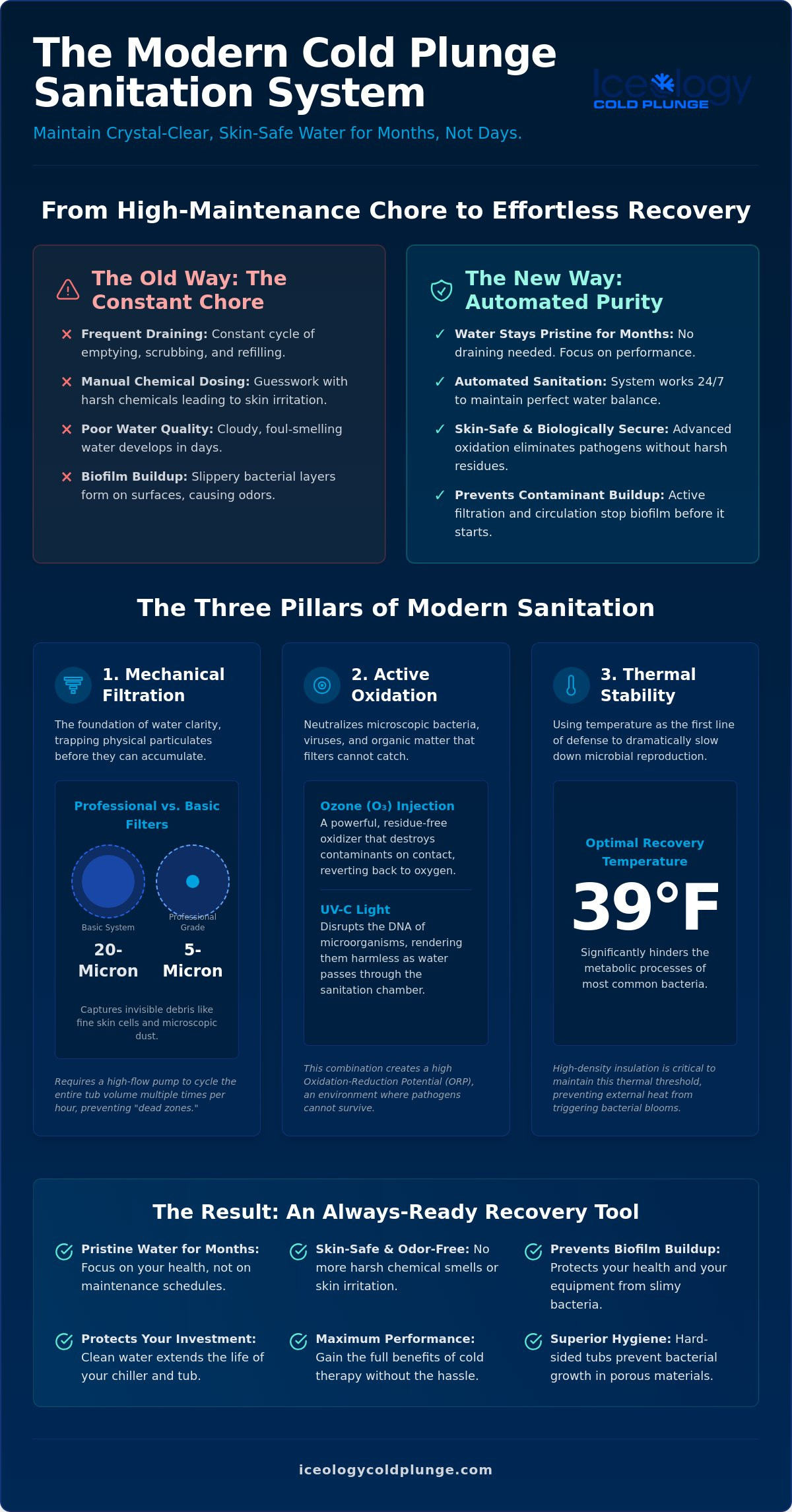
Temperature control is your first line of defense against biological blooms. Keeping your cold plunge tub at 39 degrees significantly hinders the metabolic processes of most common bacteria. It's a delicate balance; while cold water preserves the water longer, it also makes traditional chemicals like chlorine less reactive. This is why high-density insulation is so critical. It maintains the thermal threshold that supports your sanitation tech, ensuring that heat from the outside environment doesn't trigger a sudden spike in bacterial activity. By combining thermal stability with active purification, you create an environment where water stays pristine for months rather than days.
How Advanced Filtration and Purification Technologies Work
A high-performance cold plunge sanitation system operates through a synergy of mechanical filtration and active molecular purification. This three-pillar approach ensures that water doesn't just look clean, but is biologically safe at a microscopic level. In the context of cold water, Oxidation-Reduction Potential (ORP) measures the cleanliness of the water by quantifying the ability of the system to oxidize and break down organic contaminants. High ORP levels indicate a healthy environment where pathogens cannot thrive. By combining these technologies, you eliminate the guesswork associated with manual maintenance.
Micron Filtration: The First Line of Defense
Mechanical filtration is the foundation of water clarity. While basic systems often use 20-micron filters, professional-grade setups utilize 5-micron filters to trap significantly smaller particles. To put this in perspective, a 5-micron filter can capture debris that's invisible to the naked eye, such as fine skin cells and microscopic dust. For this to be effective, a high-flow pump must cycle the entire volume of your tub several times per hour. This constant motion prevents "dead zones" where bacteria might otherwise settle. To maintain peak performance, you should rinse your filter weekly to prevent "chiller-clogging" debris from restricting water flow and straining your cooling unit.
Ozone vs. UV-C: Do You Need Both?
The active pillar of sanitation involves neutralizing what a filter cannot catch. Ozone (O3) acts as a powerful, residue-free oxidizer that destroys organic matter, oils, and odors on contact. It's highly effective in cold water because it doesn't rely on the same thermal reactivity required by traditional chemicals. UV-C light serves as a secondary germicidal agent, using specific light frequencies to scramble the DNA of bacteria and viruses, making them unable to reproduce. This is particularly important for neutralizing chlorine-resistant pathogens that can occasionally survive chemical-only treatments.
The most premium cold plunge tubs utilize a dual-stage approach, combining both Ozone and UV-C for total peace of mind. This integrated technology aligns with professional standards for Automated Sanitation vs. Manual Chemical Dosing, reducing your reliance on harsh additives. This dual-action synergy ensures that the biological load is oxidized while the remaining pathogens are rendered harmless. Choosing a system with these integrated features means you spend less time testing water and more time benefiting from cold tubs that remain crystal clear for months.
Automated Sanitation vs. Manual Chemical Dosing
Choosing how to manage your water quality is a choice between a reactive chore and a proactive lifestyle. The "old way" of maintaining a cold tub relies heavily on manual chemical dosing, using chlorine or bromine tablets paired with frequent water testing. This method is often borrowed from pool maintenance, but it fails to account for the unique dynamics of cold water immersion. In contrast, a modern cold plunge sanitation system integrates directly with the chiller cycle. It provides a consistent, automated defense that keeps the water safe without the constant need for human intervention. This transition from manual to automated isn't just about convenience; it's about elevating the entire sensory experience of your recovery session.
Why Chemicals Struggle in Cold Water
Traditional pool chemicals are designed to dissolve and react in warm environments. At a crisp 39°F, the solubility of powders and tablets drops significantly. This often leads to undissolved chemical grit at the bottom of the tub, which can eventually damage the interior finish. There is also the "chemical smell" trap. Cold air is denser and tends to trap fumes right at the water's surface, forcing you to inhale concentrated chlorine scents while you're trying to focus on your breathwork. For those with sensitive skin, these high chemical concentrations often lead to post-plunge itching or dryness. Many enthusiasts are now turning to gentler alternatives like food-grade hydrogen peroxide or silver ions, which provide a softer feel while still effectively managing the biological load.
The ROI of Integrated Systems
The true value of an automated system reveals itself over years of daily use. While manual chemicals might seem cheaper upfront, the long-term cost-benefit analysis favors integrated technology. High concentrations of chlorine or bromine can be corrosive, slowly degrading the seals and internal components of your equipment. Automated systems protect the longevity of USA made cold plunge tubs by maintaining a steady, low-impact environment. You'll likely save 15 to 30 minutes every week on testing and balancing, which adds up to over 60 hours of reclaimed time over five years. This "set and forget" approach is essential for maintaining daily recovery consistency. When the water is always crystal clear and ready, you're far more likely to stick to your discipline. A reliable cold plunge sanitation system ensures that your focus remains on your physical and mental optimization, not on a chemistry set.
Maintaining Purity in High-Heat Environments (Florida Guide)
Operating a cold plunge in Florida presents a unique set of environmental challenges. In cities like Miami, Tampa, and Orlando, the relentless heat and high humidity create a perfect storm for biological growth. When ambient temperatures soar, your cold plunge sanitation system has to work overtime to counteract the accelerated metabolism of bacteria and algae. Humidity is another factor; in South Florida, moisture in the air can potentially reduce the efficiency of certain ozone generators if the system isn't designed for tropical climates. Thermal stability is your most effective weapon here. High-density polyurethane foam insulation is critical because it prevents the external heat from penetrating the water column. By keeping the water at a steady, low temperature, you ensure that your sanitation tech remains effective rather than being overwhelmed by a "heat-induced bloom."
Managing Sun Exposure and Algae
Sunlight is a catalyst for algae. In Naples or Orlando, an uncovered tub exposed to direct UV rays will see its sanitation levels degrade rapidly. Using a high-quality, UV-resistant cover is mandatory for outdoor setups. It doesn't just keep debris out; it blocks the light that algae needs to thrive. If possible, place your tub in a shaded area to reduce the thermal workload on your chiller and filtration system. For those in coastal cities like West Palm Beach or Fort Lauderdale, salt air is a constant presence. You'll want a system built with American-made, corrosion-resistant components to ensure longevity in these briny environments.
Florida Maintenance Checklist
Maintaining purity in the Sunshine State requires a more proactive schedule, especially during the peak summer months. It's about staying ahead of the environment before the water quality shifts.
- Weekly Filter Inspections: Check for fine debris or pollen that can accumulate faster in humid, lush environments.
- Monitor Water Levels: High heat leads to faster evaporation. Ensure the water level stays above the intake to prevent the pump from running dry.
- Optimize Airflow: During your cold plunge tub setup, leave at least 12 to 18 inches of clearance around the chiller to maximize heat dissipation.
Reliable performance starts with equipment designed for the most demanding climates. If you're ready to upgrade your recovery routine with a system built to withstand the Florida heat, explore our range of premium Cold Plunge Tubs today.
The Iceology Advantage: Integrated Systems for Effortless Recovery
The foundation of a sustainable recovery practice is a system that works for you, not the other way around. While many entry-level options rely on porous materials or external attachments, Iceology focuses on a fully integrated approach. Our hard-sided construction is a deliberate engineering choice designed to eliminate the bacterial traps common in inflatable models. Porous surfaces can harbor microscopic pathogens within their fibers or seams, making them nearly impossible to fully sanitize. By utilizing smooth, non-porous materials, we ensure that your cold plunge sanitation system has a clean slate to work with, preventing biofilm from gaining a foothold in the first place.
True effortless recovery comes from the seamless marriage of high-flow filtration and our precision 39°F chiller systems. We don't treat sanitation as an afterthought; it's baked into the hydraulic design of every tub. This integration ensures that water is constantly moving, treated, and chilled to the exact threshold required for peak physiological benefits. Because our components are American-made, they're built to withstand the rigors of daily use and the environmental stressors of demanding climates. This reliability is what transforms a simple soak into a professional-grade cold water immersion therapy routine that you can trust day after day.
Engineering for Longevity
Iceology utilizes commercial-grade pumps that provide superior water turnover rates, ensuring that the entire volume of your tub is purified multiple times per hour. This rapid circulation is the secret to maintaining crystal clear water even with multiple daily users. For those in the Florida luxury recovery market, this level of performance is a necessity. The hard-sided durability of our tubs also simplifies the physical side of maintenance. A quick wipe-down of the interior surfaces is all it takes to keep the tub looking pristine, as there are no folds or textured fabrics to scrub. This "quality-first" mindset ensures that your equipment remains a centerpiece of your wellness space for years.
Your Path to Pristine Recovery
The most effective strategy for water purity is a "Passive-Active" approach. The passive element is our high-density insulation and 39°F thermal stability, which naturally inhibits microbial growth. The active element is the automated cold plunge sanitation system that neutralizes contaminants through micron filtration and ozone purification. Together, they create an environment that remains safe and inviting with minimal human intervention. If you're ready to stop managing water and start mastering your recovery, our experts are here to help you design the perfect home setup. Elevate your daily routine with a system that takes care of itself, allowing you to focus entirely on reaching your next peak.
Master Your Recovery with Pristine Precision
Maintaining a sanctuary for physical and mental optimization shouldn't feel like a part-time job. By integrating a professional cold plunge sanitation system, you replace the tedious guesswork of manual chemical dosing with the reliability of automated engineering. This transition ensures that your water remains safe and inviting for months, allowing you to focus entirely on the transformative results of your practice rather than the maintenance of your equipment.
The path to crystal clear recovery is built on the pillars of thermal stability and high-flow purification. Our hard-sided, USA-made craftsmanship provides a superior, non-porous foundation that naturally resists the buildup of biofilm. When paired with chillers that reach a true 39°F, you create a biologically stable environment that is both skin-safe and incredibly efficient. You have the power to take full control of your recovery environment with technology that is as disciplined as your routine.
Explore Energy-Efficient, USA-Made Cold Plunges by Iceology and experience the peace of mind that comes with integrated 20-micron filtration systems. It's time to elevate your daily discipline with a partner in performance that values longevity as much as you do.
Frequently Asked Questions
How often do I need to change the water in a cold plunge with a sanitation system?
With a high-quality cold plunge sanitation system, you typically only need to change the water every three to six months. This longevity depends on your daily usage frequency and whether users rinse off before submerging. Without integrated filtration, you'd likely find yourself draining and refilling the tub every few days to prevent biological buildup and stagnation.
Can I use a cold plunge without any chemicals at all?
It's possible to maintain pristine water without traditional chlorine or bromine if your system utilizes powerful ozone and UV-C purification. This approach is ideal for those with sensitive skin who want to avoid the harshness of pool chemicals. Many owners find that a "chemical-free" setup is perfectly effective when paired with consistent filtration and a strict "rinse-first" policy.
Does an ozone generator make the water smell like a pool?
Ozone doesn't produce the heavy, medicinal odor associated with public swimming pools. Instead, it leaves the water smelling crisp and clean, much like the air after a heavy rainstorm. Because ozone is a natural gas that dissipates quickly, it neutralizes organic odors without leaving a lingering chemical scent on your skin or in your recovery space.
Is UV-C light safe for the skin during a cold plunge session?
UV-C light is completely safe because the germicidal process happens entirely within the enclosed plumbing of the unit. You're never directly exposed to the light rays while you're inside the tub. The water is purified as it passes through the external housing, ensuring the active sanitation remains separate from your physical immersion experience.
How often should I replace the micron filter in my cold plunge?
You should replace your micron filter every one to three months to maintain optimal water clarity and flow. Rinsing the filter with a garden hose once a week will significantly extend its lifespan by removing larger physical debris. A clean filter reduces the mechanical strain on your pump and helps your chiller maintain its target temperature more efficiently.
Will a sanitation system work if I keep my cold plunge outside in the Florida heat?
A robust cold plunge sanitation system is designed to handle the increased biological load of high-heat environments like Florida. The key is the synergy between active purification and high-density insulation. Keeping the water at a stable 39°F prevents the rapid bacterial growth that occurs in warmer water, allowing the filtration components to keep the water crystal clear.
What is the best way to clean the interior walls of a hard-sided cold plunge?
Cleaning hard-sided interior walls is straightforward due to their non-porous, smooth surfaces. Use a soft, non-abrasive cloth and a mild, eco-friendly cleaner or a simple solution of water and white vinegar. This routine prevents the buildup of residual skin oils without damaging the tub's finish or introducing unwanted toxins into your clean water supply.
Do I need to run the sanitation system 24/7 or only when the chiller is on?
Most integrated systems are designed to run whenever the chiller is active to ensure the water stays moving and treated. For the highest level of purity, running the pump and filtration 24/7 is the preferred method. Constant circulation prevents stagnant "dead zones" and ensures every drop of water frequently passes through the ozone and filtration chambers.