
How to Use a Cold Plunge to Reduce Inflammation: The 2026 Science-Backed Guide
Most athletes view an ice bath as a simple test of mental toughness, but the real power of cold water immersion lies in its role as a precision vascular recalibration tool. You've likely felt that deep, nagging ache after a heavy training session or struggled with joint stiffness that lingers long after the South Florida heat has faded. It's frustrating when your body can't keep pace with your ambition, leaving you sidelined by delayed onset muscle soreness or chronic inflammation. We understand that recovery isn't just a break from training; it's the foundation of your next peak performance.
This guide explores the 2026 science behind how a cold plunge reduce inflammation, providing you with a precise protocol to optimize your recovery and reclaim your physical edge. You'll discover the biological mechanisms of vasoconstriction and learn how a hard-sided tub with a dedicated chiller provides the thermal stability needed for systemic change. We'll break down the exact timing and temperature requirements for maximum cellular benefit, showing you how to integrate this practice into a lifestyle focused on peak performance and long-term physical longevity.
Key Takeaways
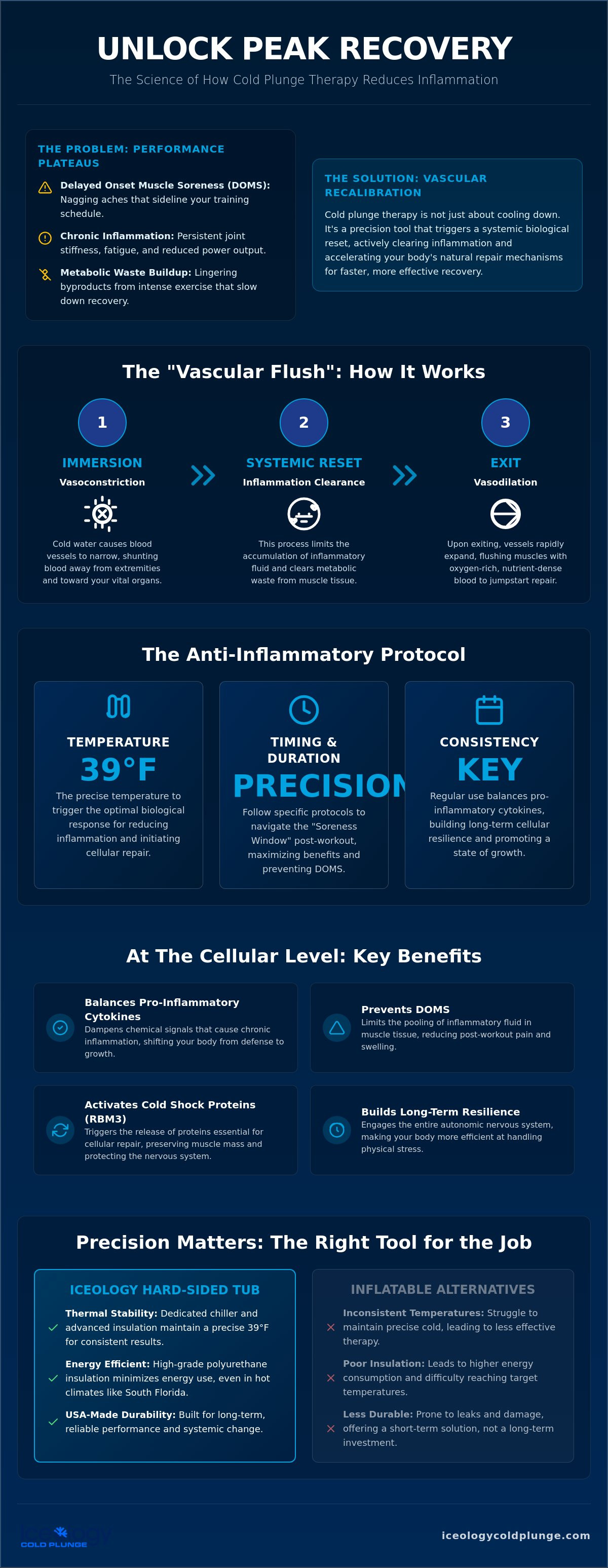
- Learn how cold water immersion triggers a "vascular flush" to systematically clear inflammatory markers and metabolic waste from your muscle tissue.
- Discover why maintaining a precise 39°F environment is the most effective way to use a cold plunge reduce inflammation and accelerate cellular repair.
- Master the specific timing and duration protocols required to navigate the "Soreness Window" and prevent delayed onset muscle soreness.
- Understand the performance benefits of hard-sided, USA-made tubs over inflatable alternatives for consistent, long-term recovery results.
- See how advanced polyurethane insulation allows for energy-efficient, always-ready cold therapy even in the challenging South Florida climate.
The Science of Inflammation: Why Cold Water is the Ultimate Reset
Inflammation is often misunderstood as a simple byproduct of a hard workout. In reality, it's a complex survival mechanism that can either build your body up or tear it down. To understand how a cold plunge reduce inflammation, we have to look at the chemical signals your body sends when under stress. When you submerge yourself in 39°F water, you aren't just cooling off. You're initiating a systemic biological reset. This process targets the inflammatory cascade, a series of chemical reactions that, if left unchecked, lead to prolonged recovery times and decreased performance. The Science of Inflammation shows that cold exposure acts as a powerful modulator, dampening pro-inflammatory signals while boosting the body’s natural repair mechanisms. This isn't just about surface-level relief; it's about altering your internal chemistry to favor resilience.
Acute vs. Chronic Inflammation
Acute inflammation is your friend. It's the immediate, healthy response to training that triggers muscle hypertrophy and adaptation. However, when this response becomes persistent, it turns into chronic inflammation. This state hinders muscle growth, causes joint pain, and leads to systemic fatigue. Athletes often experience elevated levels of pro-inflammatory cytokines, which are small proteins that act as messengers in the immune system. A consistent cold water protocol helps balance these cytokines, ensuring that your body stays in a state of growth rather than constant defense. By understanding the benefits of cold plunge, you can transition from reactive icing to proactive recovery. Common signs of systemic inflammation include lingering joint stiffness, brain fog, and a noticeable drop in power output during training sessions.
The Role of Thermal Shock Proteins
Cold exposure triggers the release of cold shock proteins, specifically RBM3. These proteins are essential for cellular repair and protection. Unlike heat shock proteins that respond to high temperatures, cold shock proteins help preserve muscle mass and protect the nervous system during periods of stress. This biological response builds long-term cellular resilience, making your body more efficient at handling the physical demands of high-intensity training. Using a cold plunge reduce inflammation by leveraging these proteins to stabilize cellular structures before damage can spread. It’s a sophisticated defense mechanism that rewards the disciplined athlete with faster turnaround times. By protecting muscle tissue at a molecular level, you aren't just recovering for tomorrow; you're investing in your physical longevity. This systemic approach is far more effective than localized icing because it engages the entire autonomic nervous system, providing a comprehensive recovery solution that targets every muscle group simultaneously.
While immersion offers systemic benefits, localized medical treatments can further enhance specific recovery goals; for instance, you can explore Laser Therapy to target persistent areas of inflammation and pain.
The Biological Mechanism: How Cold Water Shuts Down Inflammatory Cascades
Stepping into a controlled 39°F environment triggers an immediate, systemic response that a simple ice pack can't replicate. While many people focus on the numbing effect of the cold, the true magic happens through vascular manipulation. This is how a cold plunge reduce inflammation at a structural level. It forces your cardiovascular system to engage in a high-intensity workout of its own, shunting blood away from the skin and extremities toward your vital organs. This internal shift isn't just a survival tactic; it's a strategic move to clear metabolic debris and recalibrate your internal environment. To further support this biological recalibration, using a molecular hydrogen generator from Pureffect can help manage inflammation at a cellular level, complementing the vascular benefits of cold therapy.
Vasoconstriction and the Flushing Effect
During immersion, your blood vessels undergo rapid vasoconstriction. This narrowing of the vessels serves a critical purpose: it limits the accumulation of inflammatory exudate. This fluid often pools in damaged muscle tissue after heavy lifting or endurance training, causing the swelling and pain associated with delayed onset muscle soreness. When you exit the water, your body experiences a powerful rebound effect known as vasodilation. This rapid reopening of the vessels creates a "flushing" action. It delivers oxygen-rich, nutrient-dense blood back to the muscles, effectively jumpstarting the repair process. This constant cycle of constriction and expansion is why a cold plunge improves circulation over time, building a more resilient vascular network that responds better to physical stress.
Lymphatic Drainage and Hydrostatic Pressure
Unlike the heart, which pumps blood throughout the body, the lymphatic system is passive. It relies on movement and external pressure to transport waste and immune cells. This is where the depth of your tub becomes a factor. Hydrostatic pressure is the force exerted by water that compresses tissues and moves lymph. When you are fully submerged, the weight of the water acts as a total-body compression sleeve. This pressure forces interstitial fluid back into the lymphatic vessels, where it can be filtered and cleared by the body. Localized icing simply doesn't provide the same mechanical advantage. Investing in a premium cold plunge tub ensures you have the necessary depth to leverage this pressure effectively, turning every session into a comprehensive drainage treatment. By combining thermal shock with mechanical pressure, you create the ideal environment for recovery. This multi-layered approach is the most efficient way to help your cold plunge reduce inflammation and restore peak physical function.
Cold Plunge vs. Traditional Ice Baths: Precision Matters in 2026
In the past, recovery was often a guessing game involving bags of ice and a plastic tub. By 2026, the standard has shifted toward precision engineering. While traditional ice baths provide some relief, they lack the thermal stability required to truly optimize how a cold plunge reduce inflammation. A manual ice bath starts cold but warms up the moment you step in, as your body heat transfers to the water. This inconsistency prevents the deep, systemic response necessary for high-level recovery. Professional athletes and dedicated biohackers now prioritize dedicated chilled tubs that maintain a constant, exact temperature throughout the entire session.
The Problem with Melting Ice
When you sit in still water, your body creates a "thermal layer" of warmer water directly against your skin. This layer acts as insulation, shielding you from the very cold you're trying to leverage. Manual ice baths suffer from this stagnation, which significantly reduces the anti-inflammatory effect. Modern chilled systems use integrated circulation to break this barrier, ensuring that the cold water is constantly moving against your tissue. This mechanical advantage is a core pillar of the cold water immersion therapy guide, which highlights how consistent thermal stress leads to superior results. Beyond the science, there's the factor of convenience. A hard-sided tub is always ready, removing the friction of buying, transporting, and dumping hundreds of pounds of ice just to get a single session.
Why 39°F is the Gold Standard
While 50°F or 55°F is a common starting point, the most profound biological shifts occur at lower temperatures. Reaching 39°F is the gold standard for triggering the "mammalian dive reflex" and maximizing the metabolic impact. At this temperature, the vasoconstriction discussed in previous sections is more pronounced, leading to a more effective "flush" of the system. This deep cold more effectively suppresses the pro-inflammatory cytokines that cause lingering pain. However, reaching these ultra-low temperatures requires a high-performance chiller and superior insulation. Inflatable alternatives often struggle to maintain these levels, especially in humid environments. High-quality polyurethane foam insulation and hard-sided construction are essential for maintaining 39°F without overworking the motor. This level of precision ensures that every minute you spend in the water is focused on results rather than just enduring the cold. It's the difference between a superficial soak and a transformative recovery session that helps your cold plunge reduce inflammation with surgical accuracy.
Practical Protocol: How to Cold Plunge for Maximum Anti-Inflammatory Results
Achieving the best results requires more than just jumping into cold water; it requires a disciplined approach to timing and technique. To truly help a cold plunge reduce inflammation, you must consider the "Soreness Window." For immediate reduction of swelling and acute pain, plunging within 30 minutes of your training session is ideal. This rapid cooling halts the inflammatory cascade before it spreads through the muscle tissue. However, if your primary goal is pure muscle hypertrophy, some research suggests waiting 4 to 6 hours to allow the natural inflammatory signaling necessary for growth to occur first. Balancing these needs is key to a long-term cold plunge for muscle recovery strategy that supports both strength and longevity.
Control the breath to control the body. The initial "cold shock" triggers an involuntary gasping reflex and a spike in heart rate. By focusing on long, slow exhales, you override the sympathetic "fight or flight" response. This shift into a parasympathetic state allows your blood vessels to constrict more effectively, facilitating the vascular flush discussed earlier. Stay still during the session to allow a thermal layer to form if you are a beginner, or move your limbs slightly to break that layer and increase the challenge once you are acclimated.
Temperature and Duration Guidelines
Precision is the difference between a soak and a treatment. If you're new to the practice, start within a range of 50°F to 55°F to build tolerance. As your vascular system becomes more resilient, move toward the advanced range of 39°F to 45°F. Aim for a duration of 3 to 5 minutes. Research indicates that the majority of anti-inflammatory benefits occur within this window. Staying in longer isn't always better; excessive exposure can lead to a drop in core temperature that actually slows down metabolic recovery and hinders muscle repair. Consistency beats intensity every time.
The Rewarming Phase
How you exit the tub is just as important as how you enter it. While a hot shower is tempting, natural rewarming is often preferred for vascular health. This forces your body to generate internal heat, a process known as non-shivering thermogenesis. You can accelerate this by performing light movement or the "horse stance" (a wide, low squat) to engage large muscle groups. This active rewarming ensures the "rebound" blood flow is driven by your own metabolism, further strengthening your circulatory system. Always have a towel and dry clothes ready to prevent after-drop, a condition where core temperature continues to fall after exiting the water. If you're ready to stop managing bags of ice and start mastering your recovery, explore our lineup of premium cold plunge tubs to find the perfect fit for your protocol.
Optimizing Recovery in the South Florida Heat with Iceology
Living in South Florida presents a unique challenge for those dedicated to peak performance. In cities like Miami, Tampa, and Orlando, the ambient temperature often exceeds 90°F, making it nearly impossible to maintain a consistent cold environment without professional equipment. A standard tub filled with ice will melt in minutes under the Florida sun, rendering your recovery session ineffective. This is where precision engineering becomes vital. To effectively use a cold plunge reduce inflammation, you need a system that can fight back against external heat and humidity without compromise. For residents in Naples and West Palm Beach, an integrated chiller isn't just a luxury; it's a necessity for maintaining the 39°F gold standard year-round.
Insulation: The Key to Efficiency in Florida
High-grade polyurethane foam insulation is the backbone of an efficient recovery setup. In the humid Florida climate, inferior tubs allow ambient heat to seep through the walls, forcing the chiller to run continuously and wasting energy. Iceology's hard-sided construction creates a dense thermal barrier that locks in the cold. This design ensures your water stays at the target temperature regardless of the soaring weather outside. Beyond temperature control, these tubs are built to withstand heavy UV exposure and constant humidity. This durability prevents the warping or degradation often seen with cheaper, inflatable alternatives. By investing in a well-insulated system, you ensure long-term energy efficiency and consistent physical results. It's a "quality-first" approach that pays for itself through reduced operational costs and superior recovery outcomes.
The Mental Reset in a Tropical Climate
Beyond the physical repair, there's a profound psychological benefit to cooling down in a tropical environment. The intense Florida heat often leads to heat-related fatigue and elevated stress levels. Entering a chilled tub provides an immediate recalibration of the nervous system, offering a sanctuary from the oppressive outside air. This process is detailed in our guide on cold plunge for stress relief, which explains how precision cooling can lower cortisol and improve mental clarity. It's a powerful tool for total-body optimization. It helps your cold plunge reduce inflammation while simultaneously refreshing your mind and spirit.
Local Support and American Craftsmanship
Choosing a USA-made product means you have access to local expertise and reliable support. Many cheap imports are difficult to service and struggle to handle the high-performance demands of a Florida summer. Iceology tubs are designed with a meticulous eye for detail, using components that are built to last. Whether you're training in Orlando or recovering in Miami, having a Florida-based team of experts ensures your equipment remains a reliable partner in your wellness journey. The maintenance is straightforward, allowing you to focus entirely on your personal results. We encourage you to contact an expert to discuss how a dedicated chiller system can transform your daily routine and provide the lasting relief your body deserves.
Elevate Your Recovery with Precision Cooling
Mastering the science of cold water immersion is about more than just enduring the chill; it's about leveraging a precision tool to recalibrate your body’s internal environment. By understanding the biological mechanisms of vasoconstriction and the power of the vascular flush, you can systematically use a cold plunge reduce inflammation and accelerate your journey back to peak performance. We've explored how maintaining a constant 39°F temperature is the gold standard for triggering these deep systemic responses, especially when battling the intense South Florida heat.
Iceology provides the professional-grade equipment necessary to turn these scientific insights into a daily reality. Our hard-sided tubs are proudly Made in the USA and expertly insulated with polyurethane foam to ensure energy-efficient performance even in 90°F weather. With built-in chillers capable of reaching 39°F, your recovery is always ready when you are. Don't let chronic soreness or heat-related fatigue dictate your training schedule.
Explore Iceology’s Premium Cold Plunge Tubs and Start Your Recovery Journey Today
Take control of your physical longevity and experience the transformative power of disciplined recovery. You've done the hard work in the gym; now let precision cooling provide the reset your body deserves.
Frequently Asked Questions
How many times a week should I cold plunge to reduce inflammation?
Most athletes and wellness advocates find that three to five sessions per week provide the most consistent results. This frequency keeps your vascular system resilient and ensures that your baseline level of pro-inflammatory cytokines remains low. Consistency over several weeks is more important for long-term recovery than high-volume sessions in a single week.
Is it better to cold plunge immediately after a workout or wait?
Plunge within 30 minutes of your session if your primary goal is to manage immediate pain or acute swelling. If you're focused on building maximum muscle size, it's better to wait at least four hours. This delay allows the natural inflammatory signals necessary for muscle growth to occur before you use a cold plunge reduce inflammation and reset your system.
Can cold plunging help with chronic joint pain like arthritis?
Cold water immersion is highly effective for managing chronic joint conditions by slowing nerve conduction velocity and reducing synovial swelling. Regular sessions help dampen the production of inflammatory markers that contribute to daily discomfort. Many users report improved mobility and a significant reduction in stiffness after sticking to a disciplined, long-term protocol.
What is the best temperature for reducing muscle soreness?
The ideal range for systemic recovery is between 39°F and 55°F. While 55°F is a manageable starting point for beginners, reaching the 39°F mark triggers a more profound biological response. This lower temperature is the gold standard for maximizing the vascular flush and suppressing the chemical signals that cause lingering muscle soreness.
Does cold plunging reduce inflammation more than an ice pack?
A cold plunge is significantly more effective because it offers full-body immersion and utilizes hydrostatic pressure. While an ice pack only treats a localized spot, immersion compresses all tissues simultaneously. This mechanical force moves lymphatic fluid and metabolic waste much more efficiently than a static ice pack can achieve on its own.
Are there risks to cold plunging if I have a heart condition?
The sudden "cold shock" response causes an immediate spike in heart rate and blood pressure, which can be dangerous for those with cardiovascular issues. It's essential to consult with a healthcare professional before starting any cold water therapy. Safety should always be the priority when subjecting your body to extreme thermal stress.
How long does it take to see results from cold water therapy?
You'll likely feel immediate relief from acute muscle soreness after your very first session. However, the systemic benefits of using a cold plunge reduce inflammation typically become most apparent after two to four weeks of consistent use. During this time, your body adapts to the thermal shock and begins to regulate its inflammatory response more efficiently.
Can I cold plunge if I live in a very hot climate like Miami?
You can maintain a successful practice in Miami or Orlando by using a hard-sided tub with high-performance insulation. A powerful integrated chiller is necessary to fight against the 90°F+ ambient heat and high humidity. These professional-grade systems ensure your water stays at the exact target temperature regardless of the tropical weather outside.